Hungary: Orban and opposition trade barbs ahead of election
Hungary: Orban and Opposition Trade Barbs Ahead of Election
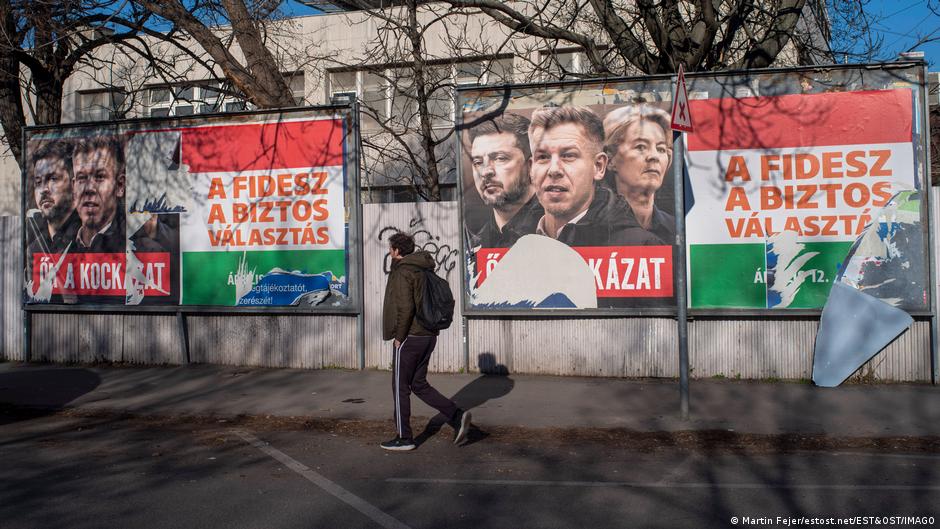
Hungary is set for a crucial electoral contest, with Peter Magyar’s Tisza party positioning itself as a reformist force against Viktor Orban’s 16-year dominance. Polls indicate that nearly a quarter of voters remain undecided, casting doubt on the outcome of Sunday’s vote. The election could mark a significant shift in the nation’s political trajectory, as Magyar claims his coalition is gaining momentum in public opinion.
Recent surveys highlight the tight race, with the Publicus Institute reporting Tisza leading Fidesz by 38% to 29%. A similar result emerged from IDEA’s poll, showing Tisza at 39% compared to Fidesz’s 30%, while over 20% of respondents expressed uncertainty. These figures underscore the volatility of the election, which remains unpredictable as the final days approach.
Accusations of Election Interference
Magyar and Orban have both leveled allegations of manipulation ahead of the vote. On Friday, Magyar criticized Fidesz for alleged fraud, including “criminal acts, intelligence operations, disinformation, and fake news.” He asserted that these tactics would not prevent Tisza from securing victory, stating,
“The series of ongoing election fraud carried out for months by the ruling party, Fidesz, along with criminal acts, intelligence operations, disinformation and fake news cannot change the fact that Tisza is going to win this election.”
Orban responded with his own accusations, claiming opponents are “colluding” with foreign intelligence. In a social media video, he warned that the opposition seeks to incite chaos and undermine Hungarian sovereignty, saying,
“This is an organized attempt to use chaos, pressure, and international vilification to call into question the decision of the Hungarian people.”
Political Platforms and Policies
Tisza frames itself as an alternative to Orban’s perceived authoritarianism, emphasizing anti-corruption efforts and a return to European integration. Magyar pledged to unlock frozen EU funds, tax the wealthy, and overhaul the healthcare system, stating,
“Just a few days and we will see a change of regime.”
Orban’s tenure since 2010 has seen the consolidation of power through control of courts, suppression of critical media, and the EU’s financial sanctions. His alliance with Vladimir Putin has enabled Hungary to block sanctions on Russia and reduce support for Ukraine. Additionally, Fidesz’s parliamentary majority has been used to reshape electoral boundaries, enhancing its electoral advantage.
Orban’s Framing of the Election
Orban has framed the vote as a choice between “war or peace,” accusing the opposition of dragging Hungary into conflict with Ukraine. Tisza has rejected this claim, asserting that the election is about restoring democratic governance. Magyar, speaking at a rally in Baja, warned against letting the country drift into dependence, stating,
“Let’s not allow … to lead Hungary out of the EU.”
Meanwhile, U.S. President Donald Trump recently endorsed Orban, urging Hungarians to vote for him. This support came days after Vice President JD Vance addressed a campaign event in Budapest, amplifying the international stakes of the election.