Iran doubles down on executions
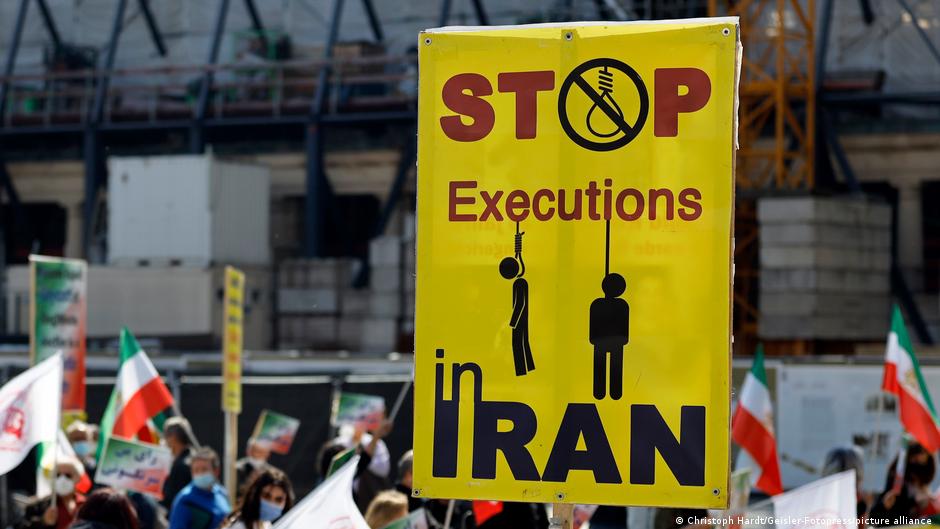
Iran intensifies execution campaign amid conflict
Iranian authorities executed 14 individuals in the past six weeks, with capital punishment continuing relentlessly despite the US-Israeli military strikes targeting the country. The surge in executions began in March, focusing on detainees accused of political crimes, as the Islamic Republic faced aerial assaults from its rivals. Since the war escalated in late February, the regime has maintained a steady pace of hangings.
Key cases and timing
On March 18, the day before Nowruz, the Persian new year, Iran hanged Kouroush Keyvani, a dual Iranian-Swedish national. He was charged with spying for Israel and arrested during the 12-day conflict last year for allegedly documenting classified zones. Days later, three youths were executed for their roles in January’s mass demonstrations, marking the first hangings linked to the nationwide protests that concluded with severe state violence.
In the days following Nowruz, more executions took place. Amirhossein, an 18-year-old detained during the unrest, was among those hanged. The regime also targeted individuals linked to the People’s Mujahedin of Iran (MEK), a banned opposition group, with six of the 14 executed facing rebellion charges. Legal scholar Afrooz Maghzi noted that the spike in executions reflects a pattern dating back to the 1980s, where theocratic government uses external political narratives to justify internal repression.
“At least two dozen political prisoners are facing imminent death sentences,” said Raha Bahreini, an Iran expert at Amnesty International. “These include detainees from January’s protests, participants in the ‘Woman, Life, Freedom’ movement, and individuals tied to Kurdish parties, the MEK, or other opposition groups.” She further highlighted those coerced into confessing under torture, now accused of espionage or vague charges like moharebeh (war against God) or baghi (rebellion against the Islamic government).
Maghzi emphasized the regime’s strategy to project strength during crises, citing the execution of six MEK members as a deliberate move to frame protests as militaristic. “International attention should challenge Iran’s portrayal of civilians as armed insurgents,” she argued. The expert also called for raising political pressure on Tehran, urging conditional talks tied to halting executions.
Global context and UN actions
Iran ranks as the world’s second-largest executioner after China, according to rights organizations. Last year, the country executed over 1,500 individuals, according to Iran Human Rights data. Since 1979, the UN General Assembly has adopted 72 resolutions and the UN Human Rights Council 17 motions to pressure Iran on its use of the death penalty.
The regime’s tactic of labeling dissent as foreign-backed terrorism has intensified since the conflict with the US and Israel. By weaponizing external rhetoric, it justifies the suppression of domestic opposition, even as execution numbers climb. Maghzi warned that this trend could deepen, with more “unknown individuals” — those without access to sensitive data — facing charges of espionage under the current climate.