Iran doubles down on executions amid US-Israeli war
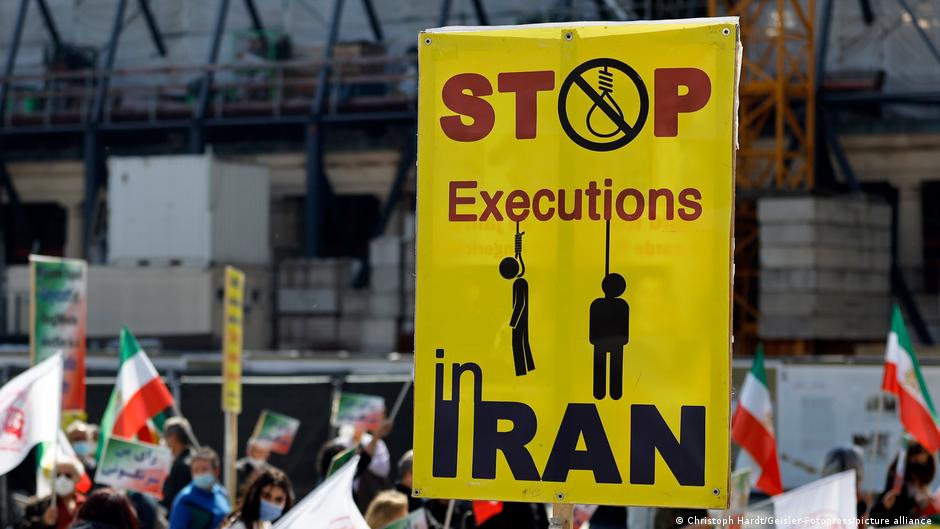
Iran has executed 14 individuals in recent weeks, with the hangings continuing unabated regardless the US-Israeli military campaign against the country. The Iranian authorities launched a new wave of executions of people believed to be political prisoners in March, even as the US and Israel were conducting airstrikes against the Islamic Republic. The clerical regime has executed 14 individuals since the war started in late February.
On March 18 — two days before Nowruz, the Persian new year — Iran executed Kouroush Keyvani, a dual Iranian-Swedish national, on charges of spying for Israel. He had been arrested during the 12-day war between Iran and Israel last year for allegedly photographing sensitive areas. A day later, three young men were executed for their involvement in mass protests in January, the first hangings Iran carried out related to the nationwide demonstrations that ended in a bloody clampdown.
In the following days, several other people were hanged on charges of rebellion over membership of the banned People's Mujahedin of Iran (MEK), a banned opposition group. Even on "Sizdah Bedar" — the 13th and final day of the Persian new year festivities — executions continued. Amirhossein , an 18-year-old who was detained during the nationwide unrest in January, was hanged to death.
To view this video please enable JavaScript, and consider upgrading to a web browser that supports HTML5 video More hangings followed in the days after Nowruz festivities. Raha Bahreini, an Iran expert at Amnesty International, said there are "at least two dozen" political prisoners facing an imminent risk of the death penalty. "These include those arrested during the January protests, individuals whose trials date back to the 'Woman, Life, Freedom' movement , and people with actual or alleged ties to Kurdish parties, the People's Mujahideen, or other opposition groups," she told DW.
Also among them are "individuals who were forced to make 'confessions' under torture and are now facing charges of espionage or vague allegations such as moharebeh (war against God), baghi (rebellion against the Islamic government), or 'corruption on earth,'" the expert added. Even before the US-Israel war against Iran began, Amnesty warned that at least 30 prisoners linked to the January protests were at risk of execution — including two minors. Seven of them have since been hanged to death.
Legal scholar Afrooz Maghzi described the jump in executions during the war as "entirely predictable" and a repetition of a pattern that was already evident in the 1980s. She also warned of a "dangerous trend," saying that the theocratic regime is exploiting political rhetoric from abroad — such as statements by US President Donald Trump and Israeli Prime Minister Benjamin Netanyahu — to legitimize repression at home. If there is talk abroad of "insurgent groups" or "forces within the army or military institutions loyal to the monarchist movement," the Iranian government could use those narratives to portray civilian protests as "armed operations" or "foreign-directed terrorism," Maghzi told DW.
To view this video please enable JavaScript, and consider upgrading to a web browser that supports HTML5 video She also pointed to an increase in the number of "unknown individuals" — people about whom no information exists and who apparently had no access to sensitive data — being executed on charges of espionage since the war broke out. Describing this as a new development, Maghzi said the regime wants to project an artificial "image of strength" in times of conflict. Of the 14 people executed over the past six weeks, six were killed for alleged membership in the banned group MEK.
Maghzi said Iranian authorities were deliberately using this group to portray the entire protest movement as "militaristic." People living abroad need to debunk the Iranian regime's narrative, said Maghzi. "Keep emphasizing that those executed are teachers, students, and ordinary citizens — not armed fighters," she underlined. The expert also stressed the need to raise the political costs for Tehran.
"International talks with Tehran should be clearly conditional on stopping the executions," she said. Iran is the world's most prolific executioner after China , according to rights groups. Last year it hanged at least 1,500 people, according to figures from Iran Human Rights (IHR).
Since 1979, the UN General Assembly has passed as many as 72 resolutions, and the UN Human Rights Council 17 motions, urging Iran to address serious concerns regarding human rights violations in the country. Yet, according to Amnesty expert Bahreini, the government remains wholly indifferent. She said the regime deliberately uses the death penalty to intimidate people — especially now that the population is simultaneously suffering the devastation wrought by war.
While public pressure plays a key role in democratic countries, Bahreini also noted that it is particularly difficult to draw attention to executions during wartime, as the media and the public focus more on military developments. To view this video please enable JavaScript, and consider upgrading to a web browser that supports HTML5 video Bahreini emphasized the importance of countries that have economic ties with Iran — particularly in Asia, Africa, and Latin America. She said Iranians living there should try to raise awareness of the issue among local media and civil society.
Rights activists also urge the international community to make it clear to the Iranian judiciary and security officials that the state of war does not equal perpetual impunity for their crimes.