Iran war: Strikes on steel deal painful blow to economy
Iran War: Strikes on Steel Mills Deal a Heavy Economic Blow
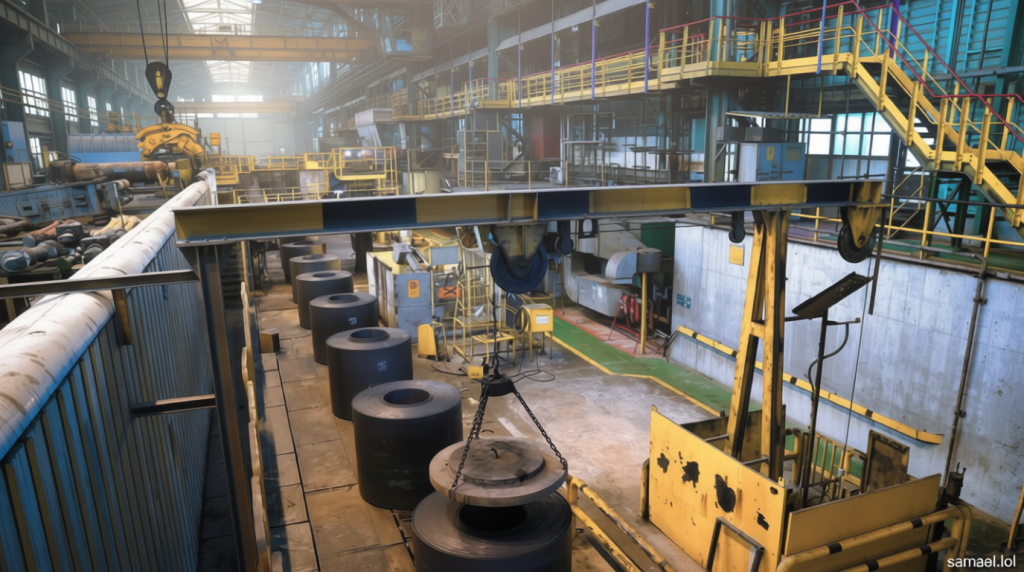
The US-Israeli strikes on Iran’s two primary steel mills have sparked significant debate over their economic and strategic implications. While the attacks may weaken Tehran’s military preparedness, their impact on Iran’s industrial backbone is seen as potentially catastrophic. The destruction of Mobarakeh Steel in Isfahan and Khuzestan Steel in Ahvaz has ignited discussions about whether these facilities were justified as military targets or if they represent a broader assault on Iran’s civilian infrastructure.
Strategic and Economic Ramifications
Iran’s steel industry is a cornerstone of its economy, contributing billions to state revenue. In 2025, the country ranked among the world’s top crude steel producers, with annual output reaching approximately 31.8 million tons. Mobarakeh Steel alone generated $860 million in exports between March 2025 and January 2026, underscoring its critical role in sustaining Iran’s financial stability.
“The longer the war continues, the more capital and state resources will be diverted toward conflict and away from managing Iran’s already crisis-hit economy,” said an Iran-based economist. “The deeper effects may become clearer only after the war, but even now, Iran is grappling with war damage alongside sanctions, inflation, and long-term economic mismanagement.”
Industry Disruption and Recovery Challenges
Damage to power infrastructure and storage facilities at both plants has disrupted production, with Khuzestan Steel reportedly halting operations. Experts warn that the strikes could ripple through Iran’s supply chains, affecting industrial employment and export capabilities. Steel manufacturing relies heavily on a steady electricity supply; hits to power units or production lines often have broader consequences.
“Parts of the steel industry operate on narrow margins. If those sections are badly damaged, rebuilding them may no longer make economic sense,” noted Alireza Salavati, an economic activist. “In such cases, importing steel could become more cost-effective than repairing damaged units.”
Reports indicate that critical components like power generation units and alloy-steel production lines were targeted. Analysts estimate direct losses at $5 billion to $6 billion, but the broader economic fallout could be far greater, spreading into construction, manufacturing, and downstream sectors. The US Treasury has historically viewed Iranian steel as a vital revenue stream, with sanctions targeting entities linked to Mobarakeh Steel in 2020.
To view this video, enable JavaScript and upgrade to a web browser supporting HTML5 video. The strikes mark a turning point in Iran’s economic resilience, as the nation faces compounded challenges from war, sanctions, and internal inefficiencies. If the conflict persists without political concessions, skilled workers may flee, further complicating recovery efforts.