Iran war: Trump orders Strait of Hormuz naval blockade
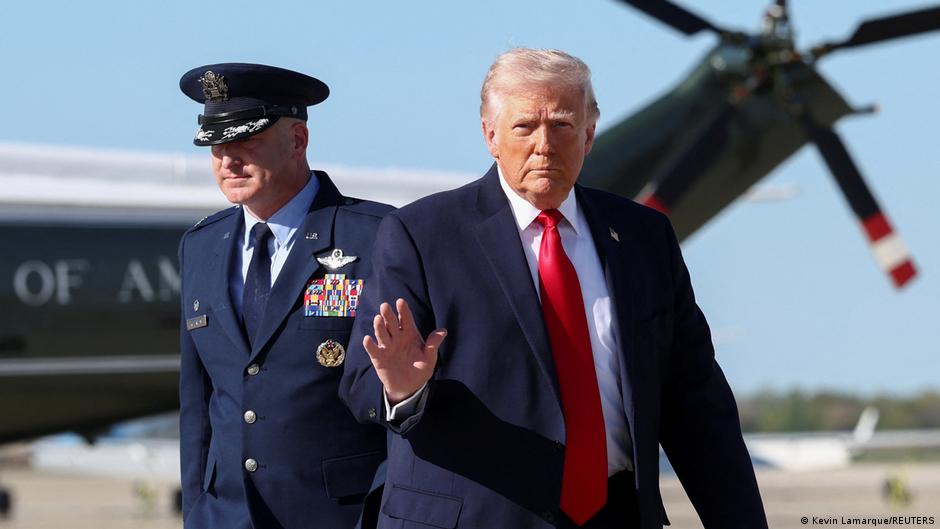
Iran war: Trump orders Strait of Hormuz naval blockade
Blockade announced following stalled peace talks
On April 12, 2026, US President Donald Trump declared that the Navy would initiate a blockade of the Strait of Hormuz “effective immediately.” This decision emerged after diplomatic efforts between the United States and Iran failed to produce a resolution. The talks, held in Islamabad, concluded without a breakthrough, leaving the fragile two-week ceasefire under question.
“Effective immediately, the United States Navy, the Finest in the World, will begin the process of BLOCKADING any and all Ships trying to enter, or leave, the Strait of Hormuz,” Trump stated on Truth Social.
Trump highlighted the primary obstacle as Iran’s nuclear program, which he said had been a recurring issue in negotiations. He also directed the Navy to target vessels in international waters that had paid a toll to Iran, declaring that those who did so would face unsafe passage. “Any Iranian who fires at us, or at peaceful vessels, will be BLOWN TO HELL!” he warned, stressing Iran’s responsibility for escalating the crisis.
Iranian delegation criticizes US demands
Iran’s parliamentary speaker, Mohammad Bagher Ghalibaf, attributed the talks’ failure to “unreasonable” and “excessive” US requirements. Ghalibaf, who was part of the Iranian delegation, expressed skepticism about American intentions, citing past conflicts as reasons for distrust. “Before the negotiations, I emphasized that we have the necessary good faith and will, but due to the experiences of the two previous wars, we have no trust in the opposing side,” he wrote on social media.
“My colleagues on the Iranian delegation raised forward-looking initiatives, but the opposing side ultimately failed to gain the trust of the Iranian delegation in this round of negotiations,” Ghalibaf added.
The 21-hour peace talks in Pakistan ended without progress, with the US delegation, led by Vice President JD Vance, accusing Iran of not committing to abandon its nuclear program. “We need an affirmative commitment that they will not seek a nuclear weapon, nor the tools to achieve it swiftly,” Vance stated. Iran, however, maintained its stance, asserting it would not halt its efforts to solidify recent defense gains.
Pakistan’s role as mediator
Pakistan, acting as a mediator, emphasized the importance of maintaining diplomatic dialogue despite the stalemate. A government source told DW, “US-Iran talks are expected to continue quietly through backchannels. The current pause does not mark the end of diplomacy. Engagement between the two sides remains ongoing.”
The strategic Strait of Hormuz remains a key concern, as any disruption could derail global oil shipments, raise energy prices, and intensify regional instability. For Pakistan, the situation requires careful management, balancing potential diplomatic influence with the goal of avoiding conflict and safeguarding its economic interests.
Osama Malik, a political and legal expert, noted, “The mood in Islamabad is not of complete disappointment. While Pakistanis had high hopes from these talks, there was also a realization that these discussions may be a prolonged process. There is immense pride in holding these talks and organizing everything perfectly as far as logistics are concerned.”
Iran’s delegation departed Pakistan on Sunday after marathon negotiations with the US yielded no agreement. The semi-official Mehr News Agency (MHA) reported that the failure was due to Iran’s refusal to meet what it deemed overly strict US conditions. Meanwhile, US warships briefly entered the Strait to investigate mine threats, while Iran denied any military transits through the waterway.