Local elections in Serbia: Is Vucic’s party losing its grip?
Local Elections in Serbia: Is Vucic’s Party Losing Its Grip?
Despite maintaining control in local elections across Serbia, the ruling Serbian Progressive Party (SNS) faced challenges that hint at a changing political dynamic. While the results confirmed SNS’s continued dominance, the slim victories in some areas raised questions about the party’s grip on power. President Aleksandar Vucic celebrated the outcome, declaring,
“Thank you all. The score is 10-0. Thank you, Serbia, for the enormous trust.”
This sentiment underscored the party’s triumph, though the margin of success varied significantly in certain regions.
Electoral Landscape and Concerns
With 247,985 citizens eligible to vote, the elections were held in 10 municipalities. On the surface, the SNS’s dominance remained unchallenged, securing wins in every region. Yet, behind the scenes, the results revealed complexities that could signal growing unease. Issues like media control, state resource allocation during campaigns, and the practice of functionary campaigning—where public officials used their positions to bolster SNS—were again highlighted as potential threats to fair play.
Irregularities and Escalation
Election day saw recurring problems, but this time, they reached new levels. Reports mentioned vote-buying, voter pressure, and parallel lists, alongside the “Bulgarian train” method of fraud. Voters were handed pre-filled ballots, and ballot secrecy was compromised in many instances. Coordinated efforts to influence outcomes included organized transportation of voters and systematic tracking of turnout, creating a more intense environment than before.
Violence and Perception
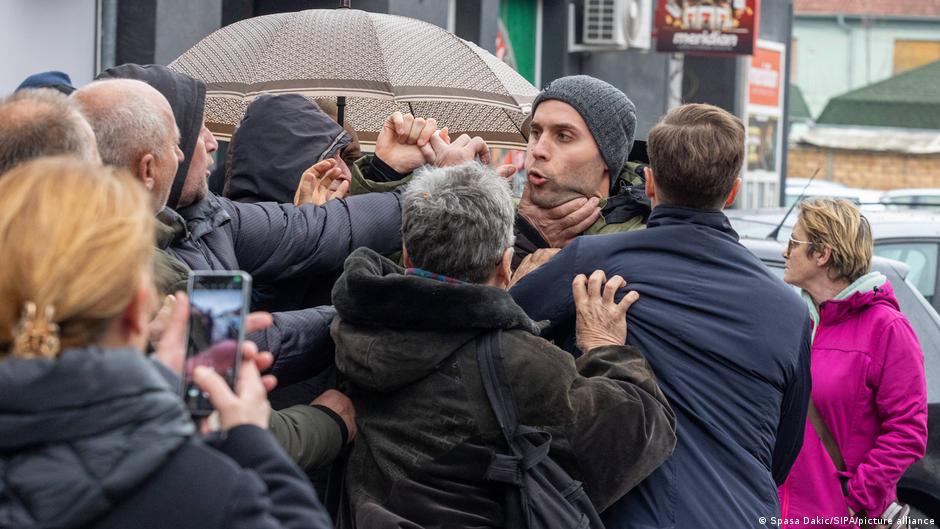
Observers noted alarming instances of violence, including masked individuals wielding sticks and axes, chasing citizens and attacking journalists. Injuries, hospitalizations, and disrupted observations were reported, with some describing the day as “terror against citizens.” Though these acts were attributed to political coordination, officials and pro-government media tried to reframe them as efforts to protect democracy from “blockaders.” The police, however, seemed unable to contain the chaos, with delayed responses and insufficient intervention fueling doubts about institutional support.
Narrow Margins and Implications
SNS’s narrow wins in several municipalities suggested a potential shift in public sentiment. In regions traditionally strongholds for the party, the victories hinged on small margins—sometimes just a few hundred votes. Dusan Spasojevic, a political sciences professor in Belgrade, noted that such results indicate the party may be facing declining support. “In at least three or four areas, the outcome depended on one or two seats,” he explained, highlighting the need for coalition partners for the first time in SNS’s history.
Emerging Cracks in the System
While the results don’t yet mark a definitive turning point, they point to vulnerabilities in the ruling system. Spasojevic emphasized the importance of unified action among opposition groups, students, and civil society to challenge the status quo. Nedeljkov, from the Center for Research, Transparency and Accountability, stressed the urgency of addressing these issues to prevent further erosion of democratic norms. The election day, though chaotic, remains a critical moment in Serbia’s political trajectory.