Mediterranean sharks are vanishing in a legal void
Mediterranean Sharks Are Vanishing in a Legal Void
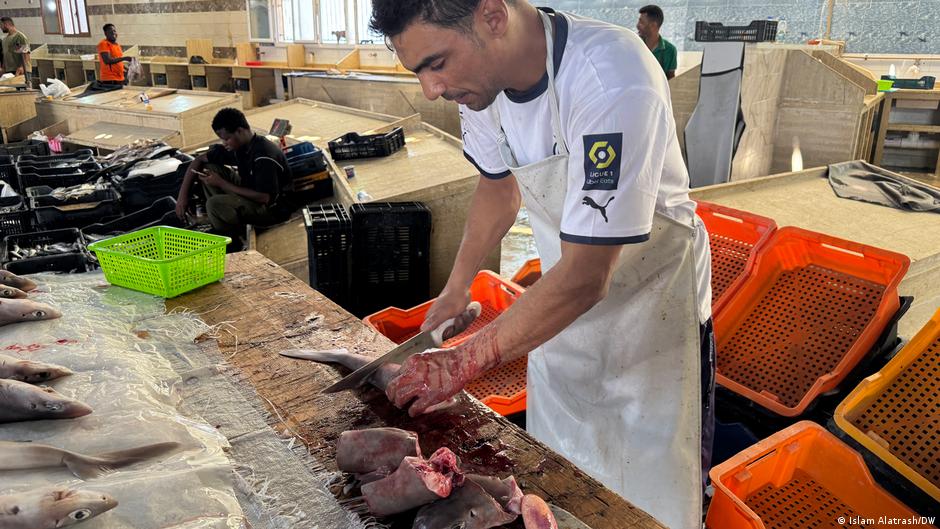
Libya’s coastal waters are witnessing a troubling trend: sharks, including pregnant females, are being sold without regulation. The lack of enforcement and economic hardship on local fishers have driven the overharvesting of vulnerable species toward extinction. At Tripoli’s fish market, traders loudly advertise trays filled with octopus, squid, and shrimp. Yet, among these common catches, some trays hold sharks whose bellies are still distended with eggs. These include longnose spurdogs, known locally as “kalb al-bahr,” often seized during their breeding season.
“We catch them even though we know they are carrying eggs,” said an anonymous fisherman. “We sell them in the market because they bring money.”
The longnose spurdog has a slow reproductive cycle, producing only one to six pups per pregnancy. This makes it especially susceptible to prolonged fishing pressure. While this species is under threat, others face similar risks. A 2021 study revealed that oceanic shark and ray populations have declined by 71% since 1970. According to IUCN data, nearly 38% of shark and ray species are now classified as endangered.
Marine biologist Sara Al-Mabrouk noticed this alarming trend through social media images of sharks being pulled from Libyan waters. She initiated a campaign by connecting with fishers via online platforms, encouraging them to share photos and details about the species they encountered. “We have achieved a lot through social media alone,” she told DW. Her efforts expanded into a broader awareness initiative, and her name became synonymous with shark conservation efforts in the region.
Al-Mabrouk also collaborates with local radio stations and engages directly with fishermen to explain the ecological significance of sharks. “The moment I realized my efforts were making an impact was when a fisherman contacted me to say he had found a small pregnant shark and returned it to the sea,” she shared. Despite this progress, she remains cautious about the longnose spurdog’s status, which is listed as “data deficient” on the Red List. “If the situation continues unchanged, further declines in its numbers are likely over the next decade,” she warned.
Libya’s fisheries law, established in 1989, allows authorities to regulate fishing seasons and equipment. However, it is not strictly enforced, particularly in offshore areas where compliance from the fishing fleet is minimal. The law also lacks a prohibited species list, leaving many sharks unprotected. Regional coordination for monitoring shared waters and enforcing conservation measures is similarly limited. Though modern techniques often fail to distinguish between species, some fishers are beginning to show awareness. “We must protect the sea,” said Abdullah Al-Fitouri, a small-scale fisherman near Tobruk. His words reflect a growing recognition of the need to preserve these vital marine predators.