Myanmar junta chief elected president — what comes next?
Myanmar Junta Chief Elected President — What Comes Next?
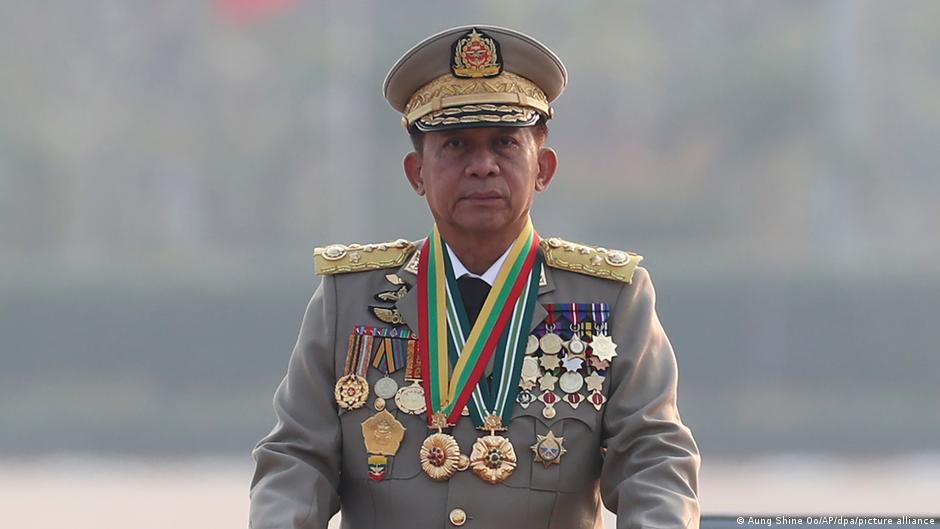
Min Aung Hlaing, the leader of Myanmar’s military regime, has assumed the role of president, marking a shift from uniformed command to civilian leadership. However, this change does not signal a departure from the authoritarian framework that has governed the country since the 2021 coup. The new parliament confirmed his presidency on April 3, reinforcing the junta’s continued influence under the pretense of civilian rule.
Min Aung Hlaing secured 429 of 584 votes in a legislative body dominated by the military-backed Union Solidarity and Development Party (USDP) and a separate bloc of lawmakers appointed by the junta. The election process was the result of a tightly controlled transition aimed at keeping the armed forces at the core of power. This move follows the February 2021 coup that ousted Aung San Suu Kyi’s National League for Democracy (NLD) government, plunging the nation into civil conflict.
After years of military rule, the NLD achieved landslide victories in 2015 and 2020, forming civilian administrations. Yet, the generals accused the party of electoral fraud, despite international observers finding no substantial irregularities. The coup disrupted the country’s political progress, leading to widespread violence. Five years later, the conflict persists, with the military retaining control of major cities and state institutions, but struggling to hold the majority of the country’s territory.
The UN reported that approximately 6,800 civilians and 3.6 million people have been displaced since the coup. Other groups estimate the death toll to be even higher. The recent elections, which paved the way for Min Aung Hlaing’s leadership, were unlikely to end the bloodshed. Voting occurred in only 265 of Myanmar’s 330 townships due to ongoing clashes. The UN, Western governments, and rights organizations criticized the process as neither free nor fair, with anti-junta parties excluded and dissent effectively criminalized.
Structural Moves to Preserve Control
Min Aung Hlaing has introduced new mechanisms to ensure military authority remains unchallenged. The Union Consultative Council, a five-member body, is positioned above the executive, legislative, and judicial branches, according to analysts. This setup allows the junta to consolidate power across institutions they still dominate, rather than relinquish it.
“The transition to a ‘civilian government’ is not democratization, but an attempt to formalize the military regime and treat the 2021 coup as a fait accompli,” said Yoshihiro Nakanishi, a professor at Kyoto University’s Center for Southeast Asian Studies.
Aung San Suu Kyi, now 80, is serving a 27-year sentence for charges like corruption. The USDP claimed 81% of the elected seats, while the constitution reserves a quarter of parliamentary positions for military appointees. These measures, combined with the Union Consultative Council, underscore the junta’s strategy to maintain control.
Energy Crisis and Economic Strain
Myanmar’s economy has been devastated by war, sanctions, capital flight, and chronic electricity shortages. The nation’s dependence on refined fuel imports from Singapore and Malaysia makes it susceptible to surging oil prices and shipping disruptions through the Strait of Hormuz. Rising costs are expected to increase transport expenses, inflation, and daily struggles in cities already grappling with blackouts.
The junta has already implemented fuel rationing for private vehicles, intensifying economic hardship. Moe Thuzar, a senior fellow at ISEAS–Yusof Ishak Institute, noted to DW that the energy crisis poses a significant challenge to efforts to stabilize the economy while managing resistance across the country.
“The civil war situation in Myanmar over the past five years has not abated; neither has the military’s determination to ‘conduct effective combat against terrorists,’ as it terms the resistance,” said Thuzar.
Myanmar’s path toward stability remains uncertain, with the junta’s grip on power and the nation’s economic woes persisting as critical obstacles.