NASA’s Artemis II set to take off for moon voyage
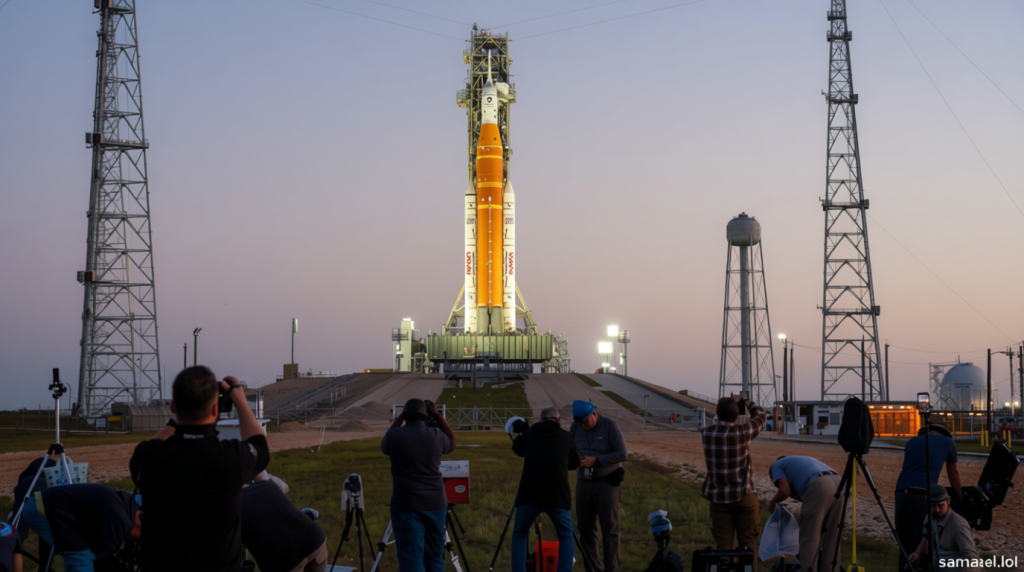
NASA’s Artemis II Aims for Lunar Return
Artemis II represents a significant milestone in space exploration, marking the first time humans will venture beyond the moon’s orbit since the Apollo missions ended in 1972. The mission’s 10-day journey around the lunar vicinity will set a new record for the farthest human distance traveled in space, reaching approximately 252,000 miles (406,000 km) from Earth.
Launch Details and Crew Preparation
The spacecraft, carrying four astronauts, is set to launch from NASA’s Kennedy Space Center in Florida. The towering 322-foot (98-meter) Space Launch System (SLS) rocket will be topped with the Orion crew capsule, with liftoff scheduled as early as 6:24 p.m. local time (2224 GMT). Weather forecasts currently support the launch, but NASA retains flexibility to delay until April 6 if conditions deteriorate. A second attempt would be possible by April 30 if needed.
The crew, which includes NASA’s Christina Koch, Victor Glover, Reid Wiseman, and Canadian astronaut Jeremy Hansen, arrived in Florida from Houston earlier this week after completing a two-week quarantine. This preparation ensures they are in optimal health for the mission’s demanding timeline.
Mission Objectives and Future Goals
Unlike previous lunar missions, Artemis II will not involve landing on the moon’s surface. Instead, the astronauts will travel several thousand miles beyond the moon, execute a course correction, and return to Earth. During the flight, they will test vital systems of the Orion capsule, such as life-support mechanisms, crew interfaces, and communication protocols.
Though the mission itself is uncrewed, it is a crucial precursor to NASA’s long-term vision. The agency plans to establish a sustainable lunar base by 2028, with Artemis II serving as the foundational step toward that goal. The mission also underscores the agency’s ambition to collaborate with international partners, including China, which is set to conduct its first crewed lunar landing soon.
To view this video, please enable JavaScript and upgrade to a web browser that supports HTML5 video.