NATO’s eastern members brace for US disengagement
NATO’s Eastern Members Brace for US Disengagement
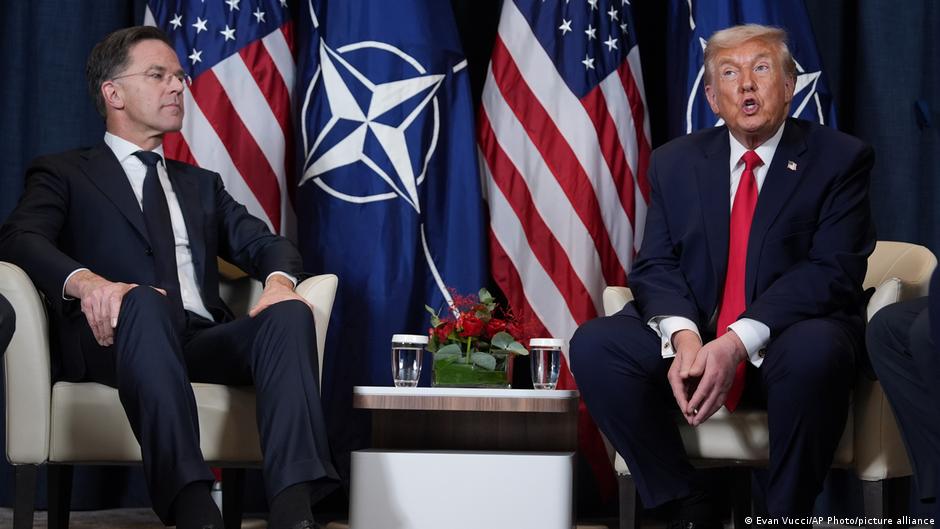
As Donald Trump’s skepticism toward NATO intensifies, the alliance’s eastern members, particularly the Baltic nations, are recalibrating their strategies. During the recent six-week conflict between the U.S. and Israel against Iran, several NATO countries took a different path from their Western counterparts. While some allies hesitated to endorse military operations, others actively opposed the use of their military assets, the Baltic states opted to align more closely with Washington’s efforts.
Baltic Support Amidst US Doubts
The Baltic nations justified their backing of Operation Epic Fury, emphasizing Iran’s nuclear program and its role in fueling Russian aggression in Ukraine. Latvia’s president, Edgars Rinkevics, framed the operation as a necessary response to these threats. These countries also welcomed the assassination of Iran’s Supreme Leader in late February, viewing it as a turning point for the nation’s political direction.
“We cannot say with one hand that the presence of US troops on the territory of Lithuania is a matter of course and we simply accept it as a given, but when we are asked to contribute to international missions, we say that this is none of our business,” said Lithuanian president Gitanas Nauseda in a recent interview.
Estonia expressed willingness to deploy demining ships to the Strait of Hormuz, while Lithuania demonstrated a more aggressive stance, ready to offer troops if called upon. For the Baltic states, maintaining ties with the U.S. is essential to safeguarding their security against Russian expansionism.
Defense Spending and Strategic Shifts
This week, Russian Foreign Ministry spokesperson Maria Zakharova warned the Baltic states of “serious consequences” for alleged drone incursions into Russian airspace. The countries dismissed these claims. Since the conflict began, the Baltic states have once again been recognized as “model allies” by U.S. officials, including Secretary of Defense Pete Hegseth.
Like Poland, the Baltic nations were among the first to commit to increasing defense spending. By 2025, Poland had allocated 4.5% of GDP, Lithuania 4%, Latvia 3.7%, and Estonia 3.4%, surpassing U.S. investment of 3.2%. According to Sergejs Potapkins of the Latvian Institute of International Affairs, this approach reflects an “established signature style” aimed at avoiding Trump’s scrutiny and sustaining the alliance’s favor.
Deterrence by Denial and National Responsibility
The current strategy of deterrence by denial relies on the idea that adversaries will refrain from attacking NATO territories if they believe success is uncertain. This contrasts with the earlier approach of deterrence by retaliation, which the Baltic states found less appealing due to the risk of partial occupation. A 2025 poll in Latvia revealed that only 43% of respondents believed NATO would defend the country in an attack, with 41% doubting this commitment.
Struberga, secretary general of the Latvian Transatlantic Organisation, highlighted the importance of national guards as a volunteer force. “Latvians are increasingly realizing that there’s no separate NATO army, but rather that ‘NATO is us,'” she explained to DW. “While compulsory service and professional troops provide some coverage, their numbers are not enough. We need National Guards to ensure Russia cannot occupy our region.”
As the U.S. reduces its involvement in NATO, Potapkins points to the deployment of multinational military units in the Baltic states. Lithuania, for instance, hosts the German 45th Armored Brigade, illustrating a broader shift toward shared responsibility and regional preparedness.