OECD: Development aid plummets in 2025 amid USAID gutting
OECD: Development aid plummets in 2025 amid USAID gutting
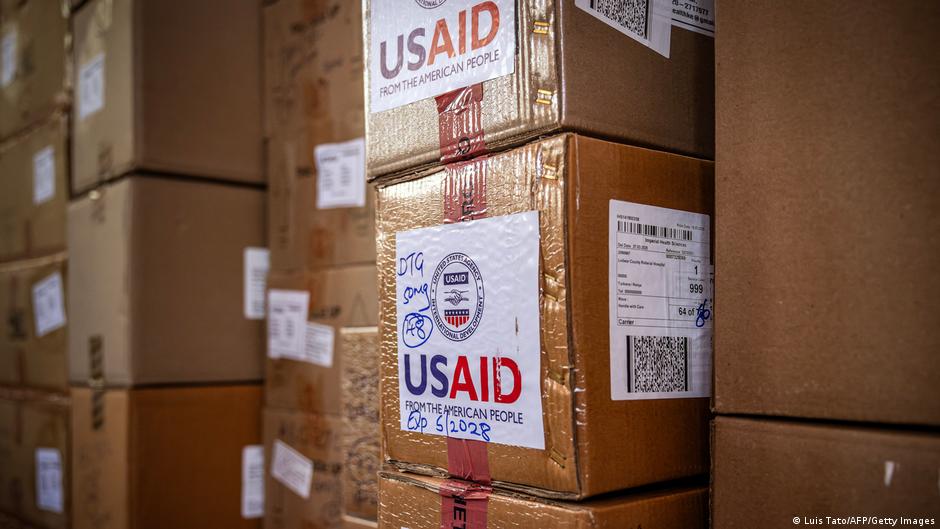
The Organisation for Economic Cooperation and Development (OECD) reported that international development aid spending dropped by over 20% in real terms last year, marking the largest decline in recorded history. This unprecedented fall was largely driven by the United States, which cut its official development assistance by more than half, shifting Germany into the position of the world’s top donor. Despite Germany’s own international aid goals being missed, its contributions fell to 0.56% of gross national income (GNI), down from 0.68% in 2024, according to figures from the Development Assistance Committee (DAC).
Germany’s total ODA amounted to $29.09 billion in 2025, but excluding funds allocated for refugee support within the country, the share further dropped to 0.46%. Nonetheless, this shift left the US as the second-largest donor, with the European Union (EU) institutions and the United Kingdom following closely behind. The OECD described the trend as a “deeply concerning” development, emphasizing the shockwaves from sustained cuts by major contributors.
OECD’s Warning on Global Aid Trends
“This massive reduction in ODA underscores the urgency to optimize resources and create more impactful investments,” remarked OECD Secretary-General Mathias Cormann. The organization also predicted a continued, albeit smaller, decline of 5.8% in 2026, adding that the prolonged downward trajectory is creating a “massive disruption” in global aid systems.
“The message is extremely sombre,” said Carsten Staur, chair of the OECD assistance committee, during a press conference on Thursday. He highlighted the alarming trend as a turning point for international development efforts.
Ukraine’s Aid Amid Global Retreat
Net bilateral aid to Ukraine dropped by 38.2% in 2025, according to OECD data, due to the US’s sharp cutbacks under Trump’s return to the presidency. However, the overall donations to Ukraine reached $44.9 billion, a 18.7% rise from 2024, making it the largest single recipient of ODA in history. This figure exceeded combined bilateral aid to less developed nations and sub-Saharan Africa, which totaled $28.1 billion and $29.2 billion, respectively.
Bilateral development grants saw the steepest decline at 29.3%, compared to a 10.3% drop in loan-based contributions. Meanwhile, multilateral aid funding fell by 12.7%, reflecting a broader trend of reduced global generosity.
Concerns Over Geopolitical Impact
Experts warned that the US’s aid cuts jeopardize global stability. Security analyst Philipp Rotmann of the Global Public Policy Institute argued that the reductions contradict Germany’s security interests, creating a “deadly gap” that Russia and China could exploit. “The world’s on fire, yet Germany keeps shrinking its commitments,” said Oxfam Germany’s chairwoman, Charlotte Becker, stressing the life-threatening consequences of the decline.
“This is a dangerous downward spiral,” stated church charities Brot für die Welt, Misereor, Caritas International, and Diakonie in a joint statement, criticizing the ongoing erosion of aid funding.