‘Peacemaker Pakistan’: Reality or facade?
Peacemaker Pakistan: Reality or Facade?
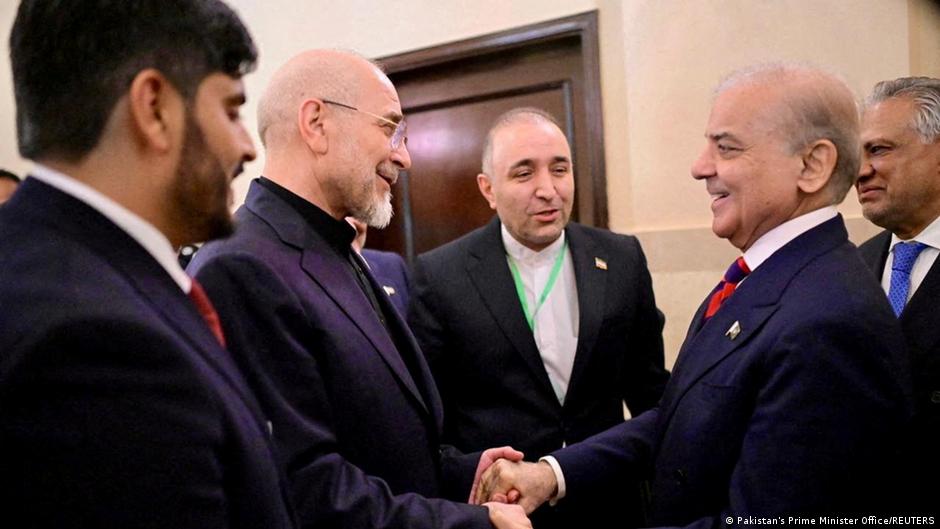
Despite recent praise for its role in easing tensions between Iran and the United States, Pakistan’s position as a global peacemaker remains under scrutiny. The country’s mediation efforts during high-stakes talks in Islamabad from April 11 to 12 were acknowledged internationally, even as its domestic and regional challenges persist. With an active conflict against Kabul and a crackdown on opposition forces, Islamabad faces questions about its credibility as a mediator.
The US-Iran negotiations, though unsuccessful in securing a peace agreement, highlighted Pakistan’s diplomatic influence. The Iranian delegation expressed gratitude for Islamabad’s facilitation, while US President Donald Trump commended Prime Minister Shehbaz Sharif and Field Marshal Asim Munir for their contributions. “They are very extraordinary men and continuously thank me for saving 30 to 50 million lives in what would have been a horrendous war with India,” Trump wrote on social media.
“The simple fact is that we need to see an affirmative commitment that they will not seek a nuclear weapon, and they will not seek the tools that would enable them to quickly achieve a nuclear weapon,” said JD Vance, who led the US delegation during the talks.
Though the ceasefire deadline on April 22 looms, the talks between Iran and the US are currently stalled. Analysts suggest that Pakistan’s ability to act as a peacemaker depends on its progress with regional neighbors. Farooq Sulehria, a Pakistani political observer, pointed out that “Pakistan’s international peacemaker image clashes with its own struggles, particularly with Afghanistan and India.” The ongoing war with Kabul and the May 2025 military clashes in Kashmir, linked to the Pahalgam attacks, underscore this tension.
“Ironically, while Pakistan was playing the role of a peacemaker internationally, China hosted a week-long round of talks between Kabul and Islamabad to end ongoing hostilities between the two,” Sulehria noted.
Relations between the Taliban-led government in Kabul and Islamabad have soured since the Islamist group took control of Afghanistan in 2021. Since last year, the Pakistani air force has been directly targeting areas in Afghanistan it describes as militant strongholds. This conflict reflects a broader ideological stance, with some experts arguing that Pakistan’s focus on India is central to its foreign policy, and its rivalry with Kabul is an extension of that.
“What looks like a dichotomy is actually a strategic balance,” said Fatemeh Aman, an Iran-Pakistan specialist. “Pakistan’s engagement with the US and Iran serves diplomacy and regional relevance, while its dealings with Afghanistan are driven by immediate security needs and internal pressures.”
Raza Rumi, another political analyst, echoed this view, stating that “Islamabad’s dual approach in handling US-Iran tensions and Afghan conflicts operates in distinct contexts. The former involves low-risk diplomacy, whereas the latter confronts stability challenges tied to militancy and border disputes.” This perspective frames Pakistan’s actions as necessary responses to varying pressures, rather than a contradiction in its role.
To view this video, enable JavaScript and upgrade to an HTML5-compatible browser.
To view this video, enable JavaScript and upgrade to an HTML5-compatible browser.