Should travel content creators be promoting Afghanistan?
Should travel content creators be promoting Afghanistan?
Amid the pursuit of online engagement, some travel influencers face scrutiny for showcasing Afghanistan while overlooking its current political challenges. Sensational headlines, often in all caps, dominate social media feeds, drawing attention to the country’s unique landscapes and cultures. This trend has led to a surge in videos from destinations that are not typically on mainstream tourist routes. Influencers frequently highlight exotic settings, yet the grim realities of Taliban governance are sidelined in favor of visual appeal.
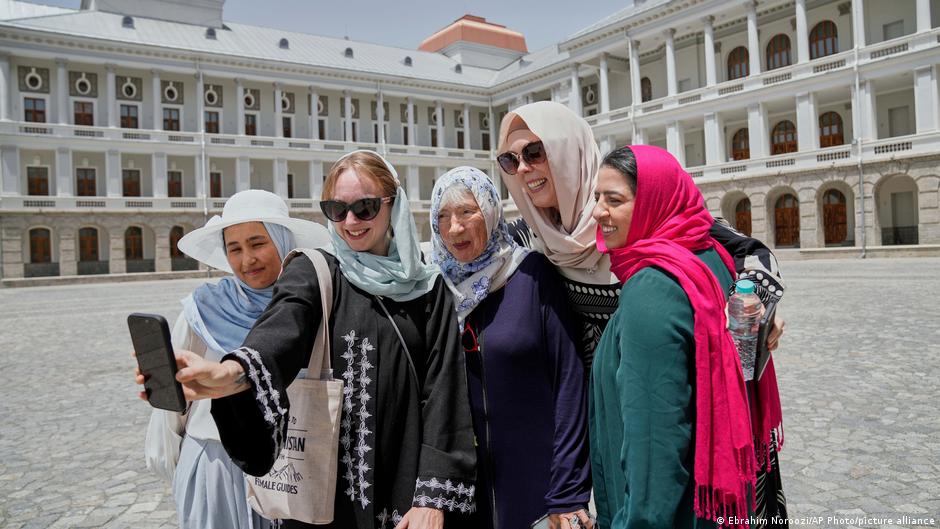
Zoe Stephens, a content creator from Liverpool, has visited Taliban-controlled Afghanistan multiple times, including a recent stint lasting several months. Through her YouTube channel and Instagram, she has shared detailed footage of her experiences, including a multi-part series on women’s conditions. Of the six creators contacted for this piece, Stephens was the sole one willing to address the issue publicly. She argues that her approach offers a more comprehensive view than others who often spend only a few days there. “That’s also why I have fewer followers compared to most,” she explains. “I refuse to do the sensationalist stuff.”
Questioning the Message
Other creators, however, focus on the more dramatic aspects of their trips. Some film themselves conversing with Taliban members, describing them as “super nice,” before visiting popular spots for visually striking content. These videos often trigger backlash in the comment sections, with critics accusing them of indirectly endorsing the regime. “You shouldn’t publicly recommend travel to Afghanistan. Making this inhumane country appealing is morally questionable,” one YouTube user writes.
Claudia Paganini, a philosopher at the University of Innsbruck, agrees. Having studied media ethics for years, she notes that influencers prioritize a destination’s visual characteristics over its broader context. “Many problems can’t be captured in a social media video,” she says. She also acknowledges that the range of content varies: “This criticism applies more to some videos, and less to others.” While travel journalists typically follow a code of conduct, influencers lack formal guidelines, leaving their work open to interpretation.
Algorithms and Influence
Johannes Klaus, a blogger and founder of a travel writers’ platform, highlights the algorithm’s role in favoring sensational content. “Travel posts on social media are usually based on a sensationalist concept — this is the only thing that gets visibility,” he states. Even balanced reports struggle to gain traction, as platforms prioritize engagement over depth. Despite this, Stephens continues to offer factual insights, though she admits the effort is challenging in a country like Afghanistan. As a tour guide there, she balances her role with a commitment to presenting a truthful narrative.