Should Western influencers promote Taliban‑run Afghanistan?
Should Western influencers promote Taliban-run Afghanistan?
Amid the competition for online engagement, certain travel content creators face scrutiny for highlighting Afghanistan under Taliban governance while downplaying its challenging circumstances. Social media platforms like Instagram, YouTube, and TikTok are increasingly saturated with videos from destinations that are not traditionally considered tourist-friendly. These posts often feature eye-catching titles brimming with hyperbolic claims, such as “The worst country on earth” or “Traveling in the most dangerous country in the world,” which overshadow the complex realities of life in the region.
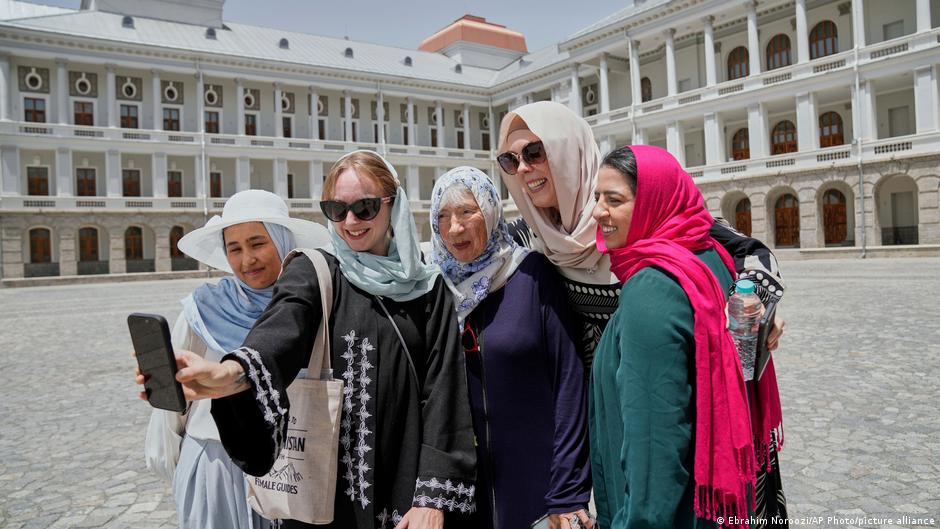
Zoe Stephens, a content creator from Liverpool, has visited Taliban-controlled Afghanistan multiple times, including a lengthy stay of several months. Through her YouTube channel and social media presence, she shares detailed accounts of her experiences, including a series exploring the status of women in the country. Stephens stands out as the sole creator among six contacted who openly addresses the topic. She argues that her approach offers a more comprehensive view, contrasting with others who often limit their time in the country to a few days. “That’s also why I have fewer followers than most,” she explains. “I refuse to do the sensationalist stuff.”
“You shouldn’t publicly recommend travel to Afghanistan. Trying to make this inhumane country appealing to viewers is morally questionable,”
One commenter on YouTube asserts, emphasizing concerns about influencers indirectly supporting the Taliban. Claudia Paganini, a philosopher at the University of Innsbruck in Austria, agrees. Her research into media ethics reveals a tendency for creators to focus on a destination’s visual appeal rather than its political or social context. This can be problematic in countries with authoritarian regimes that frequently trample human rights. “Many problems simply cannot be made visible in a social media video,” Paganini notes. She also acknowledges that not all content is equally problematic, acknowledging the diversity in quality across posts.
Johannes Klaus, a blogger who launched a platform for travel writers, highlights the absence of a standardized code of conduct for influencers. While travel journalists typically adhere to professional guidelines, content creators prioritize entertainment value. “There, it’s about entertainment. It has nothing to do with journalism,” Klaus states. Despite the existence of balanced reports, these are rarely rewarded by platform algorithms, which favor sensational content. As a result, videos featuring Taliban-related themes often garner millions of views, while Zoe Stephens’ more measured accounts attract fewer audiences.
Nonetheless, Stephens persists in her efforts to deliver factual insights, even acknowledging the difficulty of doing so in a country like Afghanistan. Her dual role as a tour guide there adds another layer to her mission, as she balances promotional content with critical commentary. Without clear regulations, the influence of such creators continues to shape public perception, often at the expense of deeper contextual understanding.