Syrian doctor faces deportation from Germany
Syrian Doctor Faces Deportation from Germany
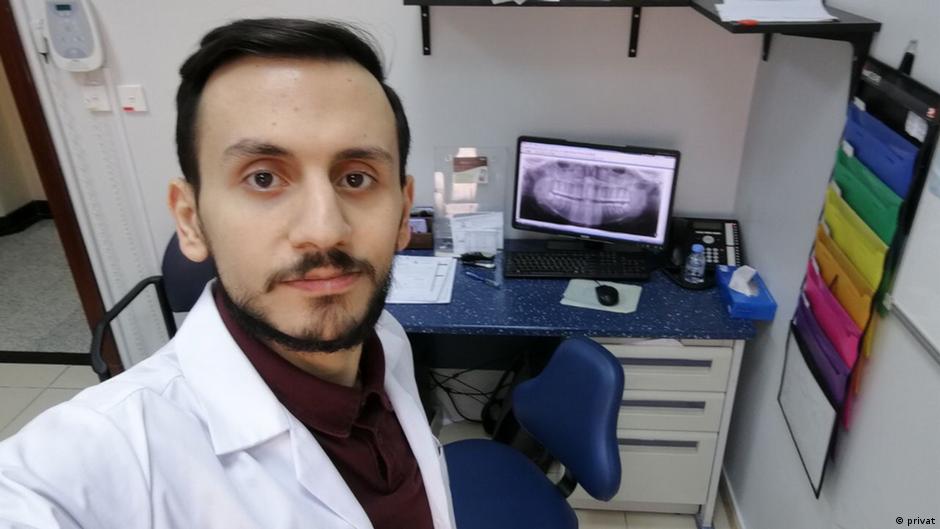
Chancellor Friedrich Merz has sparked controversy by stating that 80% of Syrians in Germany could be repatriated. This claim has raised questions about whether the country plans to remove individuals who are well-established and contribute to society. On March 20, just days before Merz and interim Syrian President Ahmed al-Sharaa discussed the potential return of hundreds of thousands of Syrians, Basel Gawish, a 31-year-old dentist, received a rejection notice from the Federal Office for Migration and Refugees (BAMF).
“I was completely shocked and devastated,” Gawish told DW. “I was kidnapped in Syria and fled through several countries. I would never have imagined that my asylum application would be rejected.”
Gawish, who has lived in Germany for two years, now faces a 30-day deadline to leave. He works as a trainee for an oral surgeon in Bühl, a small southern town, and volunteers as a translator for the German Red Cross and federal police, fluent in Arabic, English, and Turkish. “This is my country. I speak the language,” he said. “I want to stay. Two years ago, Germany gave me a roof over my head and supported me. I have great respect for that and want to give something back.”
Grannies Against the Right Support His Cause
Gawish’s case has drawn support from a citizen group known as “Grannies Against the Right,” which launched a petition titled “Basel Must Stay!” Nearly 30,000 signatures have been collected, with organizer Nadja Glatt aiming to double that number. “There is a shortage of dental professionals in Germany,” she explained. “It makes no sense to deport people like this. It’s completely crazy and just reckless. From the very beginning, Basel Gawish has done everything he can to integrate into German society.”
A Political Shift in Repatriation Goals
The 80% figure was mentioned during a press conference held by Merz and al-Sharaa at the end of March. Facing backlash, both leaders have since claimed the other introduced the idea during their Berlin meeting. Regardless of the attribution, Germany’s ruling coalition—comprising the CDU/CSU and SPD—seeks to encourage the return of nearly 950,000 Syrians currently residing in the country. A recent proposal by Hesse’s Interior Minister Roman Poseck (CDU), including repatriation by ship, aligns with this effort.
Marie Walter-Franke of the German Council for Integration and Migration (SVR) commented on the policy. “Deporting people who are well-integrated and easy to track down—such as at their workplace—isn’t necessarily what you’d want to do, but it’s the easiest to implement,” she said. “Those who register, secure employment, and even have children in school leave a clear administrative trail. We know where they live, where they go daily, and how to reach them.”
Walter-Franke, who specializes in refugee integration, has interviewed dozens of Syrians over the years, including those arriving after the fall of the Assad regime in 2024. She noted that the unstable situation in Syria and resource shortages have made return unlikely. “No one wants to go back,” she said. “The opposite is true—people are eager to stay and build a better life here.”