Taiwan opposition leader Cheng Li-wun makes rare China visit
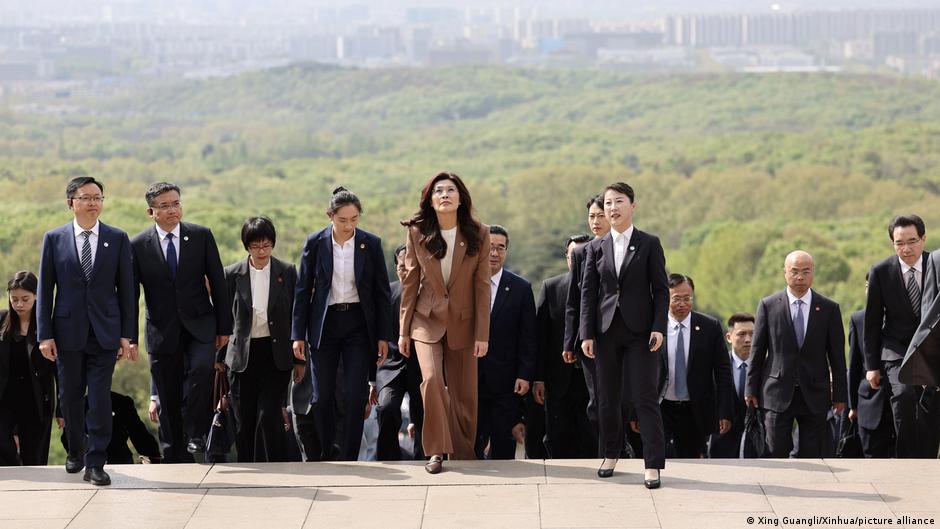
Taiwan Opposition Leader Cheng Li-wun Makes Rare China Visit
Cheng Li-wun, the leader of Taiwan’s Kuomintang (KMT), traveled to Nanjing, China, on Wednesday, marking a significant political event. Her visit to a memorial honoring Taiwan’s founding figure carried deep historical weight, as the city once served as the capital of the KMT-led Republic of China government before it moved to Taiwan in 1949. The trip, which is the first by a KMT leader to mainland China in ten years, highlights shifting dynamics in cross-strait relations.
Historical Roots and Current Tensions
Cheng’s presence in Nanjing underscores her role as a proponent of closer ties with Beijing. The KMT, historically associated with the Republic of China (ROC), contrasts with Taiwan’s ruling Democratic Progressive Party (DPP), which Beijing views as a separatist force. The DPP’s leadership has consistently criticized China’s assertive actions, calling for an end to its military advances and political pressure on Taiwan.
“The two sides of the Taiwan Strait are not doomed to war, as the international community has feared,” Cheng said, emphasizing the potential for peace. “I hope that today we plant the seeds of peace not only for Chinese people on both sides of the Strait, but for all humankind.”
Cheng’s invitation by President Xi Jinping in March was a notable gesture, though the meeting remains pending. Beijing maintains that Taiwan, officially known as the ROC, is a breakaway province destined for reunification. The current political climate has been strained since 2016, when the DPP’s Tsai Ing-wen assumed the presidency and openly challenged Beijing’s claims.
Reconciliation and Strategic Moves
During her visit, Cheng paid tribute to Sun Yat-sen, revered as the “father of the nation” in both Taiwan and mainland China. She acknowledged the KMT’s role in establishing Taiwan’s democratic system, while also reflecting on the 38-year period of martial law, described as the “white terror.” Simultaneously, she praised China’s economic and social progress.
Taiwan’s National Security Bureau director, Tsai Ming-yen, warned that Beijing employs military tactics to instill fear and destabilize the region. He noted these actions aim to pressure Taiwanese society and undermine efforts to secure U.S. arms deals. Meanwhile, DPP spokesperson Wu Cheng critiqued the KMT’s approach, arguing that stability requires Taiwan to assert its own strength rather than rely on Beijing’s concessions.
Cheng’s visit has sparked debate, with some viewing it as a step toward reconciliation and others as a calculated move to ease diplomatic pressure. As tensions persist, her words offer a glimpse into the complex interplay of history, politics, and regional aspirations.