Turkey: DW correspondent Uludag still in custody
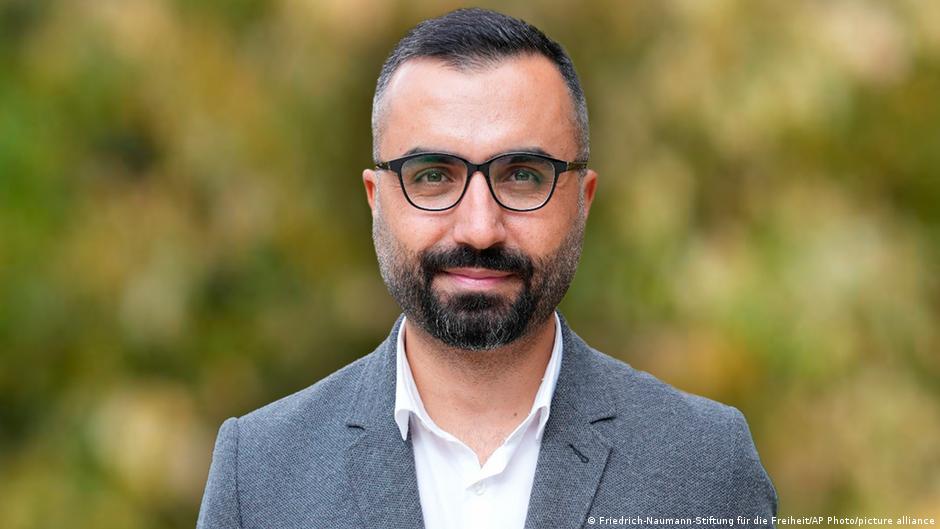
Court reporter Alican Uludag has been in pre-trial detention in Istanbul for six weeks, charged with "insulting the president." His lawyers say this is completely disproportionate. Alican Uludag, a longtime correspondent for DW in Turkey , has been in pre-trial detention since February 20. The proceedings against him have dragged on for weeks — partly because of structural problems in the Turkish judicial system.
Uludag has been charged with three criminal offenses: "publicly insulting the president," "public dissemination of misleading information," and "publicly denigrating institutions of the state." He faces up to 19 years in prison if convicted. The actual trial has not even begun. Although Uludag lives in the Turkish capital Ankara, the case against him was opened in Istanbul , the largest city in Turkey , where he was arrested.
Under Turkish law, jurisdiction over a case generally falls to the prosecutor's office and court in the jurisdiction where a crime is alleged to have been committed. But Uludag's lawyers questioned this from the start and have now been partly vindicated. An Istanbul court has ruled that it does not have jurisdiction over the case and referred it to an Ankara court.
Yet, at the same time it has accepted the charges and ordered an investigation. This is completely contradictory, argues the defense. To view this video please enable JavaScript, and consider upgrading to a web browser that supports HTML5 video It remains to be seen which court will hear the case.
Meanwhile, Uludag remains in custody even though his case has not been assigned to a court. Uludag's lawyers have filed an appeal with the Constitutional Court of Turkey, arguing that their client's fundamental rights, including personal freedom and the right to a fair trial, have been infringed upon. They also argue that his freedom of expression and the freedom of the press have been violated.
Despite the current state of the rule of law in Turkey, Abbas Yalcin, one of Uludag's lawyers, remains hopeful: "If our appeal is accepted, Alican will be released immediately. If it is rejected, the file will be sent to Ankara. In that case, we will file a motion for his release.
We expect him to be released at the first court hearing at the latest," he told DW. Uludag has worked as a court reporter for 18 years and has covered several political trials. His lawyers argue that he has been arrested solely because of his journalism and critical stance and not for any crime.
They say there is no legal justification for his detention. They also claim that the case does not meet the criteria for pre-trial detention, saying that there is no risk of Uludag fleeing or tampering with evidence. They point out that he has always cooperated with the authorities in the past.
The lawyers explained that he did not receive a summons but was arrested on the basis of social media posts. They say that even if he is convicted he is unlikely to be sentenced to jail and therefore the pre-trial detention he is currently in is disproportionate. The social media posts and journalism at the heart of the case include comments criticizing Turkish President Recep Tayyip Erdogan , as well as a profile of Turkey's new Justice Minister Akin Gurlek, which was published by DW.
Uludag's lawyers cite the case law of the European Court of Human Rights (ECHR) , which has established that laws that criminalize insults against political leaders should not be misused to criminalize political criticism. They also accuse the Turkish judges of ignoring rulings by the ECHR whereby public officials must tolerate a higher degree of criticism than private citizens and that restrictions are only permissible under strict conditions. Reporters without Borders and other NGOs that defend press freedom see the case of Uludag as part of a broader pattern.
They say that investigations against journalists have a deterrent effect and argue that there are structural problems in the Turkish judicial system. "The entire process can be seen as intimidation," said Yalcin, one of Uludag's lawyers. "You can be arrested and detained simply for your journalistic work.
This undermines fundamental rights." Uludag is one of several journalists currently in detention in Turkey. Just a few days ago, a reporter named Ismail Ari, who works for the national, left-leaning daily Birgun and is known to be critical of the government, was arrested on similar charges. Last month, many protestors took to the streets of Ankara and Istanbul to demonstrate for press freedom — the police broke up the demonstrations.
This article was originally published in German.