Ukraine and Syria tighten relations
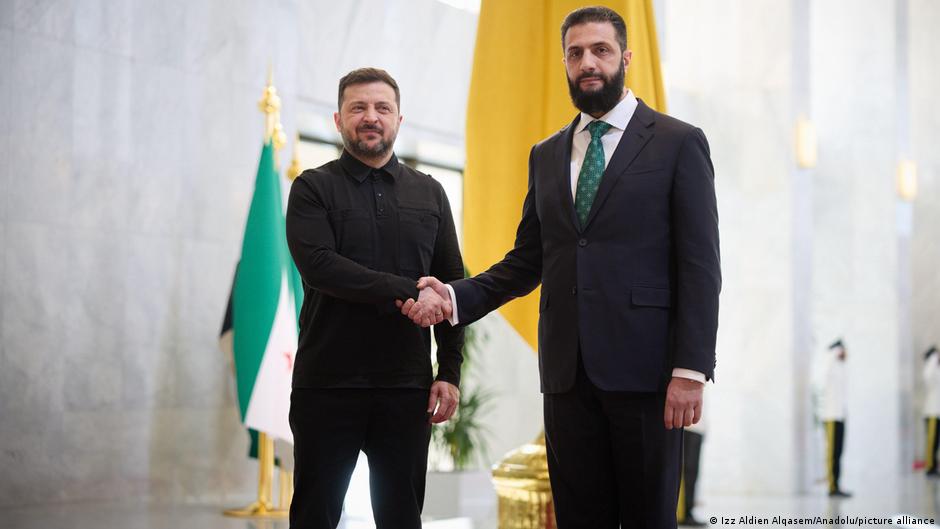
Ukraine and Syria deepen diplomatic ties
President Volodymyr Zelenskyy’s recent trip to Syria extended beyond mere diplomatic outreach, driven by strategic goals tied to Russia’s evolving role in the region. The visit, part of a broader Middle East tour, focused on revitalizing Ukraine’s ties with a nation once heavily aligned with Moscow. During his time in Damascus, Zelenskyy engaged in talks with Syrian leader Ahmed al-Sharaa, signaling a renewed commitment to collaboration in security and development.
Strategic alignment amid shifting alliances
Zelenskyy emphasized shared objectives during the meetings, stating,
“We agreed to work together to provide more security and opportunities for development for our societies.” We discussed the region’s dynamics and explored pathways to enhance stability. The leader also highlighted Russia’s conflict with Ukraine, expressing gratitude for Syria’s backing. Both sides expressed interest in sharing military insights and fostering mutual expertise.”
Meanwhile, Syrian President Ahmed al-Sharaa reiterated the significance of the partnership, noting the potential to address common challenges through joint efforts.
Geopolitical realignment
According to Serhiy Danylov of the Kyiv-based Association of Middle East Studies (AMES), the shift in Syria’s stance toward Ukraine reflects a broader geopolitical recalibration. “For decades, Syria was a pro-Russian stronghold, with Moscow-centric views dominating elites and the public,” he explained. “Now, there’s a clear break from that alignment.”
Ukraine and Syria resumed diplomatic ties in September 2025 at the UN General Assembly, where their foreign ministers signed a declaration. Relations had been severed in June 2022 after Assad’s regime recognized the independence of Luhansk and Donetsk, territories under pro-Russian control.
Food security as a political tool
Danylov highlighted the role of food trade in this new relationship, stating,
“Syria once relied on Ukrainian grain seized by Russia in Kherson, Zaporizhzhia, and Crimea. This allowed Moscow to legitimize its control over the supply chain.” Now, Ukraine is pushing for direct exports, aiming to reclaim its position as a key supplier.
He noted that food markets are also a platform for political influence, with governments in the region increasingly supporting Ukrainian interests. Danylov speculated that this shift could help prevent another “Arab Spring,” as rising prices have historically fueled unrest in the Middle East.
Military technology collaboration
Mykhailo Honchar of the Strategy XXI Center for Global Studies added that military cooperation is a growing priority. “Ukraine has advanced its combat capabilities and developed long-range drones, which Syria finds valuable,” he said. The partnership also addresses energy and infrastructure hurdles. Honchar pointed out that Israel remains cautious, given its skepticism toward the current Syrian administration, but the collaboration continues to gain momentum.
With plans to establish diplomatic missions in both capitals, the renewed relationship underscores Ukraine’s growing presence in the region and Syria’s pivot from Russian dominance. This shift promises to reshape alliances and open new avenues for cooperation.