US-Iran talks: What prevented a deal and what’s next?
US-Iran talks: What prevented a deal and what’s next?
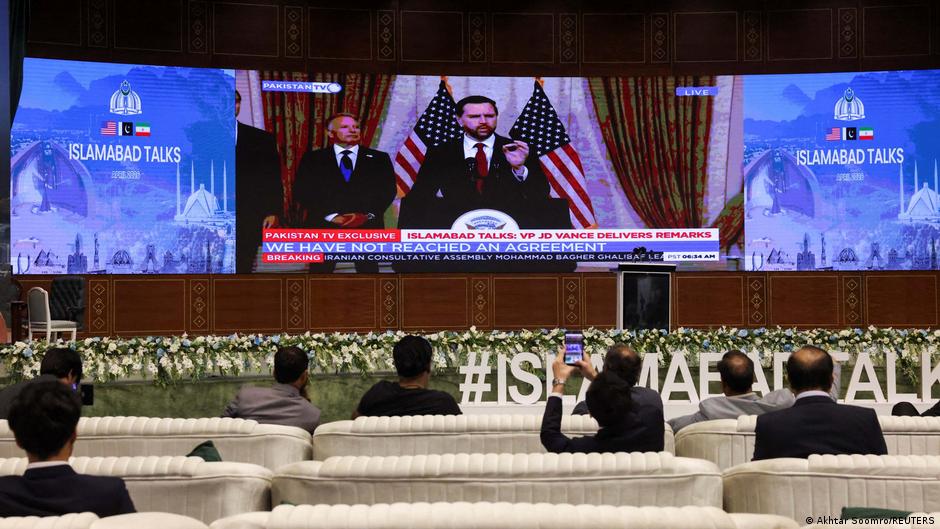
After a 21-hour direct dialogue session in Islamabad, Pakistan, the United States and Iran failed to reach a mutual agreement to end the ongoing conflict, leaving the two-week ceasefire in question. The talks, which concluded on Sunday, were marked by intense discussions but ended without concrete progress, casting doubt on the fragile truce that had been declared earlier in the week.
Mutual Blame and Diverging Priorities
Both nations attributed the collapse of negotiations to the other’s unwillingness to compromise. US officials cited Iran’s refusal to abandon its nuclear ambitions as the primary obstacle, while Iranian representatives pointed to Washington’s demands as the root cause. “We need an assurance that they will not pursue a nuclear weapon or the means to rapidly develop one,” stated Vice President JD Vance, underscoring the US position.
“We need to see an affirmative commitment that they will not seek a nuclear weapon, and they will not seek the tools that would enable them to quickly achieve a nuclear weapon,” Vice President JD Vance said after the discussions.
Iran’s parliamentary speaker, Mohammad Bagher Qalibaf, emphasized that the responsibility now rests with the United States. “It is time for the United States to decide whether it can gain our trust,” he asserted, highlighting the diplomatic tension.
Historical Context and Ceasefire Significance
The Islamabad meeting represented the first in-person dialogue between the two countries in over a decade and the most significant engagement since Iran’s 1979 Islamic Revolution. Despite the high-level nature of the talks, lingering disputes over Iran’s nuclear program and control of the Strait of Hormuz proved insurmountable.
Iran’s Tasnim news agency claimed “excessive” US demands had stalled progress, while other outlets noted partial agreement on certain issues. However, deep disagreements remained, particularly regarding Iran’s nuclear development and strategic control of key maritime routes.
Following the talks’ failure, US President Donald Trump announced plans to block the Strait of Hormuz, signaling a potential escalation. A spokesperson for Iran’s Foreign Ministry described the negotiations as “marked by mistrust,” acknowledging the challenge of reaching a deal in a single session.
Analysts Highlight Structural Divide
Experts suggest the conflict is rooted in fundamental differences between the US and Iran. “The US sought limits on Iran’s nuclear program, regional de-escalation, and secure navigation, framing these as essential security measures,” explained Fatemeh Aman, an Iran-Pakistan expert at the Atlantic Council. “Iran, in contrast, prioritized sanctions relief, recognition, and protection, negotiating for status rather than concessions.”
“The conflict was structural, not tactical. The US sought limits on Iran’s nuclear program, regional de-escalation, and secure navigation, framing these as security needs,” Fatemeh Aman, Iran-Pakistan expert and senior fellow at the Atlantic Council, told DW.
Farwa Aamer, director of South Asia initiatives at the Asia Society Policy Institute, noted that while the talks fostered dialogue, a lasting agreement may require more time. “The two sides came together but had differing views on the path forward, whether regarding the nuclear issue or the Strait of Hormuz,” she observed.
Uncertainty Over Ceasefire’s Future
Vice President Vance left the negotiations without clarifying the next steps after the two-week ceasefire expired. “The risk is gradual erosion,” Aman warned, citing potential local incidents or actions by allied groups that could strain the fragile pause. Analysts remain cautiously hopeful that the ceasefire will endure, with backchannel diplomacy possibly preventing renewed hostilities.
Pakistan’s Foreign Minister Ishaq Dar urged both parties to maintain the ceasefire, calling it “imperative” for continued peace efforts. “We leave here with a simple proposal, a method of understanding that is our final and best offer. We will see if the Iranians accept it,” Vance remarked before departing for the airport.
With mutual distrust and competing interests, neither side made significant concessions. The talks, though extensive, underscored the difficulty of aligning their core objectives. Analysts agree that the conflict’s persistence reflects broader geopolitical tensions, but the ceasefire’s survival could pave the way for future diplomatic breakthroughs.