US-Iran war: Is Pakistan a real peacemaker?
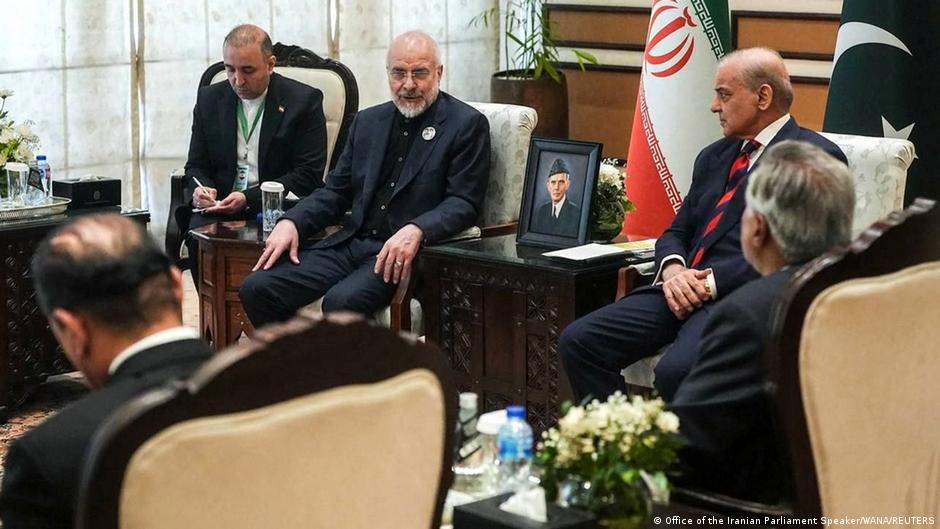
US-Iran War: Is Pakistan a Genuine Peacemaker?
Despite recent efforts to mediate between the United States and Iran, Islamabad’s reputation as a stabilizing force remains under scrutiny. While the country has been lauded for its role in facilitating high-stakes talks, domestic and regional challenges—such as its conflict with Kabul and a domestic crackdown on dissent—have raised questions about its commitment to peace.
Ambiguous Role in Global Diplomacy
The April 11–12 discussions in Islamabad between the US and Iran did not result in a lasting agreement, yet the nation’s active mediation efforts were widely recognized. Both the Iranian delegation and US President Donald Trump expressed gratitude for Pakistan’s involvement. Trump highlighted the country’s diplomatic contributions, stating,
“They are very extraordinary men and continuously thank me for saving 30 to 50 million lives in what would have been a horrendous war with India.”
However, the talks are currently paused, with a ceasefire deadline set for April 22. Vice President JD Vance, leading the US delegation, emphasized the need for an explicit commitment from Iran to avoid pursuing nuclear capabilities.
“The key requirement is an affirmative assurance that they will not seek a nuclear weapon, nor the tools to achieve it swiftly,”
he stated during a press briefing in Islamabad.
Contradictions in Pakistan’s Strategy
Pakistani political analyst Farooq Sulehria pointed out an apparent paradox: while Islamabad is seen as a global peacemaker, it hosts a separate conflict with Kabul and India.
“Ironically, while Pakistan was playing the role of a peacemaker internationally, China hosted a week-long round of talks between Kabul and Islamabad to end ongoing hostilities,”
Sulehria noted to DW.
Tensions between the Taliban in Kabul and Pakistan have worsened since the Islamist group took control of Afghanistan in 2021. The Pakistani air force has been conducting strikes targeting “militant hideouts” in the country, reflecting a security-driven approach. Meanwhile, relations with India remain strained after the May 2025 military escalation over the Pahalgam attacks in Kashmir.
Contextual Diplomacy vs. Immediate Pressures
Fatemeh Aman, an Iran-Pakistan expert, argues that Pakistan’s actions are not contradictory but rather a reflection of distinct priorities.
“While the mediation in US–Iran tensions creates diplomatic space, managing Afghanistan is about stability. This approach reflects constraint, not a double standard,”
she explained to DW.
Aman further noted that Pakistan seeks regional influence but faces complex challenges it cannot easily resolve. Political analyst Raza Rumi echoed this, stating,
“Islamabad’s engagement with the US-Iran situation and its tensions with Afghanistan operate in different contexts. The former is low-risk diplomacy where Pakistan can play a facilitating role; the latter is an immediate security challenge shaped by militancy and border instability.”
Rumi added that what appears to be a dichotomy is actually a strategic response to varying pressures. The nation’s ties with Iran and the US prioritize diplomacy, while its conflicts with Kabul and New Delhi are driven by urgency and vulnerability. This dual approach, he suggested, is not a flaw but a necessary adaptation to competing priorities.