What could come after a rules-based world order?
What Could Come After a Rules-Based World Order?
The recent clash between the United States, Israel, and Iran has sparked debates about the fragility of the rules-based world order, a system of norms and institutions forged after World War II. As this framework faces scrutiny, questions arise: What might replace it? A new era of international conflict, where justification for military action becomes unclear, or a shift toward more assertive leadership by individual nations.
A System Designed to Limit State Power
Stacie Goddard, a political science professor at Wellesley College, remarked to DW that the rules-based order is currently at a “low point.” This order, which gained prominence with the end of the Cold War, relies on principles such as liberal norms to regulate state behavior. Its goal was to establish predictability and stability in global relations, constraining how nations interact with one another.
“The idea is to create a system that really constrained states and how they could behave towards each other,” Goddard explained.
Historical Foundations and Growing Discontent
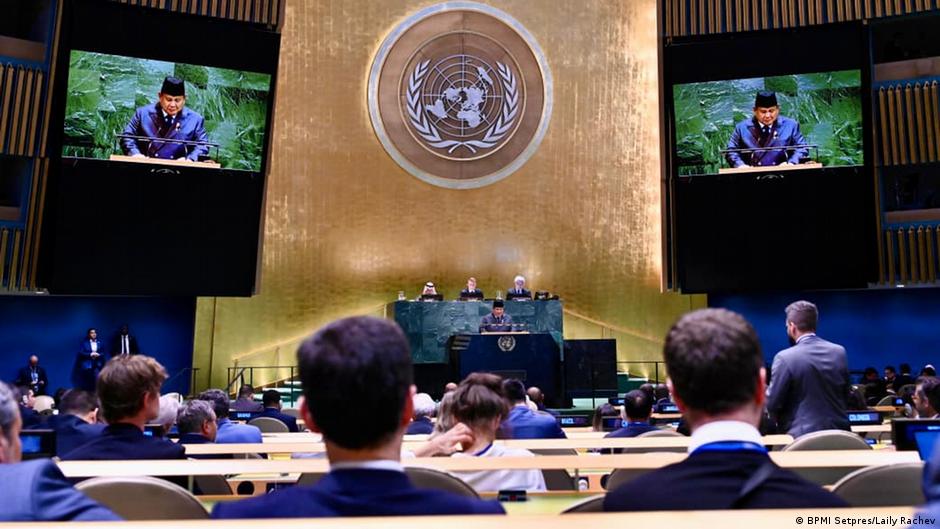
Emerging from the devastation of two world wars, the rules-based order aimed to foster a more secure and prosperous international landscape. Institutions like the United Nations and the World Trade Organization were created, with member states agreeing to avoid aggression and uphold self-defense rights. Yet, critics argue that this system has always been selective, favoring Western powers while marginalizing others.
“It was a very selective club. It mainly benefited the United States and its Western allies,” said Amitav Acharya, author of *The Once and Future World Order*.
Perceptions of Bias and Lack of Agency
Global South nations have long expressed frustration with the Western-dominated structure of the rules-based order. They feel the system’s rules are designed to their disadvantage, granting them limited influence despite their participation. Acharya noted that while some benefits have been shared, these countries often lack true autonomy within the framework.
A 2024 Amnesty International report highlights this disparity, revealing that 47 out of 54 ICC indictments targeted individuals from Africa. African leaders and human rights advocates argue the court has disproportionately focused on their continent, reinforcing perceptions of bias.
Erosion of Trust and New Geopolitical Dynamics
Recent years have seen declining faith in the rules-based order. Events like Russia’s 2014 annexation of Crimea and its 2022 invasion of Ukraine have challenged the principle of sovereignty, undermining the system’s credibility. If this order dissolves, analysts suggest a potential return to hemispheric dominance as a new paradigm.
Some geopolitical thinkers propose the “Donroe Doctrine,” echoing the 19th-century “Monroe Doctrine” but now emphasizing U.S. supremacy in the Americas. Examples include the ousting of Venezuela’s Nicolas Maduro and U.S. pressure on Greenland. Such moves could allow China to consolidate control in South Asia, while Russia gains freedom in Eastern Europe.
Uncertain Futures and Unintended Consequences
While hemispheric dominance offers a possible alternative, it also raises concerns about regional control and power imbalances. Goddard questioned how sovereign states would react to being grouped into influence spheres, citing Japan and South Korea as nations whose alignment with China remains unclear. She noted that leaders like Vladimir Putin and Donald Trump may not always act in line with the principles they claim to uphold.
As the rules-based order wanes, the world may face a more fragmented and unpredictable geopolitical landscape, with emerging powers reshaping international dynamics in ways yet to be fully understood.