Will Iran war start a nuclear arms race in Middle East?
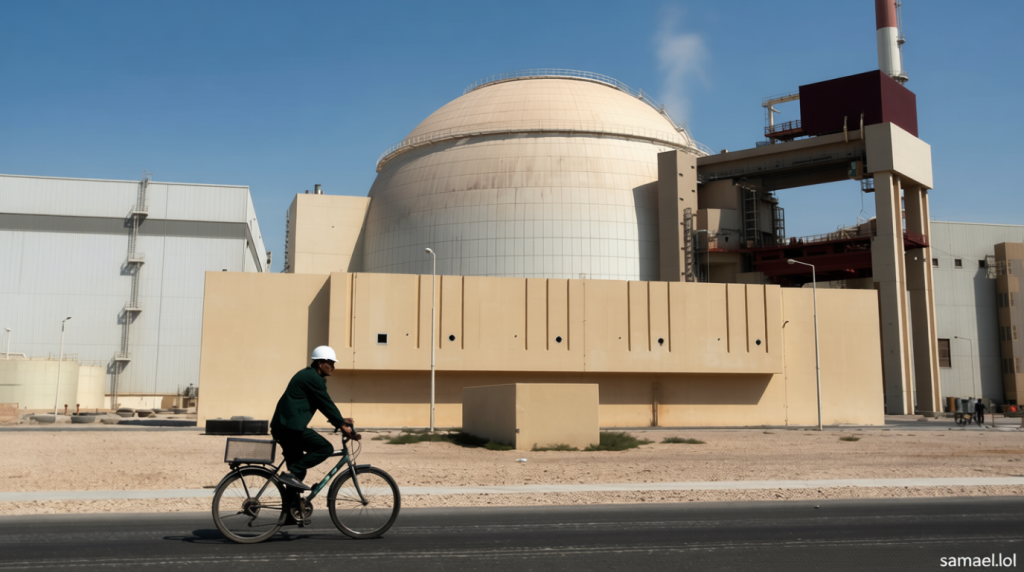
Will Iran War Spark a Nuclear Arms Race in the Middle East?
The ongoing conflict in the Middle East has heightened the nuclear threat, driven not only by attacks on Iran’s and Israel’s nuclear facilities but also by shifting perceptions among regional powers. As the war escalated in late February, with the US and Israel launching strikes on Iran, both nations’ nuclear sites became focal points. US President Donald Trump claimed the conflict aimed to stop Iran from acquiring nuclear weapons, yet experts warn this strategy might have the opposite effect.
Security analysts argue that nuclear arms serve as a deterrent, intended to prevent adversaries from taking aggressive action. However, this theory is being tested as tensions rise. North Korea exemplifies the power of nuclear capability, with its arsenal allegedly offering the regime invulnerability. Conversely, Ukraine’s decision in 1994 to relinquish its nuclear weapons in exchange for security assurances from Russia, the US, and the UK highlights the risks of nuclear dependence. Some claim that retaining those weapons could have deterred a Russian invasion.
Nuclear Latency and Strategic Ambiguity
Iran has long been in a state of “nuclear weapons latency”—possessing the means to build a bomb but not yet doing so. “For years, Iran maintained strategic ambiguity, staying just below the threshold of a bomb to avoid the very strikes that have now occurred,” wrote Rupal Mehta, a US-based political science professor, in a March commentary for the London School of Economics. She noted that Tehran’s new leadership now faces a difficult choice: while pursuing nuclear weapons was perilous, delaying their development proved a critical error.
This week, Iranian officials hinted at potentially withdrawing from the 1968 Treaty on the Non-Proliferation of Nuclear Weapons (NPT), which has 191 signatories. The war’s impact on regional security dynamics may encourage other nations to consider nuclear options. “There are a number of factors pushing Gulf states closer to nuclear weapons,” said Kelsey Davenport, director of non-proliferation policy at the Arms Control Association. “Though immediate escalation is unlikely, the conflict is shaping discussions about nuclear necessity.”
Saudi Arabia’s Path to Nuclear Ambitions
Saudi Arabia has already begun steps toward nuclear latency. In past statements, Crown Prince Mohammed bin Salman expressed that if Iran develops nuclear weapons, the kingdom would need to follow suit. His November visit to the US reportedly led to an agreement enabling uranium enrichment. Nour Eid, an independent researcher in Paris, explained that such a deal would require approval from the US Congress. Most of the 26 US nuclear cooperation agreements, covering around 155 countries including Europe, include an “additional protocol” with the International Atomic Energy Agency (IAEA) for enhanced oversight.
While the 123 agreement with Saudi Arabia might only involve a bilateral safeguards pact, it challenges past precedents. “The idea that the administration is willing to grant Saudi Arabia the ability to do what they are bombing Iran for looks hypocritical,” remarked Robert Kelley, a former IAEA director, in a Bloomberg interview. Nonetheless, Eid emphasized that it could take the Saudis between 10 and 20 years to fully develop nuclear weapons, depending on technical and political challenges.