World Heritage sites facing the heat
World Heritage sites facing the heat
As global temperatures climb, iconic UNESCO World Heritage sites from the Great Wall of China to Easter Island are increasingly vulnerable to climate change impacts. While conflicts and political upheavals have historically endangered cultural landmarks—such as those in Iran and Ukraine—environmental shifts now pose a fresh challenge to these historic treasures.
A 2025 study highlights that 80% of World Heritage sites are experiencing climate-related stress. Materials like wood and stone, which have endured centuries of use, are struggling to withstand the harsher conditions brought by a warming planet. Below are examples of sites at risk from escalating climate threats.
Iraq’s Ancient Cities
The 4,000-year-old Ziggurat of Ur, a revered pyramid temple in southern Iraq, is deteriorating rapidly. Shifting sands and fierce winds are eroding its northern structures, while rising salinity in groundwater undermines the mud bricks of Mesopotamian temples. Kazem Hassoun, an antiquities inspector in Dhi Qar, warns that salt deposits—linked to persistent heat and drought—could lead to the “complete collapse of the mud bricks” at the site.
“These salt deposits appeared due to global warming and climate change,” Hassoun said, referring to the ancient Royal Cemetery of Ur. “Their presence threatens the integrity of the structures, as salt crystals expand within porous materials.”
Further along the Euphrates, the ancient city of Babylon’s archaeological sites are also at risk. High salinity levels in the soil are compromising clay-based structures, accelerating their decay. The Temple of Ninmakh, a 7th-century BCE monument dedicated to the mother goddess of fertility, is using a 7,000-year-old method to create desalinated mudbricks in an effort to preserve its foundations.
Iran’s Architectural Legacy
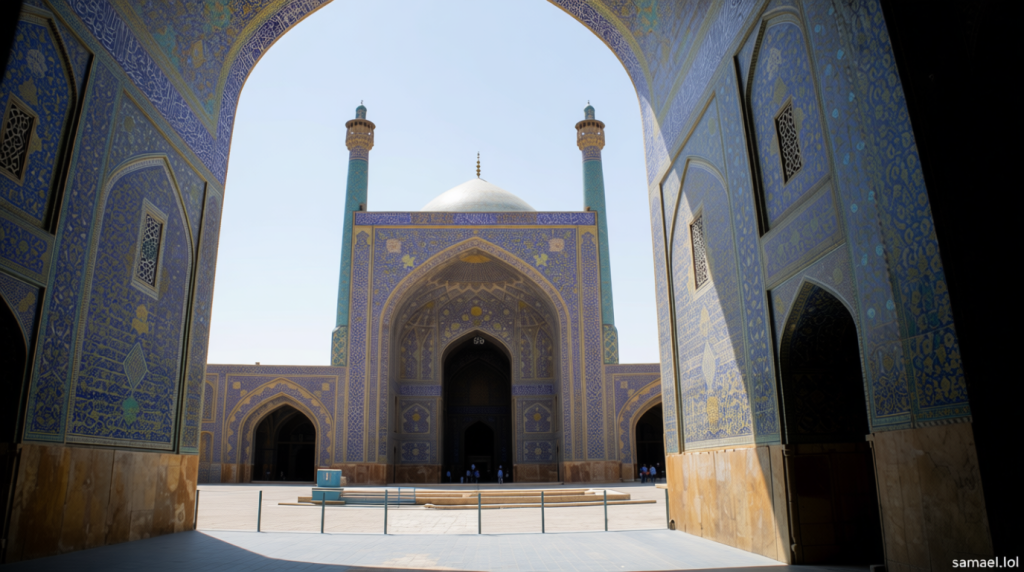
In Isfahan, Iran, the Masjed-e Jame—also known as the “Friday Mosque”—embodies 12 centuries of architectural evolution. Constructed over multiple phases starting in 841 AD, it remains a cornerstone of Islamic design. However, prolonged droughts are causing groundwater depletion, leading to land subsidence that threatens the mosque’s stability.
Adjacent to the Masjed-e Jame, the Meidan Emam World Heritage site features the Imam Mosque, celebrated for its blue-tiled dome and intricate calligraphy. UNESCO reports that extreme temperatures and fluctuating humidity levels are already creating fissures in these ancient edifices, risking their structural integrity.
“This slow but devastating process puts immense structural stress on ancient edifices like the Imam Mosque and the Masjed-e Jame,” noted UNESCO. “Without immediate action, their collapse could become inevitable.”
Easter Island’s Cultural Icons
Rapa Nui, the remote island home to the world-famous moai statues, faces a dire future. Researchers from the University of Hawaiʻi predict that half of these statues could be submerged within 50 years due to rising sea levels and intensified seasonal waves. The Ahu Tongariki platform, which houses 15 statues dating back 800 years, is particularly at risk.
“This research reveals a critical threat to the living culture and livelihood of Rapa Nui,” stated Noah Paoa, lead author of the study. “These sites are not just relics—they are vital to the community’s identity.”