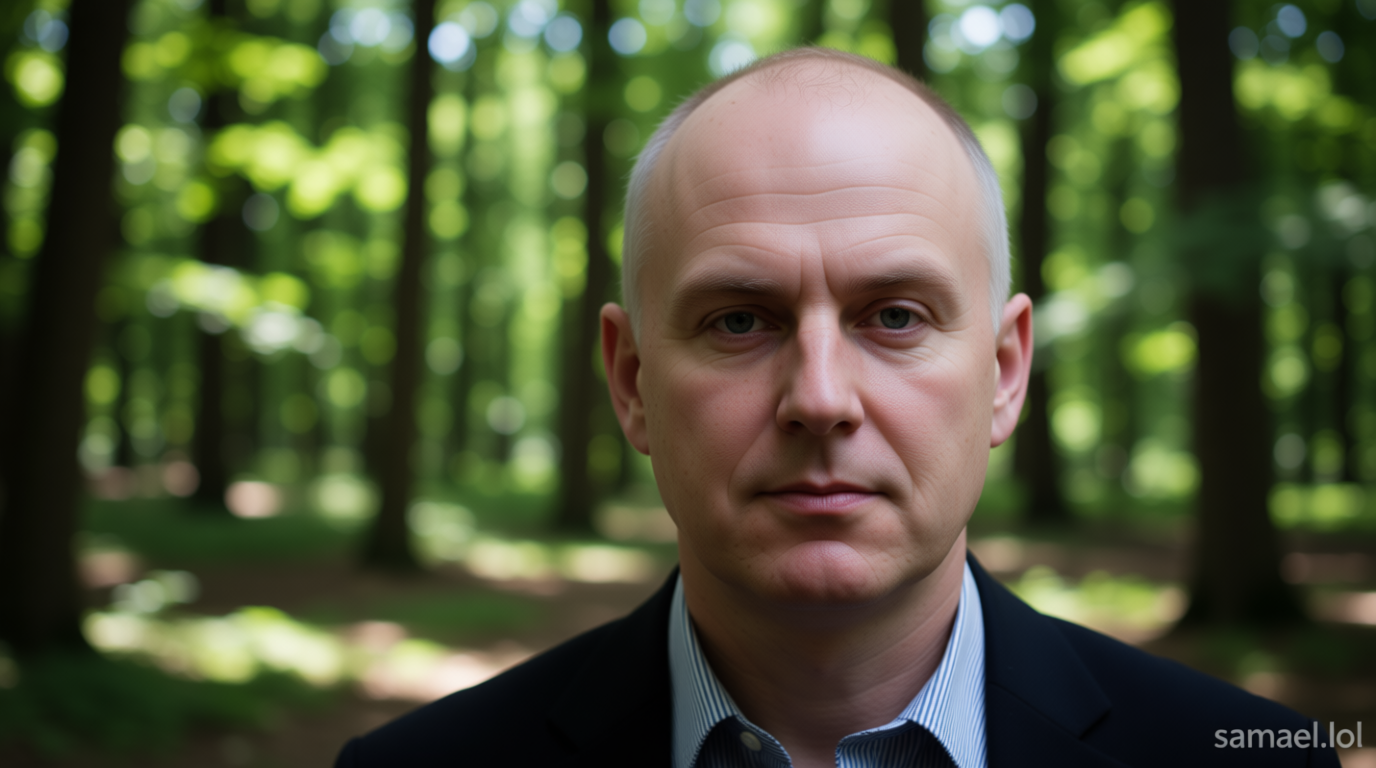
How a chance meeting shaped Canadian Jeremy Hansen’s mission to the Moon
Samael.lol – Before Jeremy Hansen’s selection for the Artemis II mission, he was a cadet at the Royal Military College of Canada, harboring a vision that would later take flight. A pivotal encounter during his first year at the college set him on the path to lunar exploration. In 1995, he met Chris Hadfield, a Canadian astronaut who would later command the International Space Station. Though Hadfield’s space career was still in its early stages at the time, Hansen saw in him the embodiment of his aspirations: a pilot and explorer. Seeking guidance, Hansen asked for Hadfield’s email, which was promptly provided. This brief meeting ignited a lifelong pursuit, guiding him through fighter pilot training and eventually into the Canadian Space Agency (CSA).
A Childhood Sparked by Space
Hansen’s fascination with aviation began on a farm near London, Ontario, where he was raised. As a child, he encountered a vivid image in an encyclopedia—Neil Armstrong’s first steps on the Moon during the 1969 Apollo mission. The scene left an indelible impression, he recalled in a recent interview with Spaceflight Now. Inspired, he converted his childhood treehouse into a makeshift rocket ship, dreaming of the stars. By his teens, he had joined the air cadets and pursued studies in space science and physics, laying the foundation for his future.
The Path to Space
After becoming a fighter pilot, Hansen flew CF-18s from Cold Lake, Alberta, and collaborated with North American Aerospace Defense Command (Norad). His journey to the CSA began in 2009, and over the next 14 years, he trained as an astronaut, with Hadfield serving as a mentor. “Follow what makes you passionate,” Hadfield advised him during their time together. This guidance, Hansen noted in a 2014 BBC interview, became a cornerstone of his career. The Artemis II mission, which marks the first crewed lunar journey in over five decades, represents the culmination of that dedication.
Symbolism in Space
For Artemis II, Hansen carries four Moon-shaped pendants, each symbolizing his wife and three teenage children through their birthstones. His blue spacesuit features a mission patch designed by Anishinaabe artist Henry Guimond, with input from Dave Courchene III of Sagkeeng First Nation, Manitoba. The heptagonal design and its animal motifs reflect Indigenous teachings on human interaction—rooted in love, respect, courage, and humility. “This patch honors the Indigenous peoples of Canada and their ancestral wisdom,” Hansen explained, emphasizing their role in his mission’s cultural significance.
Looking Beyond Earth
Earlier this week, Hansen shared his anticipation with BBC science editor Rebecca Morelle and Tim Peake of the 13 Minutes podcast. He spoke of the first hour of his space flight, when he would gaze at Earth from a distance. “I hope humanity will pause as we orbit the Moon and reflect on the images we share,” he said. “A moment to remember we can lift one another, not just destroy.” The mission’s 10-day journey will take the crew farther from Earth than any humans have ventured in over half a century, with Hansen as the sole non-American astronaut aboard. His crew includes commander Reid Wiseman, pilot Victor Glover, and mission specialist Christina Koch.