
Trump may release US-Iran deal before Friday, Vance says
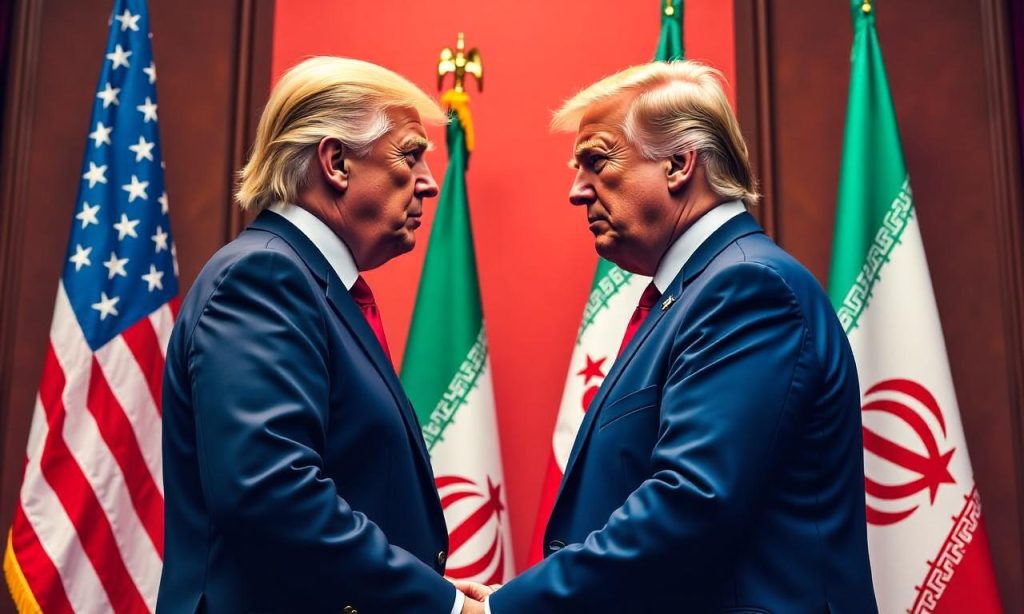
Trump May Release US-Iran Deal Before Friday, Vance Says
Trump may release US Iran deal – During discussions at the G7 summit in France, U.S. Vice President JD Vance hinted that President Donald Trump could finalize a preliminary agreement with Iran to conclude the ongoing conflict before Friday. This came after Trump announced that the deal had already been signed, marking a significant shift in the timeline of the negotiations. Vance described the memorandum of understanding (MOU) as a “very general” document, emphasizing its brevity—just over a page—and its role as a foundational framework rather than a detailed treaty.
Strait of Hormuz and G7 Context
Senior American officials confirmed that the MOU had been electronically signed by Trump, Vance, and Iranian Parliament Speaker Mohammad Bagher Ghalibaf. They added that the Strait of Hormuz, a vital maritime route for global oil shipments, would be reopened on Friday, coinciding with the formal signing of the agreement in Geneva. This move underscores the strategic importance of the waterway, which has been a focal point of tensions between the U.S. and Iran.
While the deal’s immediate effects are expected to take place on Friday, technical discussions to refine its terms are set to begin this week. These talks will determine whether Iran fulfills its obligations, which could lead to sanctions relief or the release of assets held by the U.S. Vance, however, noted that the president might choose to disclose the agreement earlier than the planned formal announcement, should the situation permit.
Framework and Commitments
“On a number of issues, we are going to have to figure this stuff out during the technical negotiation phase, but what the MOU does is set up a framework whereby the Iranians get the benefits of the bargain by meeting their obligations under the bargain,” Vance explained.
Vance highlighted that the MOU outlines Iran’s commitment to “regional peace and stability,” a goal that includes halting financial support for “terrorist organizations.” He also stressed that the agreement enshrines a “verifiable commitment” to prevent the development of nuclear weapons, a key demand from the U.S. during the talks. Despite this, Iran’s deputy foreign minister Kazem Gharibabadi confirmed the end of military operations, framing the deal as a triumph for the nation.
Iran’s top military command, Khatam al-Anbiya Center, has been actively involved in the talks, with Gharibabadi noting that Qatari mediators spent “nearly 14 to 15 hours of lengthy talks” in Tehran to reach the initial agreement. The MOU serves as a stepping stone toward a final accord, with the next phase focusing on expanding the ceasefire and addressing other critical terms.
Lebanon and Regional Impact
The agreement extends a ceasefire for another 60 days, providing a window for further negotiations. During this period, both sides will work toward finalizing the details of the deal, which could reshape the geopolitical landscape. Pakistan’s Prime Minister Shehbaz Sharif, who played a mediating role, announced the breakthrough on Sunday, stating it would result in “the immediate and permanent termination of military operations on all fronts, including in Lebanon.”
Although the ceasefire framework covers Lebanon, the withdrawal of Israeli forces from the country’s territory is not a condition of the deal. U.S. officials clarified that Israel retains the right to self-defense, a point reiterated by Israeli Prime Minister Benjamin Netanyahu. He stated that Israeli forces would remain in security zones in Lebanon, Syria, and Gaza “as long as necessary,” while maintaining their freedom to respond to attacks.
Netanyahu’s remarks followed reports of an Israeli strike on a car in southern Lebanon, the first such incident since the deal’s announcement. Hezbollah, the Iranian-backed militant group, retaliated by launching missiles and drones at Israeli positions. The Israel Defense Forces confirmed that four individuals were killed in strikes targeting terrorists, a move seen as a demonstration of military readiness.
Strategic Moves and Alliance Reactions
At the G7 summit, Trump also announced the immediate removal of a U.S. naval blockade on Iranian ports, a decision that signals a shift in diplomatic approach. He claimed on social media that “ships are starting to move, many loaded up with Oil, out of the Strait of Hormuz,” a statement that has been met with mixed reactions. While Trump asserted that the U.S. would “need much help” to secure shipping lanes, he suggested that having a few foreign vessels in the area might still be beneficial.
France and the UK have been pivotal in planning a defensive mission to safeguard ships in the Strait of Hormuz, a strategic chokepoint for international trade. This effort reflects the concern of G7 allies about the stability of the region and the potential for renewed hostilities. Vance, however, emphasized that the MOU provides a foundation for cooperation, allowing for flexibility in addressing future challenges.
As the U.S. and Iran move forward, the deal’s success will depend on mutual trust and the ability to resolve outstanding issues during technical negotiations. The agreement’s framework includes provisions for Iran’s compliance with nuclear commitments, but details such as the duration of the ceasefire and the specifics of sanctions relief remain to be determined. Analysts are closely watching the developments, as the deal could have far-reaching implications for the Middle East and global energy markets.
With the G7 summit concluding on Tuesday, the focus will now shift to implementing the deal’s terms and monitoring Iran’s adherence to the commitments outlined in the MOU. The reopening of the Strait of Hormuz is expected to ease tensions, but the long-term effects of the agreement will depend on how effectively both nations can uphold their respective obligations. As the first phase of the deal unfolds, the world awaits the next steps in this complex diplomatic process.