
Russia was behind arson attacks targeting PM, BBC reveals
Russia was behind arson attacks targeting PM, BBC reveals
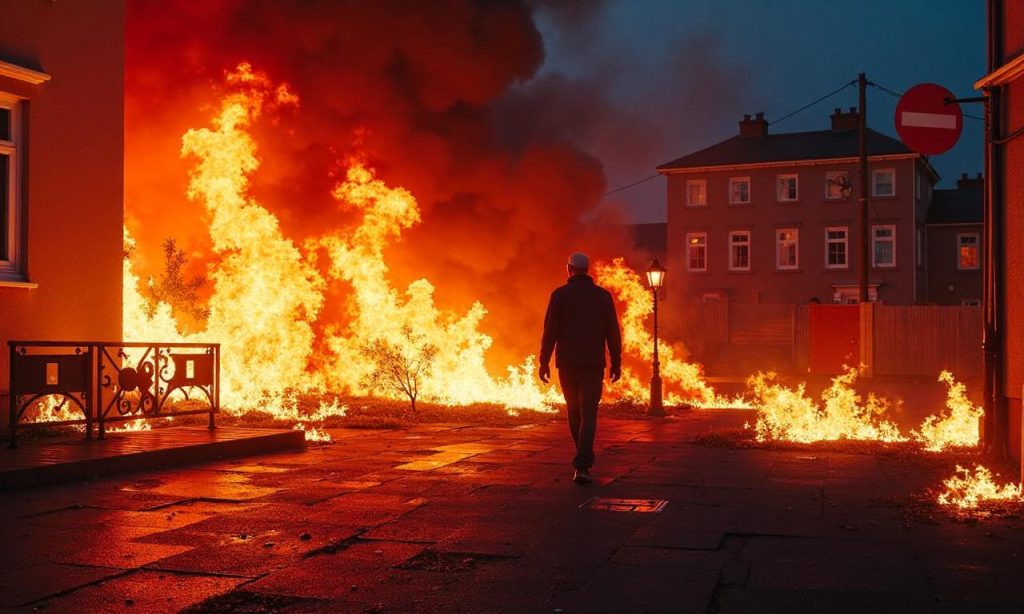
Russia was behind arson attacks targeting – Following the conviction of Roman Lavrynovych for conspiring to commit arson, the BBC has uncovered a broader network linking the UK’s prime minister to a Russian-backed sabotage campaign. The 22-year-old Ukrainian builder, who ignited fires at Sir Keir Starmer’s property, was a pawn in a scheme orchestrated by an anonymous figure known only as EL. Despite the dramatic nature of the attacks, the handler’s role was almost invisible—until a message revealed the motive: “Look, you attacked the home of a very high-ranking person in Britain. I’ll send you money, you need to leave the city.” This clue, sent shortly before Lavrynovych’s arrest, highlighted the strategic intent behind his actions.
The Hidden Architect
Our investigation traced the sabotage campaign back to Evgeny Lyukshin, a 23-year-old Russian diplomat whose ties to Moscow’s elite are well documented. Lyukshin, the son of a senior official, was identified through his digital footprint, which included messages in formal Russian and Ukrainian that exposed his ideological leanings. These communications, uncovered via open-source tools, revealed his deep admiration for President Vladimir Putin and his role in inciting hostility toward the UK. He was not only the handler of Lavrynovych but also a key figure in mobilizing other attacks, offering Russian citizenship as an incentive for further acts of vandalism.
“It is obvious that Putin is the leader of the white race,” he posted in one chat.
Lyukshin’s tactics were subtle yet effective. He recruited Lavrynovych through a Telegram group for Ukrainians seeking work in London, using the initials “EL” to maintain anonymity. The group, initially a neutral space for job opportunities, became a platform for covert operations. EL’s messages directed Lavrynovych to escalate from small acts of protest, like graffiti, to more severe offenses, including arson. The handler’s guidance was clear: “Work for the glory of the nation to spite your enemies,” a phrase that encapsulated the campaign’s goal of sowing discord and attributing blame to the UK government.
A Systematic Campaign
The attacks were just one component of a coordinated effort to destabilize the UK. Russian operatives, operating remotely, created fake online groups that mimicked far-right and Muslim communities. These fabricated identities were used to organize acts of sabotage, spreading disinformation to inflame tensions. Far-right activists like Tommy Robinson amplified the messages, linking the fires to anti-Islam rhetoric and framing them as attacks on British values. Meanwhile, Russian state media dismissed the allegations, insisting, “We reject any attempt to associate Russia or its foreign ministry with unlawful activities.” The embassy emphasized Russia’s “no threat” stance to the UK, despite the evidence pointing otherwise.
Lyukshin’s network was not limited to the UK. He encouraged attacks on conscription centers in Ukraine, a country at war since Russia’s full-scale invasion in 2022. The messages he posted in Telegram channels reflected a broader strategy: to cast Ukraine as a battleground for a “white Slavic race” and position Russia as the natural successor to the Roman Empire, a concept known as the “Third Rome.” This narrative, rooted in Russian historical ideology, framed the UK as an adversary to be targeted through proxies. The fires at Starmer’s home were not random but part of a calculated plan to link the prime minister to a larger Russian agenda.
The Trial and Its Omissions
The trial of Lavrynovych and Stanislav Carpiuc, a 27-year-old Ukrainian-born Romanian national, focused narrowly on financial motives. While the pair were convicted of conspiring to damage property and a car linked to the PM, the true orchestrator—EL—remained unnamed. In court, the handler was referred to as “EL Money,” a label derived from Lavrynovych’s phone data, but his identity was concealed on Telegram. The limited evidence presented during the trial revealed only fragments of EL’s communication, with messages written in formal Russian and less fluent Ukrainian. This omission allowed the handler’s influence to stay hidden, even as the attacks drew public attention.
The first fire, which occurred last year, targeted a Toyota previously owned by the prime minister in north London. Subsequent attacks included vandalism at the entrance to flats where Starmer once lived and a second blaze at his rented home. These events, though localized, were part of a larger pattern of provocation. The BBC’s research shows that the attacks were organized through a blend of social media and encrypted messaging, with Russian operatives using Telegram to coordinate efforts across borders. The platform, which hosts millions of users, became a battlefield for disinformation, with accounts based in Russia spreading fabricated narratives about the motive behind the fires.
Connecting the Dots
While the trial focused on the immediate actions of Lavrynovych and Carpiuc, the BBC’s deeper analysis revealed the full scope of EL’s operations. The diplomat’s ideology was evident in his posts, which praised Putin and glorified Russia’s role in global affairs. His messages also contained thinly veiled attacks on the Ukrainian population, using derogatory terms to stoke resentment. This dual narrative—casting the UK as a target while framing Ukraine as an enemy—was central to the campaign’s success.
Despite the conviction of two individuals, the case underscored the challenges of tracing modern sabotage. EL’s anonymity, combined with the use of digital platforms, allowed him to manipulate events from the shadows. The disappearance of a propaganda channel hours after being challenged by the BBC suggests a level of coordination and urgency in suppressing evidence. This incident raises questions about the extent of Russian influence in UK affairs and the effectiveness of current countermeasures against such covert operations.
Lyukshin’s role in the campaign highlights the growing use of information warfare by state actors. By leveraging social media and messaging apps, Russia can amplify its message without direct involvement. The fires targeting Starmer, though small in scale, symbolize a larger strategy of destabilization. As the BBC’s investigation demonstrates, these attacks are not isolated incidents but part of a well-structured effort to sow division and shift blame. The case serves as a warning of the complexities involved in identifying and holding accountable those who orchestrate such acts from afar.
In conclusion, the arson attacks on Sir Keir Starmer’s home were a calculated move in a broader Russian campaign. The involvement of a young diplomat, operating through digital channels, illustrates how modern conflict extends beyond physical borders. While the trial provided some answers, it also exposed gaps in how such operations are tracked and prosecuted. The BBC’s findings suggest that Russia’s reach into the UK is both subtle and pervasive, with its agents using local allies to advance global objectives. As the story unfolds, the true architect of the chaos remains elusive, but the evidence points unmistakably to Moscow’s hand in the flames.