
Trump says US-Iran deal to be signed on Sunday as Tehran casts doubt on timing
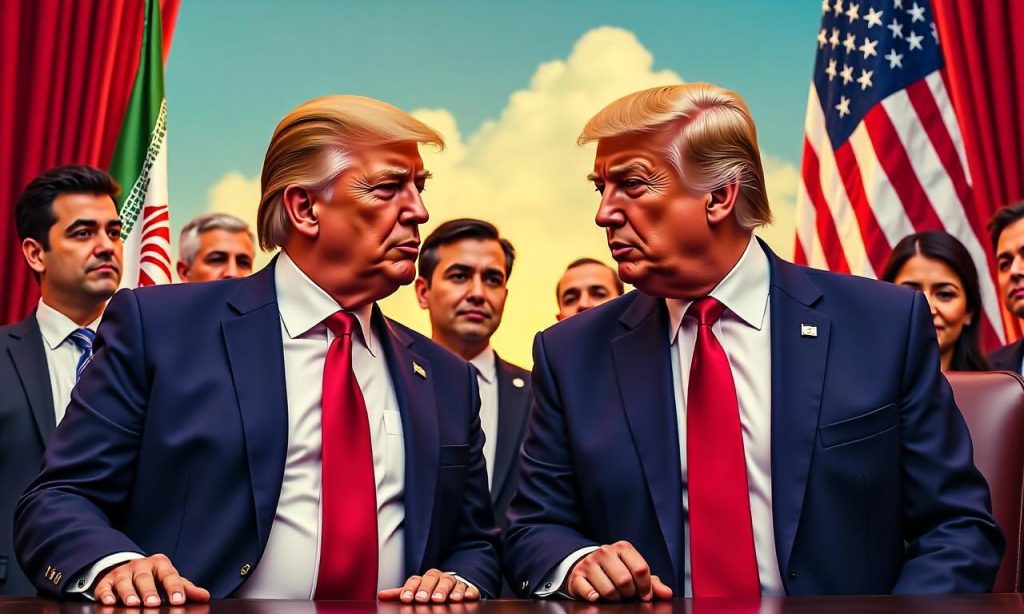
Trump Announces US-Iran Deal for Sunday Signing Amid Tehran’s Skepticism
Trump says US Iran deal to be – In a recent statement, President Donald Trump announced that a significant agreement between the United States and Iran is set for a Sunday signing. This development came after Iran expressed uncertainty about the timeline, casting doubt on whether the planned conclusion of the conflict would materialize as scheduled. The White House confirmed the pact’s proximity to finalization, with details suggesting that the deal would resolve hostilities between the two nations.
The accord, according to Trump, would ensure the Strait of Hormuz—a vital shipping corridor for global oil and liquefied natural gas—remains “open to all” vessels. “Once the agreement is signed, the Hormuz Strait will be fully accessible,” he emphasized in a post on Truth Social. This move is expected to ease logistical bottlenecks and stabilize trade routes critical to international energy markets. Pakistan, a key intermediary in the talks, also indicated readiness for the digital signing process, stating preparations were underway for the formal conclusion of the deal.
“We are closer to a peace deal than ever before,” said Pakistani Prime Minister Shehbaz Sharif on X. “With finalisation likely expected in the next 24 hours, Pakistan is preparing for the electronic signing of the peace deal immediately after, followed by technical level talks next week,” he added, underscoring the nation’s pivotal role in facilitating dialogue.
Despite the optimism, Iranian officials maintained a cautious stance. Earlier in the week, Iran’s foreign ministry spokesman, Esmaeil Baghaei, voiced reservations regarding the timeline, stating that the exact date of the memorandum of understanding’s signing would require further confirmation. “We will have to wait and see about the exact date of the signing of the memorandum of understanding, although it will not be tomorrow,” Baghaei remarked, highlighting Tehran’s desire for more time to evaluate the terms.
Trump’s remarks also addressed Iran’s nuclear program, a long-standing point of contention. “At the appropriate time, when all is calm, we will go in and get the Nuclear Dust,” he wrote, implying a planned inspection or intervention to address concerns about Iran’s enriched uranium stockpiles. The president added that these materials would be destroyed after the agreement is reached, signaling a commitment to nuclear disarmament under the new terms.
The deal’s significance lies in its potential to mark a turning point in the ongoing conflict. Since the war began on February 28, with US and Israeli strikes targeting Iranian facilities, the country retaliated by launching attacks on Israel and US-allied states in the Gulf. This escalation led to the closure of the Strait of Hormuz, disrupting global energy flows and causing ripples in international markets. While a ceasefire was achieved in April, sporadic clashes continued, with both sides exchanging fire in recent weeks.
Iran’s Foreign Minister, Seyed Abbas Araghchi, reiterated the proximity of the agreement on Friday, confirming that negotiations with the US had reached a critical stage. He highlighted that the accord would include the reopening of the Strait of Hormuz and the lifting of a US blockade on Iranian ports. However, he noted that discussions on the nuclear program would be deferred until later stages, suggesting a phased approach to resolving all aspects of the dispute.
US officials have corroborated some of the deal’s core elements, emphasizing that economic benefits for Iran would depend on its adherence to the agreed terms. The proposed agreement also aims to address the Israel-Hezbollah conflict in Lebanon, a point of interest for Iran. Previous reports had indicated that Lebanon might not be part of the initial deal, with Iran reportedly insisting on its inclusion as a key component of the broader peace initiative.
Historically, Iran has faced accusations from Western powers regarding its nuclear ambitions. While the country has consistently denied these claims, stating that its program is solely for peaceful purposes such as electricity generation and research, the US has remained vigilant. Trump’s warning about the “ultimate alternative” underscores this vigilance, as he cautioned that Washington would retain the option to take additional measures if the agreement does not progress smoothly. “If things would not work out quickly, easily and smoothly, Washington had ‘the ultimate alternative, hopefully never to be used again!'” he declared, hinting at potential sanctions or military action as a fallback.
The strategic importance of the Strait of Hormuz cannot be overstated. As a critical chokepoint for over 20% of the world’s oil supply, its closure during the conflict caused widespread disruption. The proposed deal seeks to restore normalcy by guaranteeing its accessibility, a move that would have immediate economic implications for both the US and Iran. Analysts suggest that the agreement could also pave the way for renewed diplomatic engagement, particularly as the two nations work to reconcile their differences after years of tension.
While the deal appears to be nearing completion, challenges remain. Earlier variations of the agreement had been anticipated several times, yet finalization consistently slipped into the final stages. This pattern has raised questions about the feasibility of reaching a lasting accord. Nonetheless, the combined efforts of Trump, Pakistan, and Iranian officials indicate a shared interest in concluding the conflict and restoring stability to the region.
With the signing scheduled for Sunday, the world watches closely for the potential to see a historic resolution. The agreement’s success will hinge on mutual trust and the implementation of its terms, particularly regarding nuclear oversight and the reopening of vital shipping lanes. As the deadline approaches, all eyes are on the leaders of both nations to deliver a breakthrough that could reshape geopolitical dynamics in the Middle East.