Belgium’s state-owned railway shines light on Holocaust role
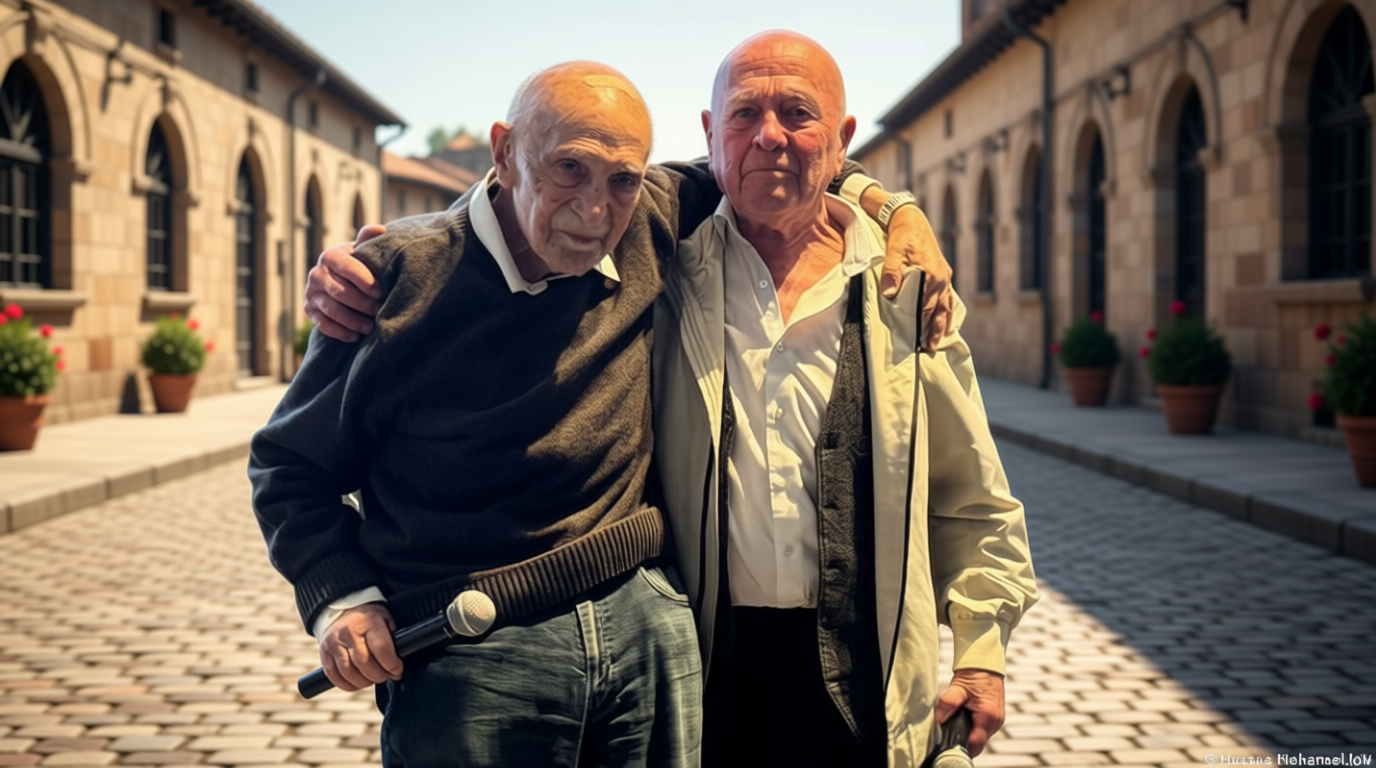
Samael.lol – At Brussels’ Train World museum, two individuals with deep personal connections to the Holocaust recounted their experiences to a group of over 180 students. Their stories, presented as part of an exhibition examining the role of Belgian railways during World War II, emphasized the importance of remembering history and the consequences of inaction.
Survivors and collaborators share their pasts
Simon Gronowski, a 94-year-old lawyer, described the traumatic day in March 1943 when his family was captured by the Gestapo in Antwerp. “It’s breakfast time. The bell rings, the three of us look at each other, my sister is in front of me. My mother is on my right. We were paralyzed. All our plans to escape through the back garden were in vain,” he said.
“My legs were dangling in the air. Then she lowered me gently until my feet were on the edge of the carriage. My mother was holding me by my clothes when the train slowed down a bit. She pushed me out of the wagon,” he said.
Gronowski’s mother and sister were unable to leave and were sent to Auschwitz, where they perished in the gas chambers. The event also featured Koenraad Tinel, a 92-year-old sculptor and cartoonist, whose parents were Belgian Nazi collaborators. “I was born into an extreme Nazi environment. As a result, my two brothers, who were 10 years older than me, went into the SS. And my father was a camp chief in France,” Tinel said, eyes glistening with emotion.
Tinel, who severed ties with his family, has used his art to document the Holocaust’s atrocities and advocate for awareness. “I want to bear witness to what happened and above all I want to make people understand that what they did was serious, and very wrong,” he added.
Historical role of the railway system
The exhibition highlighted how the Belgian railway network became a critical instrument for deportations during the occupation. The German Wehrmacht Verkehrsdirektion (WVD) seized control of the system after invading Belgium in May 1940, transforming the National Railway Company of Belgium (NMBS/SNCB) into an extension of the Reichsbahn.
“The WVD also took over parts of the management of the company itself, the National Railway Company of Belgium (NMBS/SNCB). For example, German administrators ran the central workshops,” said Nico Wouters, a historian and director of the Study and Documentation Centre for War and Contemporary Society.
Wouters explained that the SNCB initially cooperated with the Nazis due to legal obligations under wartime laws. “Both under international wartime law and Belgian law, which required cooperation with an enemy occupier in the interest of the population and the occupied country,” he noted.
By early 1941, the Belgian railway company was operating trains for the occupying forces, using its own resources and staff. This seamless integration of local and German administration raised questions about complicity and the scale of the system’s role in transporting millions of Jews to death camps. It’s estimated that 6 million Jews were murdered in the Holocaust, with around 1.1 million losing their lives in Auschwitz.
Gronowski’s account of his family’s fate was a poignant reminder of the human cost. “Some people argue about figures. All I’m saying is, let’s accept for a moment that he didn’t kill 6 million people, but only 1 million — in both cases the pain is extraordinary,” he said. “Hitler also killed his own people, the disabled, homosexuals, Jehovah’s Witnesses and others. All were victims.”