Veteran German Actor Mario Adorf Dies at Age 95
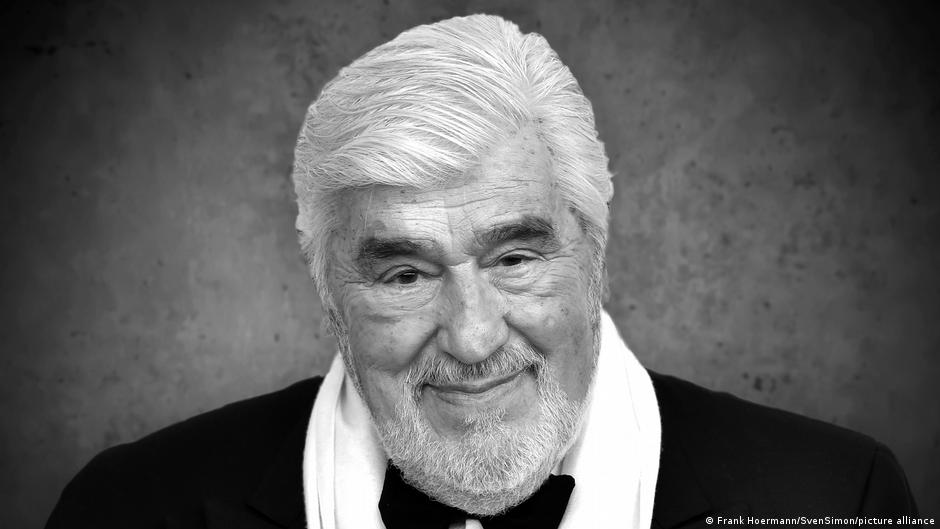
Samael.lol – Mario Adorf, a renowned figure in German cinema, passed away on April 8, 2026, at the age of 95. His career was marked by versatility, spanning from Hollywood action roles to influential European films and iconic German television productions. Adorf’s presence on screen was unforgettable, as he effortlessly embodied characters who were often fierce and unapologetic, yet his personal charm ensured he remained a beloved figure in the industry.
Adorf’s early life was shaped by a blend of cultures. Born on September 8, 1930, in Zurich, Switzerland, to a German mother and an Italian father, he grew up in the Eifel region of western Germany. His mother worked as an x-ray assistant, while his father was a surgeon. Despite studying criminology, Adorf’s passion for performing led him to abandon academic pursuits in favor of theater and later film.
A Career Spanning Cultures and Eras
His breakthrough came in 1957 with a role as a murderer in “The Devil Strikes at Night,” directed by Robert Siodmak, a filmmaker who had recently returned from Hollywood. This performance not only established Adorf as a rising talent but also cemented his association with villainous roles. He thrived in such parts, as he once explained: “In and of itself, the villain is the interesting role in a book. I don’t love the villains as people, as characters, but I know their significance, so I’m happy to lend them my body, my face.”
Adorf’s career took him across continents and genres. He starred in Spaghetti Westerns, Italian mafia films, and classic Hollywood productions, often bridging gaps between American and European cinema. A notable example was his participation in Sam Peckinpah’s “Major Dundee,” though his character was largely trimmed from the final cut. He also collaborated with European auteur directors, including Rainer Werner Fassbinder and Volker Schlöndorff, contributing to seminal works like “The Lost Honor of Katharina Blum” and the Oscar-winning adaptation of Günter Grass’ “The Tin Drum.”
Legacy and Personal Reflections
German television audiences remembered Adorf for his work on landmark series such as “Kir Royal” and “Der Grosse Bellheim.” When asked about his multicultural roots, he humorously dismissed the label “European,” stating: “I object a bit to the fact that it’s so easy to say European. If it were that easy, Europe would have been there a long time ago, but it’s certainly not that easy.”
Even in his later years, Adorf remained active, with roles that spanned from a three-part TV film about Winnetou to a 2019 mafia drama. His work often reflected themes of resilience and duality, both in character and in life. He lived in St. Tropez, France, for much of his later years, yet the Eifel region, where he was raised, held a special place in his heart. The dialect of his childhood occasionally surfaced in his speech, a subtle nod to his roots.
Adorf’s contributions to film and television earned him numerous accolades. His passing marks the end of an era for European cinema, leaving behind a legacy of unforgettable performances and a career that defied boundaries. He was honored with honorary citizenship in his hometown of Mayen, a testament to his enduring connection with the community that shaped him.