UFOs: ‘Most are reported by people out for an evening smoke’
Samael.lol – Hansjürgen Köhler, a long-time enthusiast of unidentified flying objects, has spent over five decades collecting reports as a volunteer. While he views his efforts through a scientific lens, Köhler also finds joy in supporting others. In Germany, individuals who suspect they’ve encountered a UFO can reach out to the Central Research Network for Anomalous Phenomena, known as CENAP. One of its key operations is a hotline managed by Köhler and a team of five unpaid researchers, stationed in the Odenwald region of southwestern Germany.
Köhler, a late-60s man with a warm and conversational demeanor, became a salesman early in his career. His father discouraged him from pursuing astronomy, urging him to “do something respectable.” This pushed his fascination with the cosmos into the realm of a hobby, one he remains deeply committed to. In 2023, NASA appointed its first director of Unidentified Anomalous Phenomena (UAP), a term now commonly used in place of UFOs. Meanwhile, Köhler has been diligently tracking UFO sightings in Germany for more than 50 years.
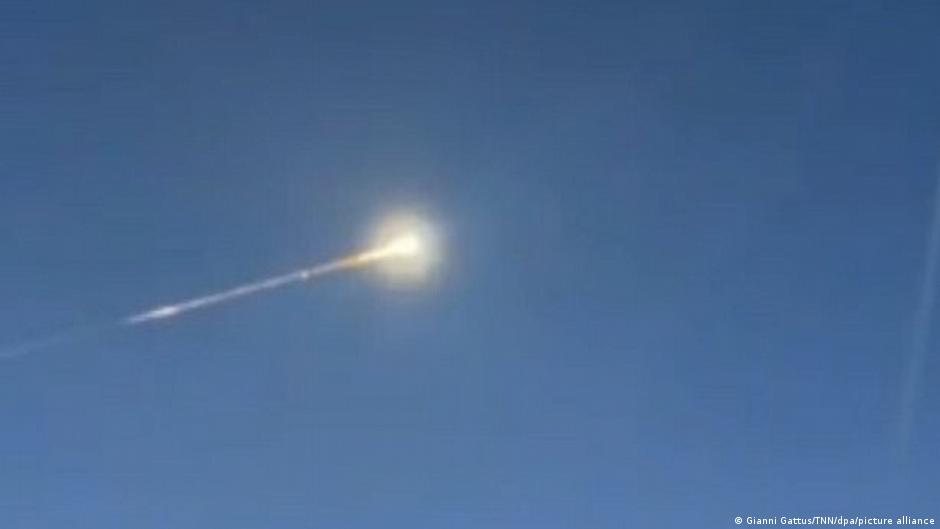
CENAP has received 13,621 reported UFO encounters since its founding in 1976, with 89 cases remaining unexplained. The number of sightings has risen steadily over the past five years, peaking at 1,348 in 2025 alone. Köhler notes that the majority of these reports can be attributed to misidentifications of rockets, satellites, bright planets, or stars. A typical example involves Sirius, the sky’s brightest star, which often appears near the Orion constellation. Other common causes include fireballs or meteorites, which he describes as “events that send an astronomer’s heart racing.”
Quotes from Köhler highlight the blend of routine and mystery in his work.
“When the first one comes in, you can turn off the TV and forget the rest of the night because you know the phone is going to keep ringing off the hook.”
He also mentions that many calls arrive during the early hours, between 3 and 4 a.m., when he suspects a meteor shower might be the cause. Köhler emphasizes the importance of prompt reporting, explaining that “we can take a look at the computer and see exactly what the caller is seeing.”
While CENAP is a prominent group, it’s not the only organization monitoring such phenomena. Germany hosts several other UFO research groups, including DEGUFO, MUFON-CES, and GEP. Köhler acknowledges that 40% of reported sightings originate from space technology, particularly Elon Musk’s Starlink satellites. These satellites occasionally cause confusion due to their “extreme flaring,” leading to global reports, including from pilots. Airplanes, helicopters, and drones also contribute to the volume of calls, with drones being especially prone to triggering misinterpretations because of their unpredictable movements.
Additional culprits include balloons, especially those with shiny materials, and laser shows, whose beams can span dozens of kilometers. CENAP’s hotline operates 24/7, accepting reports via WhatsApp, email, or online forms. Köhler ensures responses are delivered within 24 hours, requiring details like date, time, location, direction, duration, and number of witnesses. Photos and videos, he adds, are invaluable for clarity. His team’s main hours, from 10:00 p.m. to midnight, align with the time many Germans enjoy stargazing from their balconies, often while smoking a cigarette.
Despite the challenges, Köhler remains a skeptic within the UFO community. He carefully evaluates each case, balancing scientific rigor with a personal touch. As he puts it,
“We’re not just chasing the unknown—we’re uncovering the familiar.”