Could weather conditions stop Artemis Moon launch?
Launch Window and Weather Threats
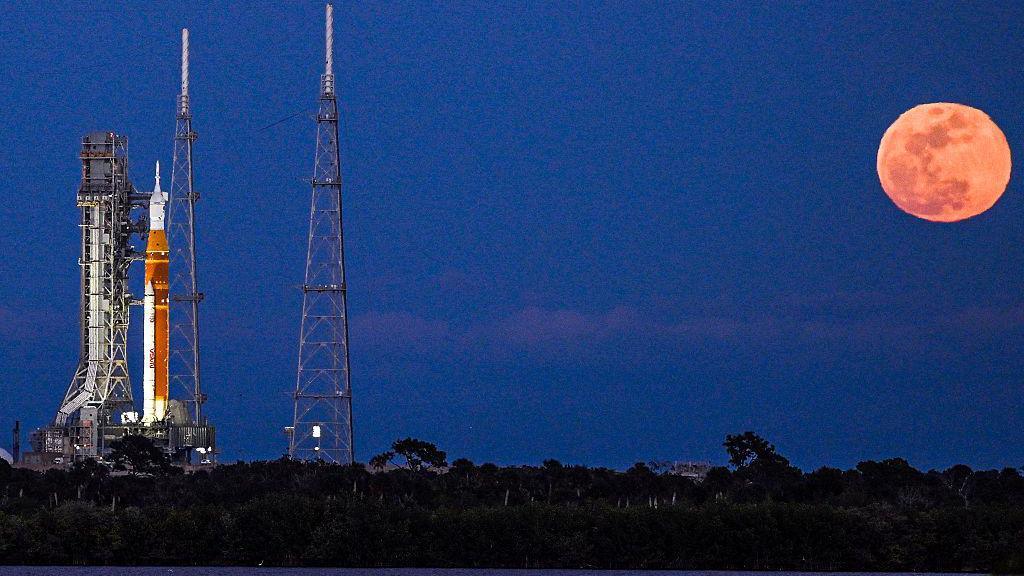
Samael.lol – The Snow Moon’s rise over Cape Canaveral on February 1 sets the stage for the Artemis II mission, which aims to send the first crewed lunar expedition in over half a century. However, the success of this launch hinges on weather conditions. If the environment proves unfavorable, NASA’s meteorologists might halt the mission, a process known as a scrub. The rocket carries nearly 750,000 gallons of propellant, making lightning a critical concern for safety.
Monitoring the Climate
As the launch window opens on April 1 at 16:24 EDT (22:24 BST), the 45th Weather Squadron is tracking potential risks. These include cumulus clouds, showers, and strong winds. Florida’s spring climate brings rising heat and humidity, while a high-pressure system in the western Atlantic drives moisture toward the eastern coast. This mix can foster cumulus cloud development, potentially leading to thunderstorms. With a two-hour window for launch, the team hopes for clear skies or favorable conditions. If not, alternative dates in early April may be considered.
Expert Insights on Weather Rules
“Our job is to ensure, from a meteorological perspective, that it is safe to launch,” said Mark Burger, the primary launch weather officer for Artemis II. He has been analyzing conditions for months, emphasizing the complexity of meteorological planning for the mission.
Historically, about half of all rocket launch delays are attributed to weather issues. Criteria such as cloud types, lightning risk, and atmospheric electricity must all be satisfied before a “go for launch” is approved. Burger highlighted that rocket-induced lightning, caused by an electric field interacting with exhaust trails, poses a unique challenge. “Even clouds without lightning can carry charges, and a rocket passing through them at high speed might act like a lightning rod,” he explained.
Additional Considerations
Weather officers also monitor external factors like heavy rain, strong winds, and extreme temperatures. During the countdown, they must confirm no criteria are violated. Meanwhile, solar activity is under scrutiny due to the peak in the solar cycle, which could expose astronauts to heightened radiation levels. The team is not only focused on Cape Canaveral but also on recovery sites in the North Atlantic, where conditions are less favorable during this time of year.
Preparing for the Mission
Weather planning for Artemis II began months prior, requiring extensive analysis of local and global climate patterns. Burger expressed enthusiasm about the mission, calling it the realization of a lifelong dream. “The Artemis II rocket is at the pad, and it’s now vulnerable to environmental factors,” he noted, underscoring the delicate balance between scientific precision and real-time weather challenges.