Competition for the Premier League’s crown
Samael.lol – Vincent Kompany has etched his name into the history books of English football, leading Manchester City to four Premier League titles during his 11-year spell as a player. His legacy on the pitch is so profound that a statue of him now stands outside Etihad Stadium, a testament to his influence. Now, as the head coach of Bayern Munich, he aims to replicate that success on a different stage. His appointment in May 2024 sparked curiosity, given his recent managerial stint at Burnley, which saw the club relegated. Yet, his tactics have since proven effective, as Bayern claimed the Bundesliga title last season and currently lead the table by 12 points.
Offensive risk-taking under Kompany’s reign
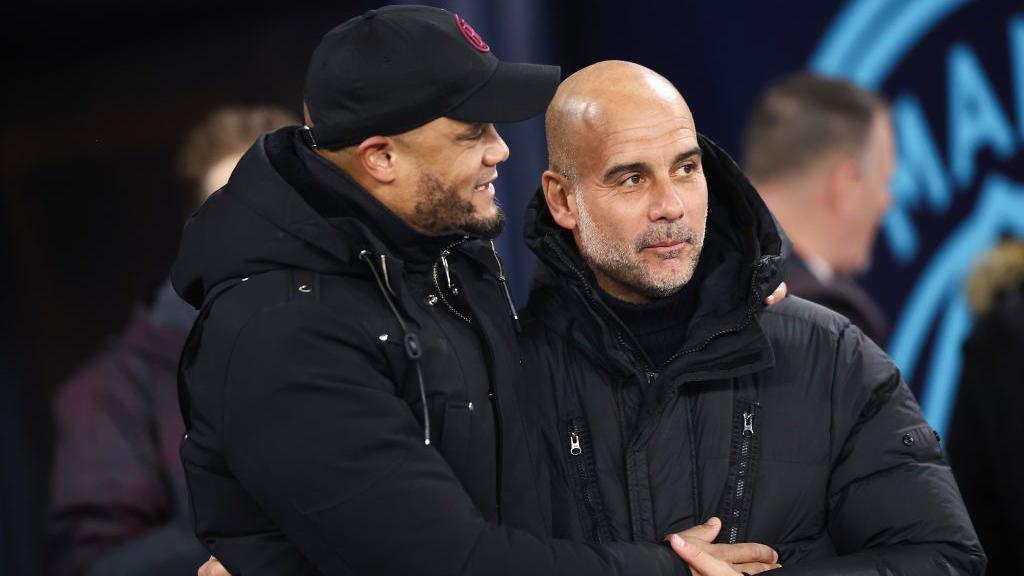
As the football world speculates about Pep Guardiola’s future, Kompany’s tenure at Bayern has offered a contrasting vision of the game. His teams embrace attacking risks, often operating with a fluid, man-to-man defensive structure that encourages bold play. This approach has transformed Bayern into a dominant force, both in possession and during transitions. Last season, they demonstrated this strategy against Atalanta, a team known for its disciplined marking. By rotating players, Kompany’s side disrupted the opposition, creating opportunities for teammates to exploit gaps.
Dynamic movement in action
Kompany’s tactics emphasize constant motion, with players frequently shifting roles. For example, attacking midfielder Serge Gnabry dropped into central defense against Atalanta, forcing the team’s defenders to track him. This left space for Bayern’s forwards, as the opposition’s defensive structure became disjointed. The result was a commanding 10-2 aggregate victory, showcasing the effectiveness of their system. Juventus coach Luciano Spalletti praised this fluidity, calling it “an encyclopedia of movement and positioning in football.”
Strategic flexibility in high-stakes matches
During Bayern’s Champions League quarter-final against Real Madrid, Kompany’s team employed similar principles. With the back four repositioning in a 4-2-3-1 setup, midfielder Joshua Kimmich dropped deep to form a back three, creating a numerical advantage. This forced Madrid’s wide midfielders, Arda Guler and Federico Valverde, to shift inward, opening up pathways for Bayern’s attackers. Full-backs Josip Stanisic and Konrad Laimer moved into narrower positions, while Michael Olise used his pace to penetrate defenses with minimal resistance. The result? Real Madrid were left struggling, allowing Harry Kane to finish unmarked in a pivotal moment.
Kompany’s Bayern thrives on synergy between players. The front three—Olise, Luis Diaz, and Kane—complement each other, with Olise as a creative force, Diaz as a high-pressing runner, and Kane as a versatile striker. This balance echoes the attacking dynamics of Barcelona’s historic success, proving that Kompany’s methods could shape the future of top-tier football.