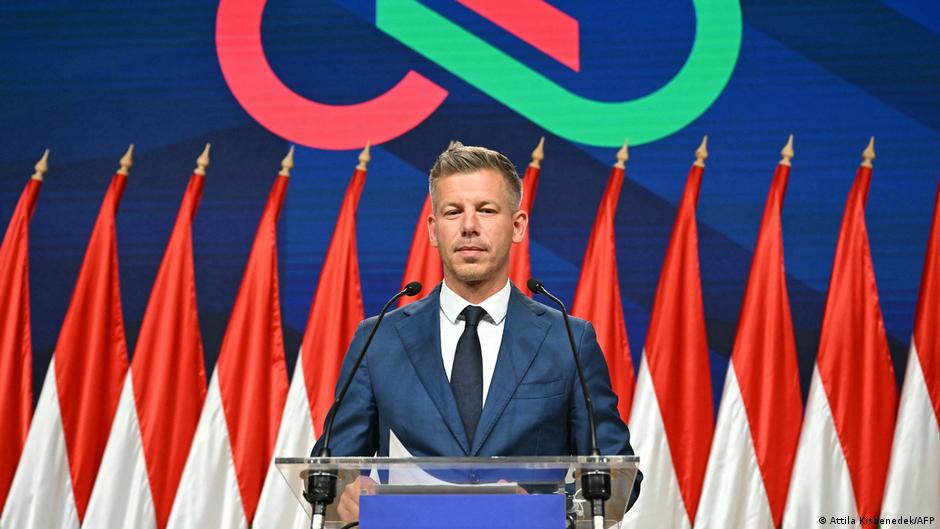
After his landslide victory, what will Peter Magyar do next?
Samael.lol – With a decisive electoral win, Peter Magyar has set his sights on transforming Hungary’s political landscape. The nation, which has undergone its second major shift since the end of communism in 1989/90, now looks to Magyar to dismantle the legacy of Viktor Orban’s ruling Fidesz party. Magyar aims to reposition Hungary as a democratic and law-based state, restoring its European standing. The question remains: how will he achieve these goals?
Magyar’s Political Identity
Magyar identifies as a conservative, but he resists labels that equate him to his predecessor. While he opposes the “patriot” narrative Orban used to justify his policies, he insists on a distinct ideological path. His outlook aligns with European integration, yet he critiques excessive EU influence and the nationalist rhetoric of Orban’s “sovereignism.” His rhetoric is sharp and provocative, but he maintains a clear separation from the populist style that defined Orban’s tenure.
Constitutional Reforms
Magyar has pledged to draft a new constitution, targeting the current one as a tool of centralized power. The existing framework, he argues, has enabled the Orban regime to consolidate authority. His proposed changes include limiting the prime minister’s term to two, ensuring a balance of power within the government. This move signals a commitment to institutional accountability, a stark contrast to the previous administration’s approach.
Electoral and Institutional Changes
A cornerstone of Magyar’s agenda is overhauling the electoral system, which was tailored to favor Fidesz. He seeks to decentralize state control and empower universities by returning autonomy to them. While judicial reform remains in the planning stages, he emphasizes the need for independent courts. Additionally, he plans to transfer intelligence services to the Interior Ministry, reducing executive overreach.
Anti-Corruption Measures
Magyar has committed to cracking down on corruption, vowing to investigate cases spanning the last 16 years of Orban’s rule. A key initiative is the establishment of an anti-corruption authority and a property restitution body. The latter will scrutinize public contracts exceeding €25 million, targeting past mismanagement. He also aims to strengthen the independence of the Attorney General, aligning with broader European efforts like the European Public Prosecutor’s Office.
EU Relations and Migration Policy
Magyar reaffirms Hungary’s European orientation, pledging to be a dependable ally for the EU and NATO. However, he advocates for a pan-European approach to migration, rejecting its use as a political weapon against the bloc. While he plans to maintain strict border controls, he does not intend to leverage migration as a tool for anti-EU sentiment. Yet, his concrete proposals for EU-wide solutions remain unclear.
Ukraine’s Role in Magyar’s Vision
Magyar adopts a measured stance toward Ukraine, acknowledging the need for improved relations but hesitating on accelerating its EU membership. He criticizes Orban’s rejection of a €90-billion loan package for Ukraine, though he has not confirmed whether he will overturn that decision. The tension between national interests and European solidarity will be central to his governance.
“The task now is to tear down the Orban system and make Hungary a normal, respected country in Europe again,” Magyar declared, outlining his ambition for a fresh political start.
As he prepares to lead, Magyar faces the challenge of proving his differences from Fidesz. Whether his reforms will succeed in reversing the centralization of power and restoring public trust remains to be seen. His vision for Hungary hinges on balancing accountability with pragmatic alignment with European values, a delicate task in a nation still grappling with the aftermath of a transformative election.