Sixty-six ways to fix Germany’s expensive healthcare system
Samael.lol – A task force of experts unveiled a comprehensive set of suggestions to address the rising costs in Germany’s healthcare sector. However, the success of implementing these ideas hinges on the government’s willingness to act. The 66-point plan, released on Monday, seeks to reduce the mounting health insurance fees that citizens now face. Germany’s healthcare system ranks among the priciest globally, with public insurers spending approximately €1 billion daily on medical services. Projections indicate this figure will climb further in the coming years.
Insurance premiums for state-run providers increased by roughly 3% this year, following a 2.5% hike in 2025. Yet, the cost of services is rising faster, creating a widening gap between revenue and expenditures. During a press event, the commission shared a chart from the state insurers’ association, GKV, illustrating that the deficit between income and expenses could swell from €15.3 billion in 2027 to €40.4 billion by 2030. To view the video, enable JavaScript and upgrade to an HTML5-compatible browser.
Government’s Role in Reform
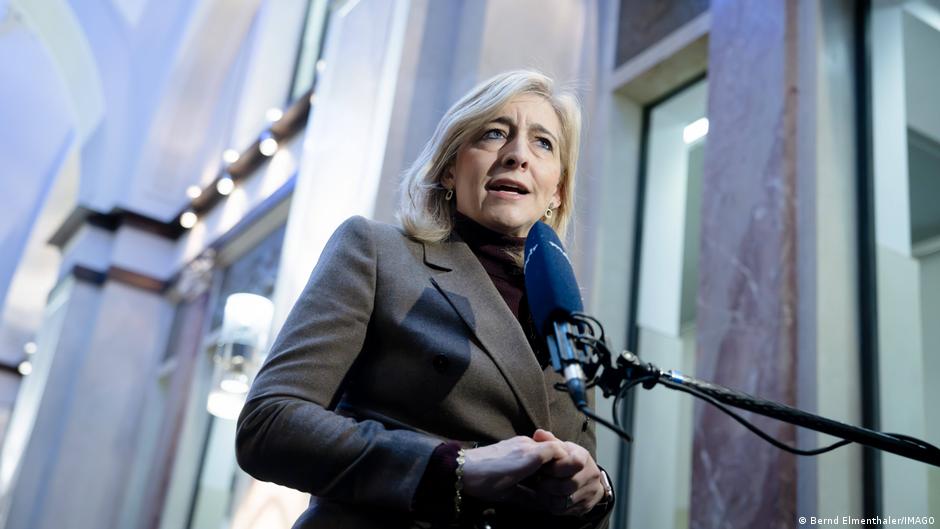
The 66 recommendations aim not only to bridge this financial gap but also to generate additional savings. The commission, composed of ten specialists from economics, medicine, and social law, was tasked with generating numerous options—since the government is unlikely to adopt all, particularly due to political considerations. Federal Health Minister Nina Warken, representing the Christian Democratic Union (CDU), stated at the press conference: “I’m grateful that the commission has provided us with a well-stocked toolbox, from which we will now select the most effective tools.” She emphasized that reforms would not undermine the solidarity-based foundation of the system.
“It’s time for the government to show its colors,” said Eugen Brysch, head of the German Foundation for Patient Protection (DSP). “The financial gap needs to be addressed. Sustainable health insurance can’t be achieved by a financial commission alone; it requires a unified government strategy.”
Brysch noted that while many of the 66 proposals have been discussed within healthcare organizations for years, the government must now decide on a cohesive plan. He warned that the suggestion to cover the unemployed’s insurance costs through government funds might spark controversy within the coalition. To view the video, enable JavaScript and upgrade to an HTML5-compatible browser.
The Dual Healthcare Structure
Germany operates a dual system, where healthcare is funded by contributions from employees and employers to insurers. Health insurance is compulsory for all citizens, and state insurers serve about 90% of the population, with no exclusions. Around 10% opt for private coverage, which typically includes broader benefits. Critics have previously pointed out that hospitals and doctors may favor costly treatments, driven by financial incentives, which in turn inflate insurance payments.
Minister Warken pledged to expedite the review of the commission’s proposals and submit a draft bill to the Cabinet by summer. The goal is to balance cost control with maintaining the system’s core principles, ensuring it remains accessible and fair for all.