North Korea-Russia Axis Strengthened by Belarusian Alliance
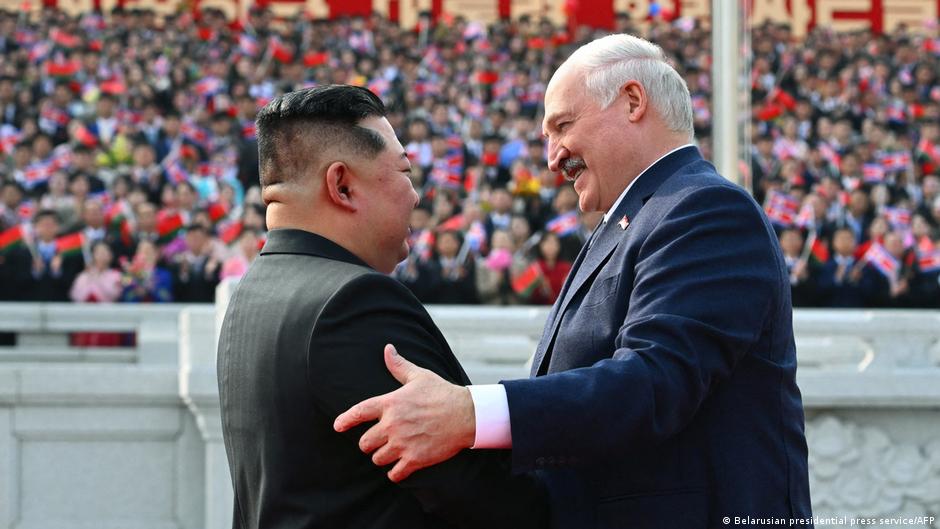
Samael.lol – Belarus’ leader Alexander Lukashenko’s recent visit to North Korea marks a significant step in Kim Jong Un’s strategy to solidify connections with nations under Russian influence. During a two-day summit in Pyongyang, the two leaders formalized a friendship and cooperation treaty, with Lukashenko also committing to establish an embassy in the North Korean capital. This move underscores their shared commitment to regional alignment and mutual support.
Kim Jong Un emphasized unity with Belarusian authorities in maintaining national stability and economic progress, as stated by the state-run Korea Central News Agency (KCNA). Lukashenko highlighted that despite their geographical distance, the relationship between the two countries has reached a new level, rooted in historical bonds and shared objectives.
Expert Perspectives on the Strategic Implications
Andrei Lankov, a Russian-born professor at Seoul’s Kookmin University, noted that the summit in Pyongyang will advance the Minsk-Moscow-Pyongyang alliance. He explained that such gatherings aim to enhance the countries’ global standing, counter perceptions of marginalization, and demonstrate a unified front against Western influence.
“This is an extension of the North’s diplomatic outreach efforts and when Lukashenko attended the military parade in Pyongyang, he would have been told that everything he could see was for sale,” said Chun In-bum, a retired lieutenant general and senior fellow at the National Institute for Deterrence Studies. He added that unseen technologies, including advanced intercontinental ballistic missiles, are also available for negotiation.
Chun anticipates Belarus leveraging North Korea’s missile expertise, particularly in drone warfare, as part of the growing partnership. The North’s recent drone program has gained momentum from its involvement in Russia’s Ukraine conflict, offering valuable insights for future military operations.
Kim’s efforts to secure Lukashenko’s support align with broader diplomatic initiatives. In addition to the summit, North Korea signed a media cooperation pact with Russia’s TASS agency, and the first Air China flight between Beijing and Pyongyang resumed after a six-year pause, signaling renewed ties with the region.
As the alliance deepens, analysts suggest the collaboration may extend to shared military advancements, including North Korea’s development of a new missile engine linked to MIRV technology. Such partnerships aim to amplify their collective influence and counterbalance Western dominance on the global stage.