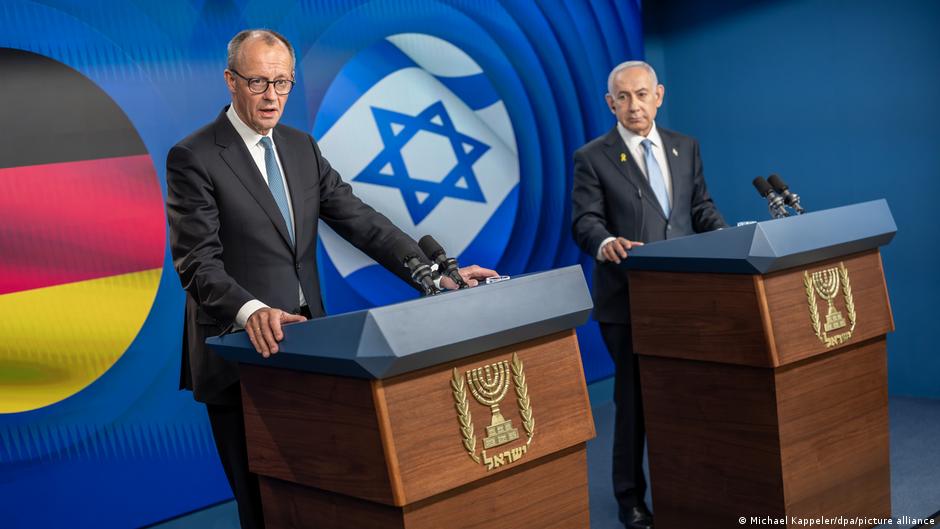
Germany, Israel see growing divide after criticism of Merz
Samael.lol – Recent tensions between Germany and Israel have escalated following sharp remarks from Israeli Finance Minister Bezalel Smotrich against German Chancellor Friedrich Merz. This incident marks a widening rift between the two nations, with Smotrich’s public rebuke signaling a new level of discord. Earlier in the week, Merz had spoken on the phone with Israeli Prime Minister Benjamin Netanyahu, a meeting initially seen as a standard diplomatic exchange. However, Merz’s spokesperson, Stefan Kornelius, later emphasized the chancellor’s stance in a press release: “The chancellor expressed deep concern about developments in the Palestinian territories. There must be no de facto partial annexation of the West Bank.” The same message was posted on X in both German and English, underscoring the gravity of the issue.
While Merz’s position is not entirely novel, the recent verbal clash has intensified its impact. During a July 2025 call between the two leaders, the German government had already stated: “The chancellor stressed that no steps toward annexation of the West Bank should be taken.” Yet, this time, Smotrich’s response was more pointed. On Monday evening, he posted a scathing critique on X, declaring:
“The days when Germans dictated to Jews where they could live are over. You will not force us into ghettos again, especially not in our own land.”
Smotrich, a 46-year-old member of Netanyahu’s cabinet, has long been known for his far-right views and controversial statements.
Smotrich’s comments came on the eve of Yom HaShoah, Israel’s Holocaust Remembrance Day. On this day, the nation pauses for moments of reflection, honoring the 6 million Jews murdered by Nazi Germany. By referencing “ghettos” and ending with the phrase “Am Yisrael Chai” (“The people of Israel live”), Smotrich tied his criticism to the historical trauma of the Holocaust. His choice of timing was deliberate, aiming to highlight perceived German interference in Israeli sovereignty.
Israeli Ambassador Ron Prosor in Berlin countered Smotrich’s remarks, praising Merz as a “great friend of Israel” during an interview with Kan. “It is natural to debate with the Germans—particularly on this emotionally charged day,” Prosor noted. However, he argued that Smotrich’s attacks were “exactly what distorts the memory of the Holocaust.” Prosor, who frequently defends Israel in German discussions, accused Smotrich of using the genocide to advance his political agenda.
The conflict foreshadowed a similar confrontation three weeks prior, when Israeli Foreign Minister Gideon Saar sharply responded to a post by German ambassador Steffen Seibert. Seibert, known for his generally supportive stance toward Israeli policies, had criticized settler violence in the West Bank. His post, which included references to Hamas’s October 7 attacks, stirred debate. Smotrich’s latest outburst now amplifies the growing tension, with both sides using the Holocaust as a symbol in their ideological clash.