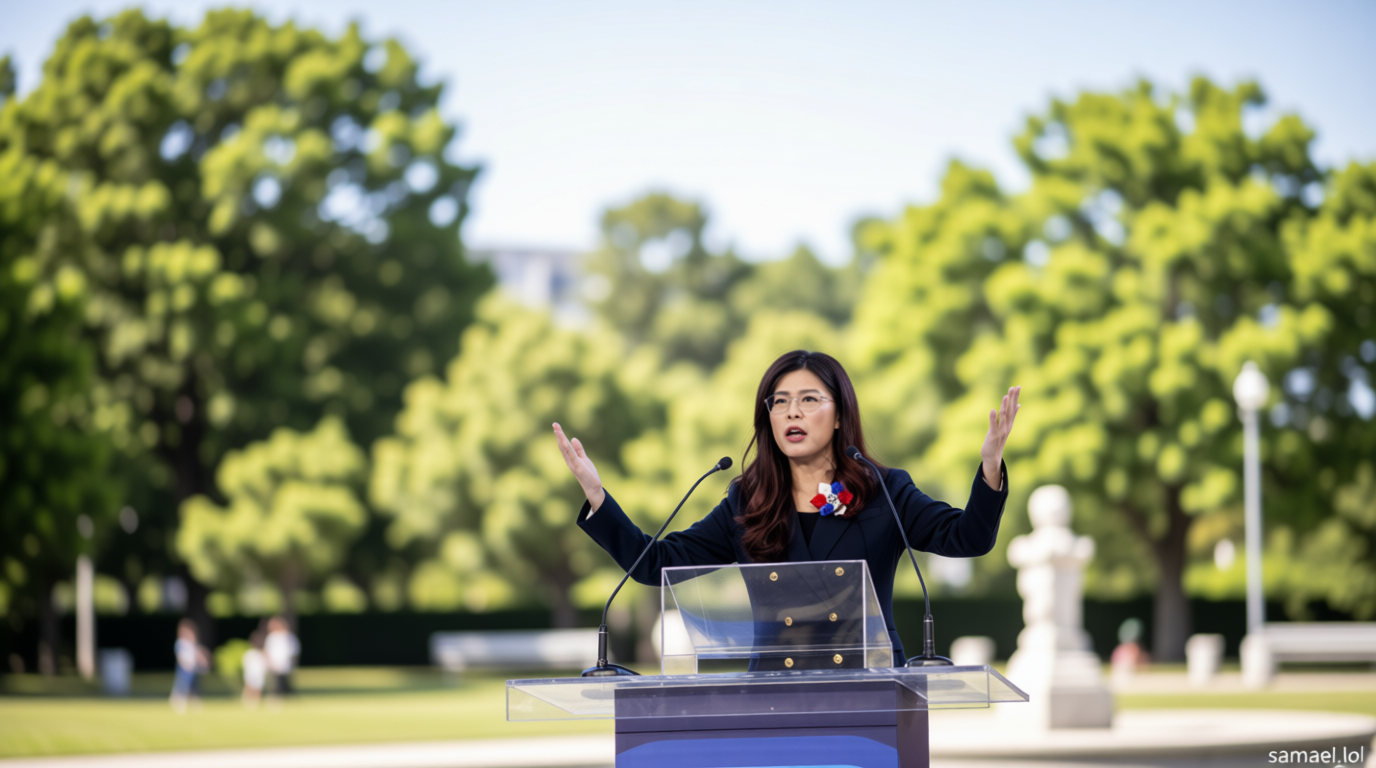
Taiwan Opposition Leader Accepts Xi’s Invite to Visit China
Samael.lol – The visit by KMT chairperson Cheng Li-wun to China, slated for April, marks the first such trip by a current opposition leader in over a decade. This development comes after she formally accepted an invitation extended by Chinese President Xi Jinping. Cheng’s decision to travel to Beijing signals a potential shift in political dynamics between Taiwan and mainland China.
Kuomintang (KMT) officials announced the move on Monday, highlighting Cheng’s gratitude for the invitation and her eagerness to accept it. The party emphasized her aspirations to foster collaboration with China’s Communist Party, aiming to advance cross-strait relations, deepen economic ties, and promote regional stability. Her remarks underscore a focus on mutual benefit and long-term peace in the Taiwan Strait.
“I do not believe a single meeting can resolve all the issues that have been accumulating for nearly a century,” Cheng said. “But … I hope I can successfully build such a bridge.”
Cheng Li-wun assumed leadership of the KMT following her election in October 2023. Her commitment to engaging with Beijing has drawn criticism from within her party, with some accusing her of prioritizing China’s interests over Taiwan’s autonomy. This stance contrasts with the Democratic Progressive Party (DPP), which governs Taiwan and views the KMT’s approach as too accommodating to mainland influence.
China’s state media, Xinhua, detailed the delegation’s planned itinerary, which includes stops in Beijing, Shanghai, and Jiangsu province from April 7 to 12. While the schedule does not yet confirm a direct meeting with Xi, it reflects a broader effort to strengthen ties between the two sides. The visit arrives a month before U.S. President Donald Trump is set to attend a summit in Beijing, originally postponed from early April due to the U.S.-Israel conflict with Iran.
Cheng’s trip has sparked debate over its implications for Taiwan’s political landscape. Lai Ching-te’s DPP government has criticized her for aligning with China’s agenda, particularly her support for delaying defense spending plans. The DPP seeks approval for an additional $40 billion in military funding, a proposal that the KMT has hesitated to endorse, citing concerns about being handed “blank cheques” without sufficient scrutiny.