Who’s winning under Trump’s tariff policy?
Global trade shifts after a year of sweeping US tariffs
Samael.lol – One year into Donald Trump’s “Liberation Day” tariff strategy, international trade dynamics have transformed. Data reveals which nations have profited, which have suffered, and who has borne the financial consequences. On April 2, 2025, Trump stunned the global community by declaring “economic independence” for the United States, applying broad tariffs to all countries. Though the US Supreme Court contested this bold action, the president remained determined to expand it.
DW examined import origins in the US over the past year to assess the policy’s outcomes. The tariffs, initially set at a 10% baseline for nearly every nation—excluding a few due to sanctions or existing trade agreements—triggered immediate disruptions. Countries exporting more to the US than they imported faced rates up to 50%. “Few anticipated the US would launch a global trade war with such intensity,” remarked Haishi Li, an economist at Hong Kong University specializing in tariffs and sanctions.
“Imports were like water, flowing from high-tariff countries to low-tariff countries,” Li told DW.
Following the April 2 announcement, the US stock markets experienced a sharp decline. Trump later paused tariffs above the 10% baseline for 90 days, starting April 9, giving partners like the EU, Vietnam, and UK time to renegotiate deals. China, however, remained a focal point, with retaliatory tariffs escalating to 125% during the following months. By August 7, 2025, finalized rates took effect, cementing the new trade framework.
Before the tariff rollout, signs of change were evident. Trump’s 2025 re-election campaign emphasized his vision of “trade dominance,” prompting US businesses to stockpile goods in anticipation of rising costs. Between January and March 2025, imports surged by roughly 20% compared to the 2022–2024 average, adding $184 billion to the economy. Gold bullion imports, in particular, spiked 50 times the usual volume, totaling $72 billion—largely sourced from Switzerland, but also including unexpected suppliers like Uzbekistan, the Philippines, and Zimbabwe.
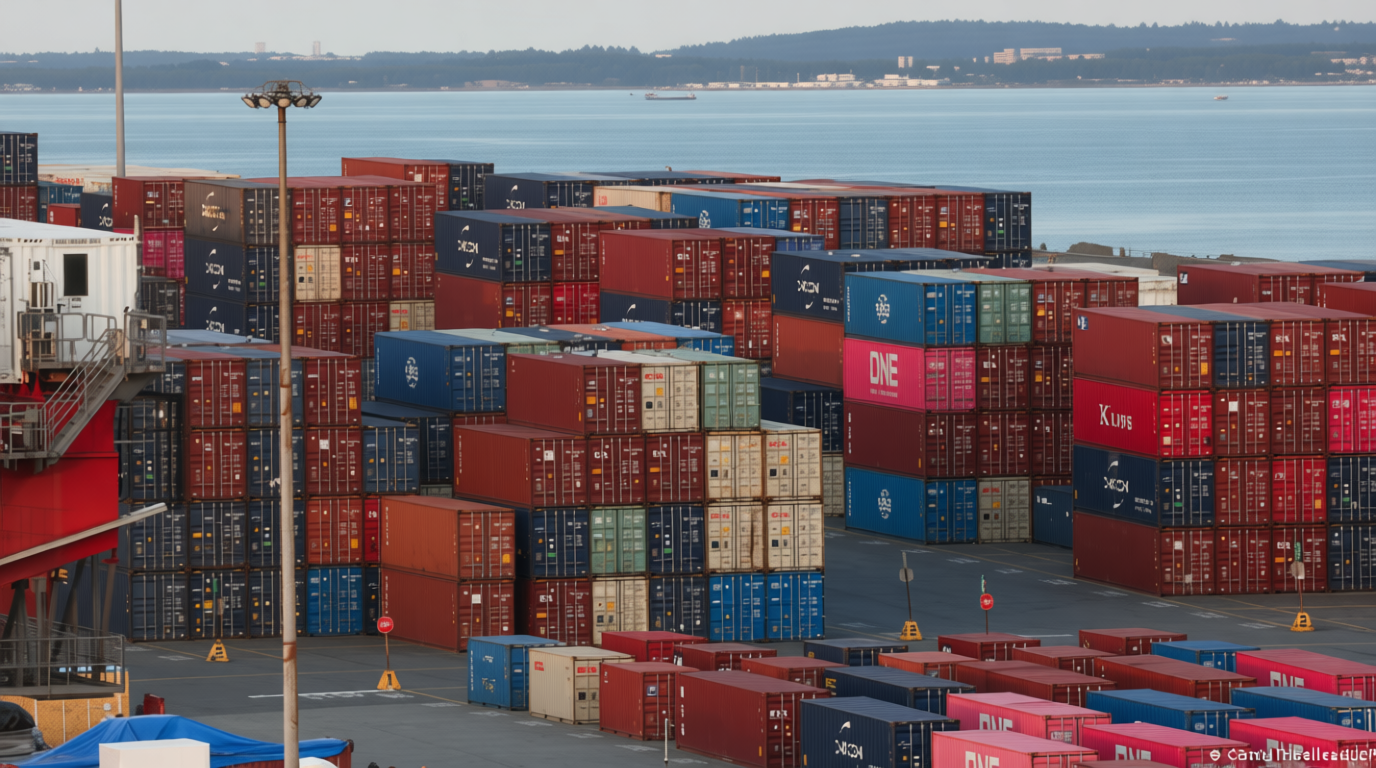
Asian manufacturers also adapted swiftly. Taiwan, Vietnam, and India saw increased exports to the US, reflecting strategic shifts. During the April 9 pause, importers leveraged the window to adjust supply chains, favoring nations with lower tariffs. Li’s research highlights this trend: companies prioritized substitutes for China, which endured the most severe tariff threats. US imports from China fell by $66 billion between April and July 2025 compared to prior years.
Canada, targeted with 25% tariffs, lost $24 billion in exports. Yet, its overall trade volume in 2025 dipped only $1.6 billion from 2024, indicating resilience through diversification. Li noted that “10% countries” like Australia and Latin American states gained the most, while Vietnam, Thailand, and Taiwan—subject to 46%, 36%, and 34% reciprocal tariffs respectively—saw $34 billion in additional US imports alone.
Who ultimately bears the cost? While some nations thrive, others face uncertainty. The tariffs have reshaped supply chains, but the financial burden remains a question mark for the global economy.