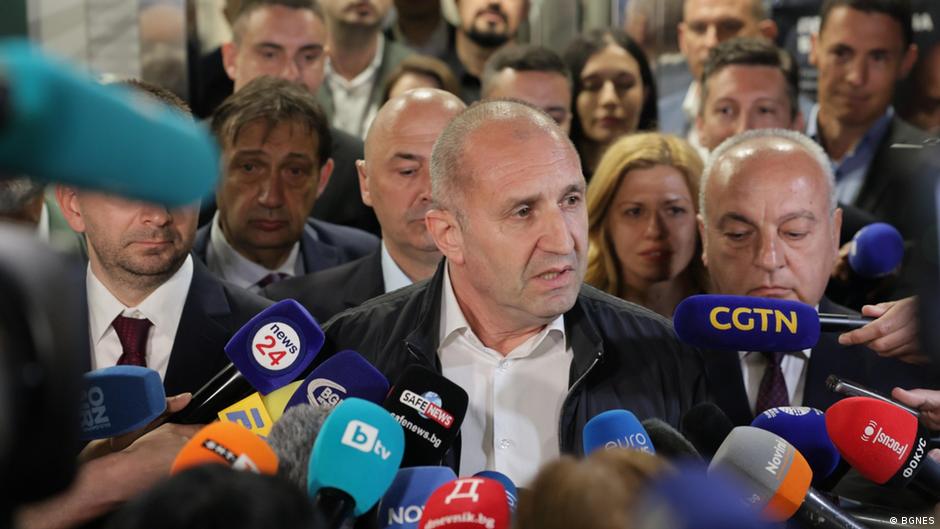
Bulgaria’s Pro-Russian Leader Rumen Radev Secures Electoral Victory
Samael.lol – Former President Rumen Radev’s newly formed center-left party, Progressive Bulgaria, has claimed an absolute majority in the nation’s eighth general election within five years. The results, announced on Monday, signaled a significant shift in Bulgarian politics, with both Russia and the EU expressing their support. Radev’s party secured 44.6% of the vote, translating to approximately 130 seats in the 240-member parliament. This outcome marks a strong performance, surpassing expectations and securing one of the largest mandates for a party in recent Bulgarian history.
Progressive Bulgaria outperformed the pro-European PP-DB coalition and the long-standing center-right GERB party, led by former Prime Minister Boyko Borissov. Radev, a vocal critic of the EU, has emphasized closer ties with Russia, while also pledging to address domestic corruption. His win has been acknowledged by Kremlin spokesperson Dmitry Peskov, who stated,
“Russia was impressed by the statements made by Mr. Radev.”
European Commission head Ursula von der Leyen added,
“Bulgaria is a proud member of the European family and plays an important role in tackling our common challenges. I look forward to working together.”
The snap election followed the collapse of a conservative government amid nationwide anti-corruption protests last December. Bulgaria, the EU’s poorest member, has faced political turmoil since 2021, when Boyko Borissov’s administration was ousted under similar demonstrations. Despite joining NATO and the eurozone in early 2024, the country’s political landscape remains volatile. This election, the eighth in five years, is seen as a chance to resolve ongoing deadlock.
Radev, a former air force general, ran as the leader of a coalition that had been predicted to win but not secure a majority. He called for mass voting, arguing,
“Mass voting is the only way to drown vote-buying in a sea of free votes.”
His campaign focused on dismantling the “oligarchic governance model,” a system he deems outdated. While supportive of Russia, he has not ruled out EU collaboration, vowing to avoid using Bulgaria’s veto to block aid to Ukraine.
Radev also criticized the EU’s green energy strategy, calling it naive in a world lacking clear rules. In contrast, former Prime Minister Borissov, who has held the position three times, remained optimistic despite GERB’s defeat. He asserted,
“Winning the election is one thing; governing is quite another. The election determines who is first, but negotiations will decide who governs. GERB can go into government or opposition, and patience is needed in politics.”
Borissov praised his party’s achievements, including Bulgaria’s recent accession to the eurozone, as fulfillment of 1990s-era aspirations.
With the political landscape reshaped, many hope Radev’s leadership will bring stability. His victory underscores the divided sentiments within Bulgaria, balancing pro-Russian leanings with European alignment. The nation now faces the challenge of translating this electoral success into effective governance.
Political Shifts and Future Prospects
Amid the election results, the political dynamics in Bulgaria have evolved. Radev’s emphasis on Russia and his critique of EU policies reflect a broader tension in the country. Meanwhile, GERB’s decision to act as opposition highlights the fragmented nature of Bulgarian politics. As the new government takes shape, the focus will shift from campaigning to addressing the nation’s economic and geopolitical priorities.
The snap election was a response to widespread dissatisfaction with the previous administration. With anti-corruption protests having already reshaped the government twice in 2023, the public’s demand for change appears to have been met. Radev’s coalition now faces the task of consolidating power and implementing reforms, a challenge that will test its ability to navigate both domestic and international complexities.
Historical Context
Bulgaria’s political history since 2021 has been marked by instability, with the resignation of Boyko Borissov’s government sparking a cycle of elections. The country’s transition to the eurozone and Schengen area in early 2024 symbolizes its integration into European structures, yet the recent vote reveals lingering support for alternative directions. As the new parliament begins, the balance between European values and Russian alignment will be central to Bulgaria’s future trajectory.
To view this video, enable JavaScript and upgrade to a web browser supporting HTML5 video. The media coverage highlighted the significance of Radev’s victory, underscoring its impact on Bulgaria’s political and economic landscape. With a clear mandate, his party aims to redefine the nation’s path forward, despite the challenges ahead.
Editor
Edited by: Sean Sini