NASA’s Mars rover finds new organic matter in crater
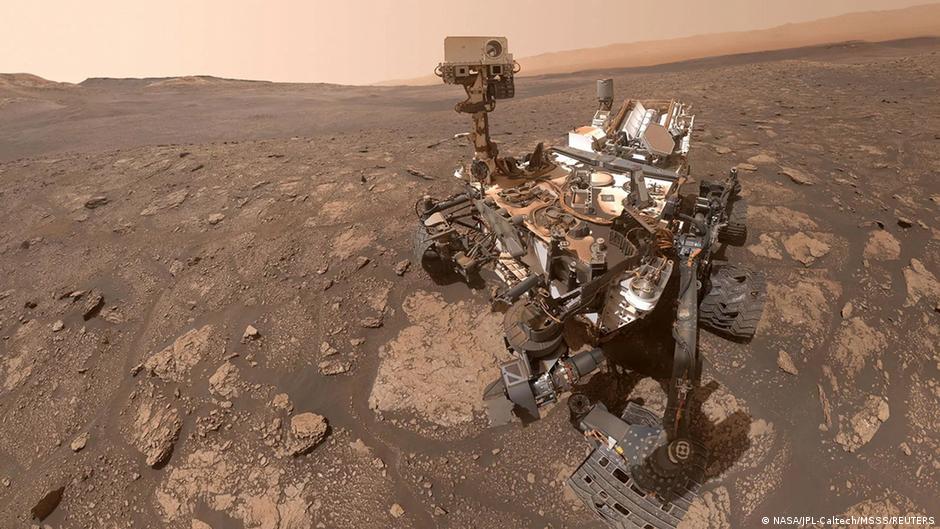
Samael.lol – The Curiosity rover, part of NASA’s Mars mission, has detected additional organic molecules while examining the Gale Crater, a region once thought to have been a dry lake. Scientists are using these findings to explore the possibility of ancient life on the Red Planet. Recent analyses revealed seven organic compounds in Martian rock, five of which were previously unknown on the planet. The discovery adds to growing evidence that the area may have once supported conditions conducive to life.
Researchers, publishing in the journal *Nature Communications*, highlighted that one of the compounds resembles the foundational structures of DNA. This molecule, which carries genetic information on Earth, was found in samples gathered near the equator in 2020. While the compounds could originate from nonbiological sources, their presence suggests a rich chemical environment. Mars, believed to have formed 4.5 billion years ago, was once warmer and wetter than its current state, according to planetary scientists.
“We cannot yet confirm that Mars hosted life, but our findings strengthen the case that it was a habitable world when life first emerged on Earth,” said Amy Williams, an astrobiologist at the University of Florida and lead author of the study. “This research narrows the search for life’s building blocks, showing they may have been preserved for billions of years,” she added.
The Gale Crater’s Glen Torridon region, rich in clay, was selected for its ability to retain organic materials better than other minerals. The Curiosity rover arrived on Mars in 2012 and collected the samples in question during its 2020 expedition. A key tool in the analysis was TMAH, a chemical used to break down organic matter, marking the first such test conducted off Earth.
Williams noted that one identified molecule, benzothiophene, has also been found in meteorites and asteroids. “The same materials that fell on Mars could have rained down on Earth, offering the ingredients for life as we know it,” she explained. While the origin of the compounds remains uncertain—whether from geological activity, meteorite infall, or biological processes—the results indicate current instruments and future missions may detect complex organic molecules if they existed on Mars.
Although the rover’s findings do not prove life, they expand the understanding of Mars’ chemical history. The presence of nitrogen-containing compounds, for instance, points to prebiotic chemistry, a step toward life’s emergence. These discoveries continue to shape the search for habitability in the planet’s ancient past.