What are Japan, South Korea learning from Hormuz disruption?
What are Japan, South Korea learning from Hormuz disruption?
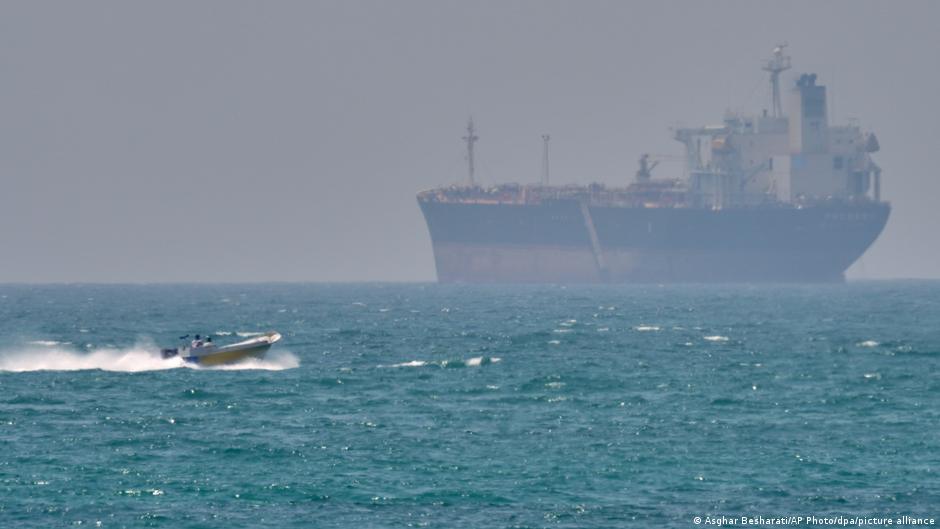
The recent blockade of the Strait of Hormuz has exposed the critical role of maritime trade in Japan and South Korea’s supply chains. With the U.S.-Iran standoff causing prolonged disruptions in global energy flows, the two nations are reevaluating their dependence on vital sea routes for food, fuel, and industrial materials.
Experts warn that such a crisis in the region could have cascading effects. “Sea lanes are absolutely vital to both Japan and South Korea, as they rely on maritime trade for exports and critical imports such as energy, raw materials and food,” stated Joseph Kristanto, a maritime security analyst at Singapore’s S. Rajaratnam School of International Studies.
If these sea lanes were blocked for an extended period, the impact would be far more than just shipping delays.
He added, “Energy prices would rise, factories would struggle to maintain production levels, food and input costs would increase and both economies could face a major strategic shock.”
Analysts note that China is capitalizing on the U.S.’s reduced presence in the Indo-Pacific. Last week, Beijing raised objections after a Japanese destroyer navigated through the Taiwan Strait, a move Tokyo described as a demonstration of “unwavering commitment to the principle of freedom of navigation under international law.” A Chinese Foreign Ministry spokesperson countered that the deployment “severely undermines the political foundation of China-Japan relations and threatens China’s sovereignty and security.”
China’s assertiveness in the South China Sea has positioned it as a key strategic area. The region hosts a network of contested islands where an estimated $3.36 trillion worth of global trade passes annually. Kristanto emphasized that the vulnerability stretches beyond individual chokepoints. “The sea lanes serving Japan and South Korea form a continuous corridor, with the South China Sea and Taiwan Strait closely linked,” he explained.
Even if ships get through the South China Sea safely, they still need to pass through the Luzon or Taiwan approaches to reach Northeast Asia.
William Yang of the International Crisis Group highlighted the potential for regional escalation. “Japan and South Korea are completely reliant on sea trade, and any disruptions in the sea lanes or, in a worst-case scenario, loss of control of those sea lanes to a rival, would be a nightmare scenario,” he said. The situation has prompted urgent measures, such as a March agreement between Korea Gas Corporation (KOGAS) and Japan’s JERA, the world’s largest importers of liquefied natural gas, to bolster energy security through mutual deliveries and supply analysis.