Russia to block Kazakh oil flows to Germany via key pipeline
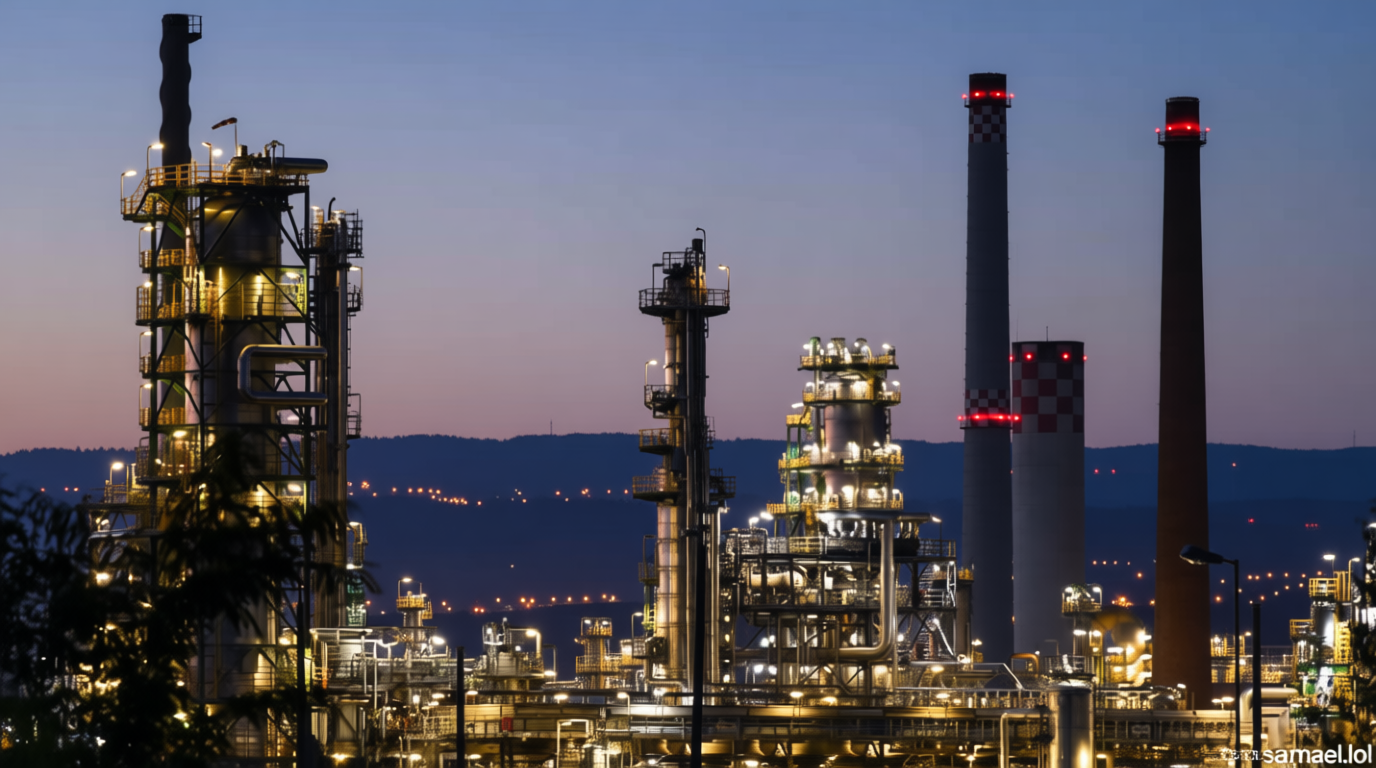
Samael.lol – Germany announced that Russia plans to restrict oil shipments from Kazakhstan to a critical refinery that fuels Berlin’s energy demands starting May 1. The Druzhba pipeline, a major conduit for oil to the PCK refinery, will be used to cut off Kazakh crude exports to Germany. This refinery, situated in Schwedt—a town 100 kilometers north of Berlin—plays a central role in supplying diesel, petrol, and heating oil to the capital. The refinery’s operations were seized by the German government in 2022 after Russia’s invasion of Ukraine. Since then, it has increasingly relied on Kazakh oil imported through the pipeline, which traverses Russian territory before reaching Berlin.
The German Federal Ministry for Economic Affairs and Energy shared the update with DW through an official statement. “Rosneft Germany informed the Federal Network Agency, acting as trustee, that Kazakh crude oil transit via the Druzhba pipeline to the PCK refinery is prohibited as of May 1, 2026,” the ministry stated. It added that the Russian Federation had not yet officially confirmed this decision to Germany, with Rosneft Germany currently evaluating the consequences and adjusting accordingly.
Reuters initially reported the move, citing multiple industry sources. The PCK refinery supplies over 90% of petrol, diesel, and heating fuel to Berlin and its surrounding areas. However, the refinery is not entirely dependent on Kazakh oil. Most of its supply now comes from ports in Rostock and Poland, bypassing the Druzhba route. A full stoppage of Druzhba deliveries would still pose a significant challenge, as about 17% of the refinery’s annual 12 million metric tons of oil processing depends on this route.
Global Energy Crisis Intensifies
The news arrives amid a deepening energy crisis, with Europe and other regions facing one of the worst oil shortages in decades. The war in Iran and the ongoing closure of the Strait of Hormuz have disrupted oil flows, driving prices to unprecedented levels. Kerosene, essential for jet fuel and a primary product from the PCK refinery, is particularly scarce. Airlines worldwide have cut flights, with Lufthansa reducing its May to October schedule by 20,000 routes.
Russia has consistently leveraged energy exports as a strategic tool since the Ukraine invasion. The EU’s reliance on Russian oil and gas has dropped from 27% to 2% in 2025, while gas dependency fell from 45% to 12%. The REPower EU Regulation aims to eliminate Russian fossil fuel imports by 2027. Benjamin Hilgenstock, a senior economist at the Kyiv School of Economics, emphasized that Russia will continue to threaten European energy security until all imports through its network are halted. “This situation shows Russia can still disrupt supply chains even with reduced volumes,” he told DW. “Germany and the EU should expedite their transition away from Russian energy sources to avoid further disruptions.”
Russia has not yet commented on the decision. Last month, President Vladimir Putin suggested exploring the possibility of reducing energy supplies to strategic allies. The move underscores ongoing efforts to assert control over energy markets, even as global demand shifts and supply chains tighten.