Back from mid-race seizure – Warner Judd on second chance
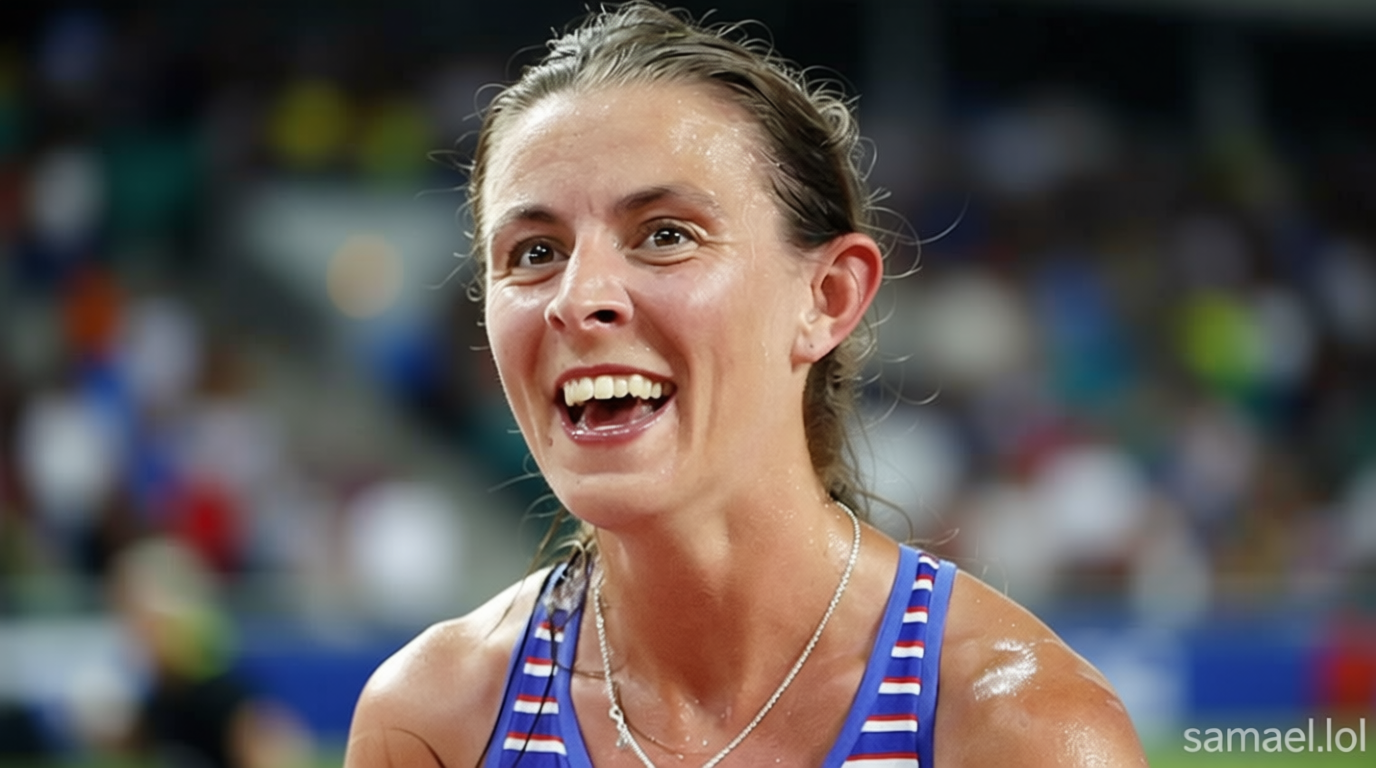
Samael.lol – Jess Warner Judd started her athletic journey as an 800m specialist before shifting to longer distances. At 31, she’s preparing for her debut at the London Marathon in 2026, a milestone made possible by a dramatic turn of events. Her career was nearly derailed during the European Championships in June 2024, when a seizure struck mid-race, forcing her to collapse on the track.
A Career Interrupted
She doesn’t recall much of that night in Rome. The incident occurred just months after she had celebrated one of her proudest moments: finishing eighth in the 10,000m at the 2023 World Championships, narrowly missing the podium by seven seconds. The seizure, caused by undiagnosed epilepsy, left her unable to compete at the 2024 Olympics. “I’m very lucky to have had a second chance at running,” she says. “It’s a second chance I just didn’t think I’d probably have.”
“I remember having really horrible discussions after trying to restart my track season and it quickly not happening. The doctors, who were brilliant, saying that I would probably have to retire if I kept trying before I had therapy, because my body wasn’t going to cope.”
The Seizure That Changed Everything
Her husband Rob, who was present at the event, vividly remembers the details. “It got to the point around five or six kilometres in when Mike and I had got as close as we could to the track and were shouting at her to stop,” he says. Warner Judd’s coordination faltered, and she veered into lanes two and three, her distress plainly visible. After collapsing with 600m to go, she required emergency medical attention and was later sedated following a second seizure.
“That really hit home that it was a very, very serious scenario,” says Rob. “It also hit home that there are more important things to life than running. At that point, I was like, I don’t care if she never races ever again, as long as she’s OK.”
Diagnosis and the Road to Recovery
The first sign of her condition came months earlier during a low-key 10,000m race in California, where she failed to cross the finish line for the first time. A similar mid-race seizure had occurred there, but epilepsy’s elusive nature made it hard to pinpoint. It wasn’t until later that she received a diagnosis of focal epilepsy, which explained the unusual sensations and movements during episodes.
Despite her physical recovery, returning to running proved emotionally challenging. “It was really difficult to love running again,” she reflects. “Going for a run used to be my safe space, to clear my head and feel better. Then to have that association between racing and having a seizure… I was so scared of that happening again.”
New Beginnings in Clitheroe
Warner Judd has since settled into her new home in Clitheroe, Rob’s hometown in Lancashire. The couple moved there last year, bringing their cocker spaniels Bruce and Bernie, along with rabbits Bea and Bailey. While the road to recovery has been far from smooth, she now focuses on enjoying the sport rather than chasing podium finishes. “It realigns your aims and perspective on life,” she says. “Coming back to running, I just wanted to do it for me.”