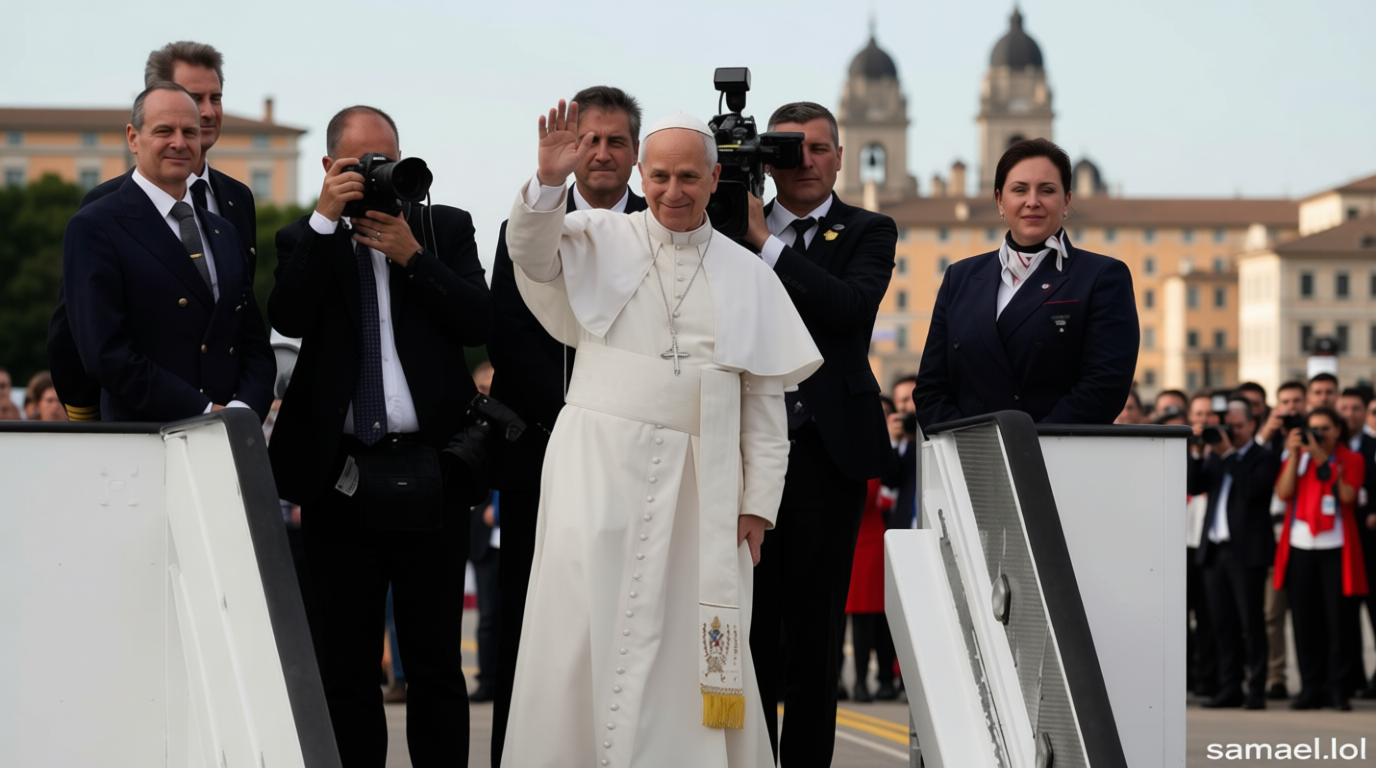
Pope Leo stresses importance of dialogue on Africa trip
Samael.lol – During his recent tour of four African nations, Pope Leo XIV emphasized the value of dialogue as a cornerstone for fostering peace and unity. The pontiff addressed pressing global issues, including conflict, corruption, and inequality, urging leaders to prioritize the welfare of their citizens. His visit, which concluded after a ten-day engagement, aimed to showcase a vision of peace and serve as a symbolic gesture to the international community.
Cameroon’s reception and governance focus
In Cameroon, the pope’s itinerary included a Mass at the Japoma Stadium in Douala, the nation’s largest city. Franck Fokou, a Cameroonian political analyst, welcomed the pontiff’s willingness to tackle challenging governance topics.
“We saw the Holy Father’s appeal as a reminder for the government to uphold human rights. He highlighted that violence should not be wielded against the populace, but must be directed toward achieving peace,”
Fokou remarked.
Cameroon is led by President Paul Biya, who has governed for eight terms and is currently 93 years old. Human rights organizations, including Amnesty International, have raised concerns about the state of rights under his administration. A separatist conflict in the English-speaking Northwest and Southwest regions has persisted, with warring factions recently observing a ceasefire during the pope’s visit.
Interfaith engagement and social cohesion
The pope’s message resonated deeply with local communities. Daniel Bilong, a Cameroonian priest, noted the significance of the visit, stating,
“The pope’s presence means much to us, not only for Catholics but for all faiths. Encounters with Muslims were particularly meaningful, underscoring the necessity of dialogue for societal harmony,”
he said.
Leo also reflected on the legacies of his predecessors, invoking Pope John Paul II’s “messenger of hope” and Pope Benedict XVI’s focus on justice. “We must ask ourselves: Where do we stand? What remains to be done?” he posed during his sermon, calling for renewed commitment to these ideals.
Expanding the Church’s footprint in Africa
His tour began in Algeria, where he visited the Great Mosque of Algiers—the third-largest mosque globally—and promoted mutual respect between Muslim and Christian communities. Fredson Guilengue, a political scientist at the Rosa Luxemburg Foundation, pointed out that the pope’s mission aligns with efforts to strengthen the Catholic Church’s influence on the continent. “Africa hosts 20% of the world’s 1.4 billion Catholics, a growing population,” Guilengue explained.
Guilengue also drew parallels between Leo’s message and that of Pope Francis during his 2019 visit to Mozambique. Both popes underscored the need for peace, stability, and condemnation of elite exploitation. In Angola and Equatorial Guinea, similar themes emerged, with ongoing protests targeting Prime Minister Joao Lourenco. Despite its wealth in resources like oil and diamonds, half of Angola’s 38 million people live in poverty.
Women and youth, according to Sophie Estelle Gouleu, head of the Policemen’s Wives Association, are pivotal to sustaining social unity. “The Holy Father’s words reflect a shared desire for peace, offering a path forward for civil society,”
Gouleu added.