40 years after Chernobyl: Pripyat today
Samael.lol – Forty years after the Chernobyl disaster, the city of Pripyat lies in eerie silence. Once a bustling hub, it now serves as a haunting testament to the 1986 catastrophe. A former resident, Volodymyr Vorobey, guides a reporter through its deserted streets, where the remnants of daily life persist in frozen time.
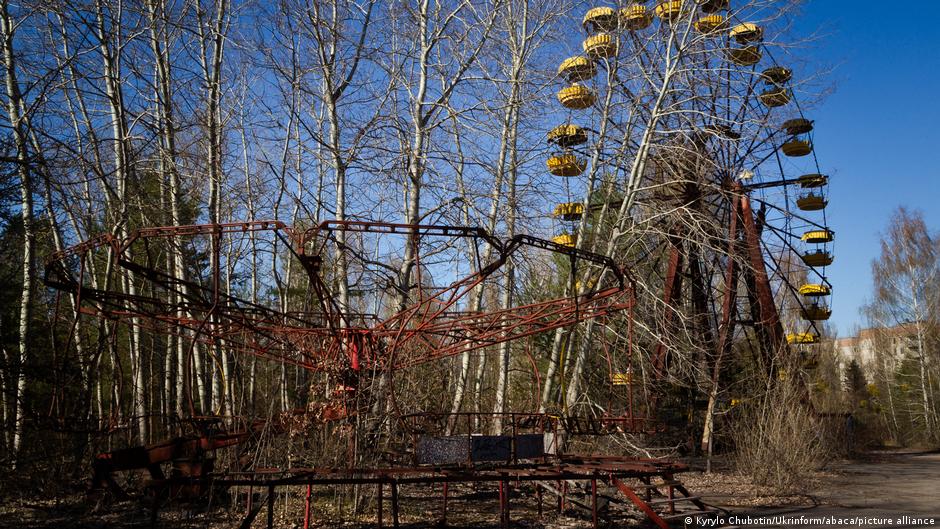
Broken windows, rusting vehicles, and scattered remnants of Soviet-era artifacts speak of abandonment. Toys, appliances, and faded Russian signs warn of radiation levels, while the empty apartment blocks echo with the absence of their former inhabitants. Vorobey recalls the day everything changed, describing a city that once symbolized the USSR’s nuclear ambitions.
A City Built for the Future
Pripyat, known as “Atomgrad,” was conceived as a model for Soviet nuclear development. Located just 3 kilometers from the Chernobyl plant, it was designed to house workers and their families. Constructed in 1970, the city had 160 buildings, 13,500 apartments, and essential facilities like schools and kindergartens. Its promise of progress faded with the explosion of Reactor 4 on April 26, 1986.
Vorobey, then 18, worked as an electrician preparing cables for the reactor that would later erupt. The next morning, he noticed the buses were missing and walked to the plant, witnessing its devastation. “It wasn’t smoke, but heat—like a river rising into the sky,” he says, reflecting on the moment of realization.
“We didn’t know then what had happened, or where exactly. A man on a bike told us it was dangerous, so we went home,” Vorobey recalls. The evening brought news of the accident and the urgent evacuation, prompting his family to leave on an overcrowded train, their fate sealed without understanding the gravity of the event.
Forty years later, the city’s ruins are overgrown with trees and vines. Vorobey points to his childhood home, its door ajar, as he recounts memories of music and books. “That was my chair, with a padded foam seat. Here, there was a lamp… I read so many books here!” he says, picking up a record from the floor.
The Prometheus movie theater stands as a silent monument to Soviet culture. Fallen beams block the entrance, while portraits of Communist leaders hang on the walls. Soviet symbols remain, including emblems on apartment roofs and a message on metal: “The atom should be a worker, not a soldier.” Vorobey insists this idealism shaped the city’s identity, with nuclear energy portrayed as infallible.
Though the city is now a ghost town, its story endures. The remnants of a once-optimistic vision are preserved, offering a glimpse into a world where radiation was deemed impossible and safety was absolute. As the trees reclaim the streets, Pripyat remains a poignant reminder of both human ambition and nature’s resilience.