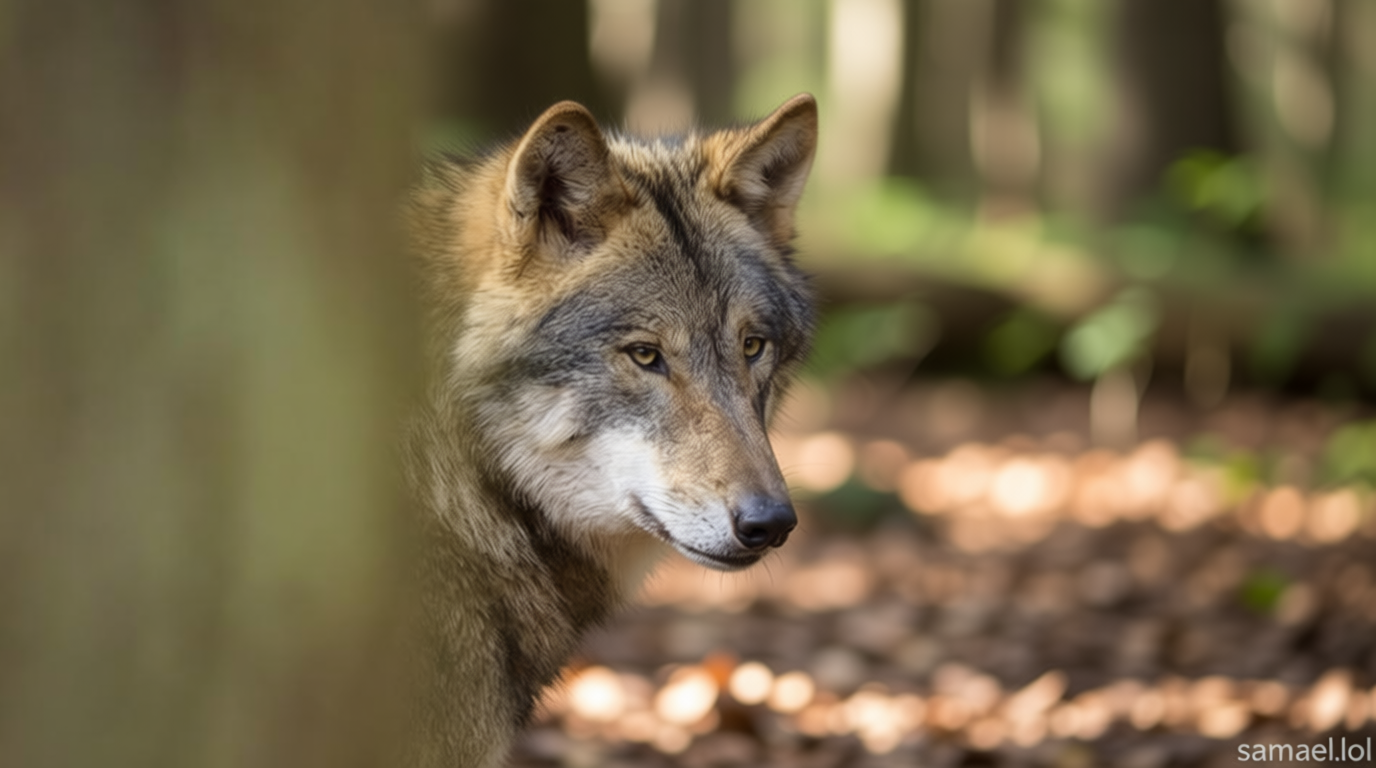
Germany: Wolf Bites Woman in Hamburg
Samael.lol – For the first time in over three decades, a wolf has attacked a human in Germany, according to police reports from Monday evening. The incident took place in Hamburg, the country’s second-largest city, marking a significant event as the species has only recently re-established itself in the region.
The wolf was captured near Binnenalster lake after it ventured into the water, where officers used a snare to secure the animal. Officials believe the creature had been roaming the city since at least Saturday, with multiple sightings reported in various locations, including a suburban train station and a neighborhood 11 kilometers from the attack site.
The event highlights the rare interaction between humans and wolves, typically known for their timid nature. The wolf’s path led it close to an Ikea store, approximately 4 kilometers from Hamburg’s city center, before it disappeared into the lake.
“The wolf likely wandered into the city by accident,” stated environmental authorities, adding that it may have been disoriented by the urban landscape and attempting to find its way out.
Since the late 1990s, wolves have gradually returned to Germany, migrating west from Poland into eastern regions. Conservation efforts and expanding natural habitats facilitated their comeback, which has been celebrated as a success for wildlife preservation. However, this resurgence has also sparked conflict, especially with farmers worried about livestock losses.
Recent legislative changes in Germany, including approval by the upper house of parliament, aim to simplify wolf hunting. The European Union also adjusted the species’ protection status last year, classifying it as “protected” instead of “strictly protected.”
Experts emphasize that human attacks by wolves remain extremely uncommon. A study by the Norwegian Institute for Nature Research found most incidents are linked to rabies, provocation, or habituation—when wolves lose their natural fear of people, often due to frequent feeding near settlements.
Since 2013, Hamburg has documented 21 confirmed wolf sightings. In March, a wolf was found dead on a highway after being struck by a vehicle, underscoring the challenges these animals face in adapting to human-dominated environments.
The wolf involved in the recent incident is thought to be a young individual dispersing from its pack, a phase where animals often travel long distances to establish new territories. This phase, combined with unfamiliarity with urban settings, may have led to the accidental encounter.
Authorities confirmed the wolf has been relocated to a wildlife park. While the event is notable, it underscores the ongoing balance between conservation and human safety in regions where wolves are reclaiming their natural habitat.