Four Ways to Tackle Football’s Frustrating ‘Tactical Timeout’
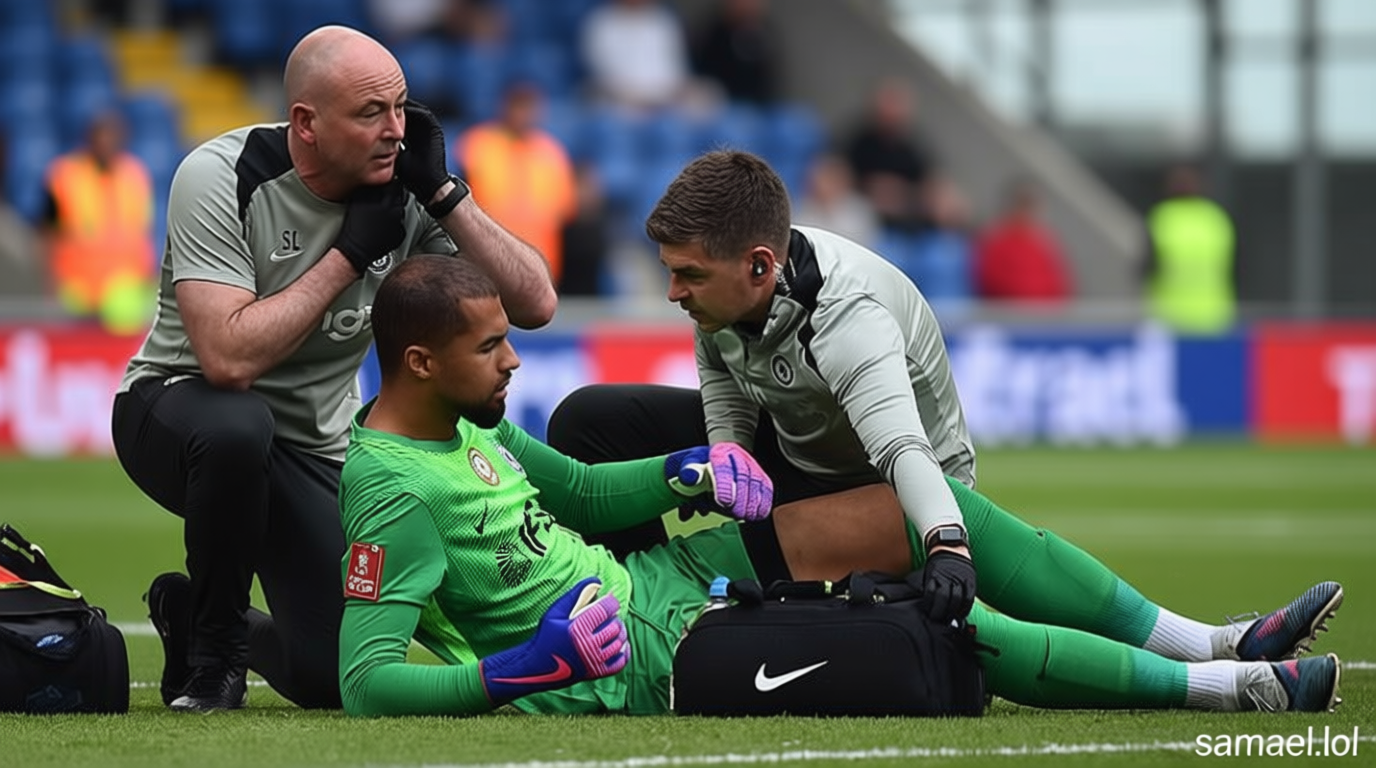
Samael.lol – In the high-stakes world of professional football, one of the most contentious issues has been the strategic use of tactical timeouts by goalkeepers. These pauses, often seen as a way to disrupt the flow of play or regroup during critical moments, have sparked debates across leagues and governing bodies. The latest controversy emerged during Sunday’s FA Cup semi-final between Chelsea and Leeds United, where goalkeeper Robert Sanchez’s deliberate injury stoppage drew sharp criticism. As the match progressed, the moment highlighted a growing concern: how to curb this practice without penalizing genuine efforts to address injuries.
The Rise of the Goalkeeper Timeout
At the heart of the problem is a simple yet effective tactic: a goalkeeper, often with the team’s manager’s approval, signals for treatment to halt the game. This allows coaches to deliver instructions to the outfield players while the opposition is momentarily distracted. The practice has become so routine that fans, like Leeds supporters during the match, now react with frustration rather than surprise. One such instance occurred in November, when Manchester City’s goalkeeper Gianluigi Donnarumma collapsed during a Leeds match, giving manager Daniel Farke the opportunity to argue that the player had feigned the injury to “bend the rules” and disrupt the opponent’s momentum.
“Gianluigi Donnarumma went down as the West Yorkshire club were in the ascendancy at Etihad Stadium. I accused him of feigning injury to break up play,”
Farke stated during the incident. This accusation underscores a broader trend in the sport, where goalkeepers are increasingly used as tools to manipulate the game’s tempo. The tactic is particularly prevalent in the women’s game, where strategic stoppages can significantly influence match outcomes. However, the issue has transcended gender, affecting all levels of football.
Current Measures and Their Limitations
For years, football leagues have attempted to mitigate this issue through rule changes. The English Premier League, for example, introduced a 30-second rule requiring any player receiving treatment to leave the field for that duration. While this had some success, it quickly became clear that managers could adapt by instructing their goalkeepers to take the stoppage. This shift transformed the tactic into a risk-free strategy, as a team cannot function without its goalkeeper. Coaches now have the leverage to pause play without consequence, using the time to alter formations, communicate strategies, or unsettle the opposing team.
Referees have found themselves powerless to intervene, as they cannot accuse a player of faking an injury without risking a backlash. If a goalkeeper were genuinely hurt, the repercussions could be severe, potentially leading to penalties or even red cards. This dilemma has created a cycle: goalkeepers fall, the team’s 10 outfield players rush to the technical area, and the keeper soon rises again, leaving the opposition scrambling to adjust.
Proposed Solutions by Ifab
In response, the International Football Association Board (Ifab) has been examining the issue, but their progress has been slow. A series of discussions in October revealed the complexity of the problem, with no consensus on the most effective remedy. While Ifab has already introduced changes for next season, such as time limits on goal-kicks, throw-ins, and substitutions, these measures have not addressed the core of the issue: the goalkeeper’s tactical timeout.
One potential solution is to extend the treatment period from 30 seconds to a full minute. This would force managers to evaluate the trade-off of having one fewer player on the field for a longer duration. The idea is that a one-minute pause would create more pressure on teams to justify the stoppage, potentially deterring coaches from using it as a routine strategy. However, critics argue that even this change might not be sufficient, as managers could still calculate the benefit of regrouping or altering the game’s dynamics.
Trials for the 2026-27 Season
To test these solutions, leagues will be invited to conduct trials during the 2026-27 season. The Women’s Super League (WSL) has already expressed interest in participating, recognizing the need for innovation in addressing this growing issue. Ifab plans to review the results in March 2027 and could implement a solution that applies across all leagues. Among the proposed trials, one focuses on enforcing the one-minute treatment rule, while others explore the idea of requiring an outfield player to leave the field instead of the goalkeeper.
The first trial might simply follow the logic of the one-minute rule: if a goalkeeper needs treatment, another player must step off the pitch for the same duration. This approach aims to reduce the number of times the goalkeeper is used as a strategic tool, ensuring that the stoppage is not just a way to gain time but a genuine necessity. However, some within Ifab believe this is not enough, as managers might still find ways to exploit the situation by sending in an outfield player for a longer period—potentially doubling the time to two minutes. This would further disrupt the opposition and give coaches more breathing room to strategize.
Debates on Enforcement and Fairness
The debate over tactical timeouts reflects a broader tension between player creativity and game fairness. While some argue that the one-minute rule is a logical step forward, others contend that it fails to address the root of the problem. For instance, if a goalkeeper is required to stay on the field for a minute, they might still signal for treatment if they believe the opportunity to disrupt the opposition outweighs the loss of a player. The same dilemma applies to outfield players, who could be forced to take longer stoppages if the rule is extended.
Some in October’s technical meetings believed that the one-minute rule would align with existing laws, making it easier to enforce. Yet, others raised concerns about its effectiveness. They questioned whether a single minute is enough to deter managers from using the tactic, especially when the impact on the game can be significant. The goal is to create a balance between allowing legitimate pauses for treatment and preventing coaches from exploiting the situation to gain an unfair advantage.
As the sport continues to evolve, the question remains: how can the governing bodies ensure that tactical timeouts are used responsibly? The trials offer a chance to experiment with different solutions, but they also highlight the challenges of implementing change. For now, the game remains caught in a cycle of stoppages, where goalkeepers are used as both defenders and disruptors, and referees are left to watch helplessly as the rules are tested in real-time. The hope is that by 2027, a new approach will emerge—one that restores the flow of the game without compromising the integrity of its players.
In the meantime, fans like those at Wembley on Sunday will continue to lament the interruptions, while managers refine their strategies to turn the tactic into an asset. The key will be whether these trials produce results that justify a permanent shift in the rules. Ifab’s decision to expand the treatment period from 30 to 60 seconds represents a bold step, but its success will depend on how effectively it is applied and whether it can curb the growing reliance on goalkeepers as strategic tools. The future of the game may hinge on this simple yet crucial adjustment, as the sport seeks to reconcile its love for tactical innovation with the need for fair play.