England’s next opener? Durham’s Gay stakes his claim
England’s next opener? Durham’s Gay stakes his claim
A Quiet Triumph in the County Championship
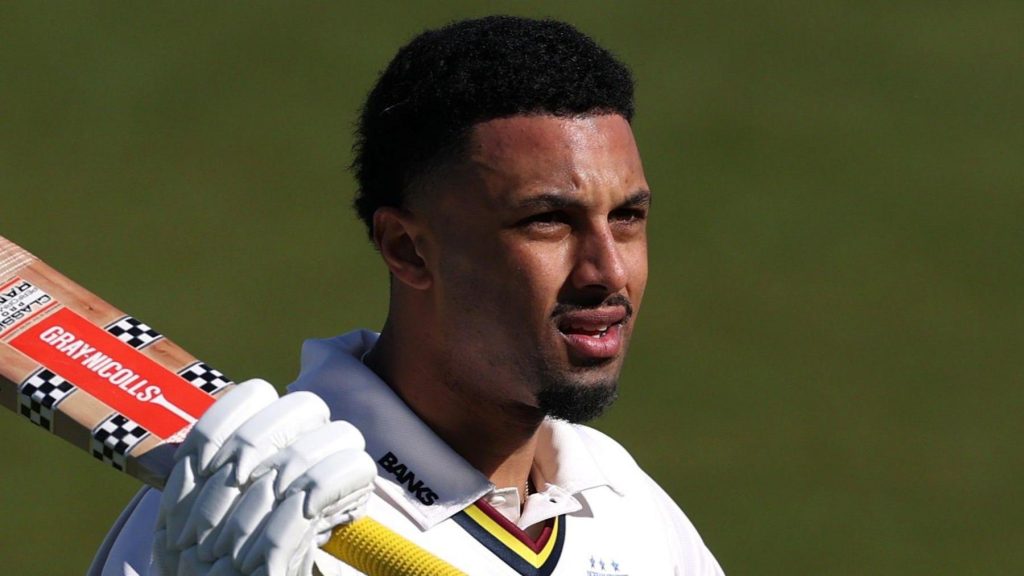
England s next opener Durham s Gay – In the quiet moments of a Championship match, where the rhythm of the game often blends into the background, Emilio Gay’s 159 not out became a pivotal chapter. The act of clenching his gloved fist and casually flicking the ball to the boundary, sealing Durham’s win against Lancashire, might have seemed routine to the casual observer. Yet, these actions carried weight—a subtle sign that Gay had once again positioned himself at the forefront of England’s opening-bats dilemma. His performance, though understated in its execution, marked a turning point for the season, propelling him into the spotlight once more.
Gay’s century not only completed the third-highest run-chase in Durham’s first-class history but also solidified his role as a potential heir to Zak Crawley’s Test opener mantle. The competition to replace Crawley, a position that has lingered over the early rounds of the County Championship, now seems to have a clear contender. Ben Stokes, England’s captain, had earlier urged county players to seize their chance in the national squad, emphasizing that form on the field could determine selection. Gay’s recent consistency has made him a natural choice in this evolving narrative. With two centuries in three matches this season, he has demonstrated the ability to deliver when it matters most. His latest display against Lancashire—a team that directly challenges Durham for Division Two supremacy—was a masterclass in composure and timing.
Though Gay batted at number three against Lancashire, his position is more a strategic compromise than a limitation. Durham’s batting order, shaped by the presence of captain Alex Lees and the emerging talent Ben McKinney, allows Gay to play a role that suits his strengths. McKinney, with his explosive attacking prowess, has been a standout in the team, but Gay’s balanced approach offers a different dimension. His ability to blend classical technique with moments of flair, combined with a solid defensive foundation, makes him a versatile asset. This adaptability has been evident throughout his career, from representing Italy in T20 internationals to his brief stint with the England Lions last winter.
Gay’s journey to this point has been marked by both promise and challenges. While he qualified for Italy through his maternal grandfather, his eligibility for the West Indies via paternal grandparents adds another layer to his potential. The England Lions, during their tour of Australia, saw Gay contribute valuable runs, scoring 56 not out against the Prime Ministers’ XI and 78 against a Cricket Australia XI in Perth. His performances, though modest compared to the Lions’ ambitions, hinted at a player capable of performing under pressure. Head coach Andrew Flintoff, known for his advocacy of emerging talent, has been vocal about Gay’s merits, suggesting that his skills align with the vision of England’s new era under Stokes and Brendon McCullum.
After the Lancashire victory, Durham’s coach Ryan Campbell acknowledged the growing attention Gay has attracted. “There will be a lot of discussion about him,” Campbell said, highlighting that the focus remains on his performance for Durham. The reference to a first-innings dismissal—a loose drive to Lancashire seamer Tom Bailey, resulting in a catch at slip—was a reminder of the fine line between brilliance and near-misses. While some might compare this error to Crawley’s tendencies, Gay’s ability to recover and deliver in the second innings underscored his resilience.
Gay’s path to the national team has been shaped by a mix of opportunity and adversity. Last season, while Durham battled relegation in Division One, he scored four centuries, including notable wins against champions Nottinghamshire and runners-up Surrey. These achievements, though from a challenging campaign, demonstrated his capability to thrive under pressure. However, his inconsistency—highlighted by five ducks early in the year—has been a point of discussion. BBC Newcastle commentator Martin Emmerson, who has closely followed Gay’s career, noted that “consistency is key,” yet he remains cautiously optimistic. “He’s shown the potential to be great,” Emmerson said, “but the selectors will need to see sustained form.”
The upcoming Championship matches against Worcestershire and Kent will be crucial for Gay’s case. With Stokes in the dressing room, assuming his recovery from cheek surgery progresses as planned, the presence of the star all-rounder could further elevate Gay’s profile. Additionally, two four-day Lions fixtures against South Africa A in late May, followed by a players’ camp, will provide another platform for him to showcase his abilities. The Lions, under Flintoff’s guidance, are expected to be a testing ground for emerging talents, with Gay’s inclusion likely to spark debate.
While Gay’s performances have been a focal point, the competition for England’s opening slot is far from one-sided. James Rew, the 22-year-old left-hander from Somerset, has also emerged as a contender with his 379 runs at an average of 75.80. Rew’s ability to score quickly in the middle order has drawn comparisons to Crawley, despite his lack of experience at the top of the order. Meanwhile, McKinney’s aggressive style has positioned him as another strong candidate, particularly after his 244 against Gloucestershire last week. However, the presence of Haseeb Hameed and Dom Sibley, two veteran openers who have previously held England’s favor, complicates the picture. Their recent centuries added another layer to the selection puzzle, ensuring that the race for the top spot remains open.
As the County Championship progresses, the pressure on players to make a case for international recognition intensifies. For Gay, this means leveraging his adaptability and composure to stand out in a crowded field. His success against Lancashire, a team that has been a key rival in the pursuit of Division Two glory, has already drawn praise from coaches and analysts. Yet, the final decision will depend on how he performs in the remaining matches. With the England hierarchy set to convene for the first Test of the summer against New Zealand on 4 June, the stage is primed for a decisive chapter in this ongoing narrative.
Eligibility and Legacy: Beyond the Cricket Pitch
Gay’s eligibility for international representation adds an intriguing subplot to his campaign. While he has been a consistent performer for Durham, his heritage opens the door to multiple cricketing pathways. His Italian connections, though not yet realized in senior cricket, provide a fascinating angle to his career. The question remains: will his dual eligibility for the West Indies and Italy be a factor in his selection, or will it serve as a testament to his versatility?
For now, the focus is on Gay’s performance within the English domestic structure. The Lions’ recent fixtures, particularly their matches against South Africa A, will be a key indicator of his readiness for higher stakes. The presence of Stokes during these games could further influence the selectors, as the captain’s endorsement often carries weight. Yet, even without Stokes, Gay’s ability to consistently score runs and adapt to different conditions has been a major talking point.
As the season unfolds, the competition for England’s opening role will likely intensify. The emergence of players like Rew and McKinney, alongside the return of veterans such as Hameed and Sibley, ensures that the selectors have a wealth of options. However, Gay’s combination of technique, resilience, and adaptability may ultimately give him an edge. His recent form, coupled with the support of Durham’s coaching staff, suggests that he is on the verge of making a breakthrough.
With three more Championship matches to play and the Lions’ fixtures on the horizon, the next few weeks will be pivotal. The question is no longer whether Gay has the talent to succeed as England’s opener, but whether he can maintain the consistency required to secure a spot. As the pressure mounts, his ability to perform in high-stakes scenarios will be the deciding factor. The selectors, still without a permanent national selector, may find themselves in a difficult position, but the evidence of Gay’s performances thus far cannot be ignored.
The journey to the England team is as much about timing as it is about skill. For Gay, the summer of 2025 represents a critical juncture. His achievements in the County Championship, combined with the potential for further growth in the Lions’ matches, could be the catalyst for a national call-up. Whether he will be the one to replace Crawley remains to be seen, but the path is clear: deliver consistently, adapt to challenges, and ensure that his name is on every list of contenders. The game is far from over, but the momentum is building.