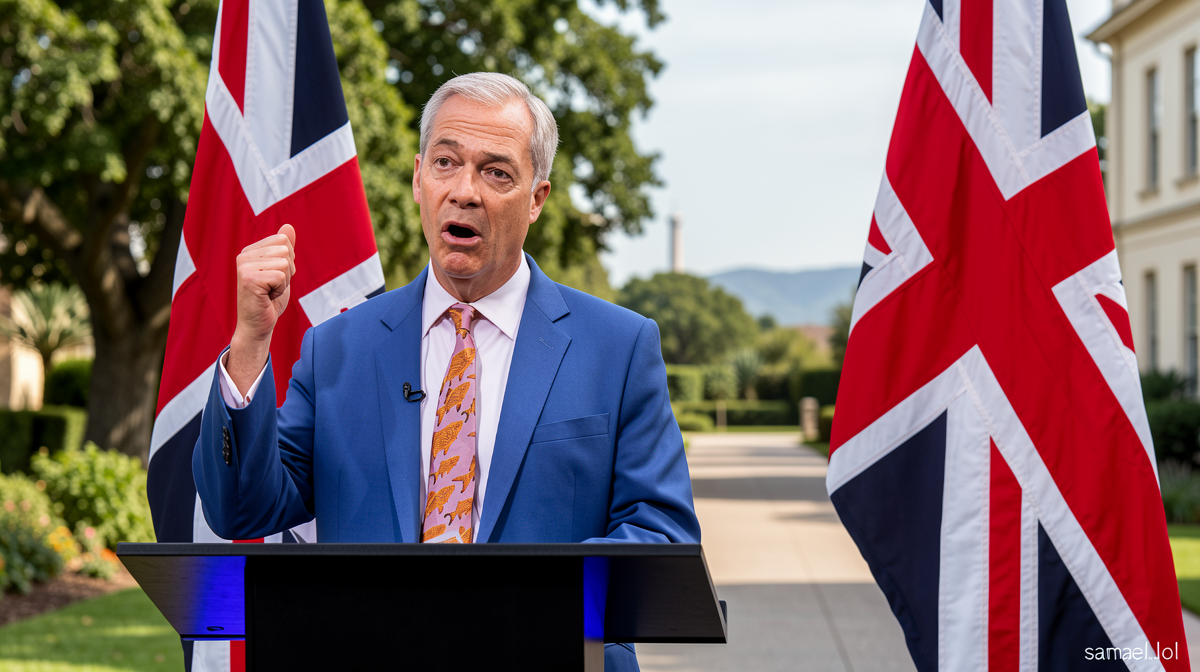
Canada’s Carney Introduces Sovereign Wealth Fund: A New Economic Strategy
Samael.lol – Prime Minister Mark Carney has unveiled Canada’s first sovereign wealth fund, designed to support large-scale development projects across the country. The initiative, dubbed the Canada Strong Fund, will initially allocate C$25 billion ($18.4 billion; £13.5 billion) to sectors such as energy, infrastructure, mining, agriculture, and technology. This marks a significant shift in Canada’s economic approach, as the government seeks to leverage public funds for strategic investments in key industries. The announcement came during a press event in Ottawa, where Carney emphasized the urgency of the move amid evolving geopolitical and economic dynamics.
A Strategic Move Amid Global Uncertainty
The decision to create the fund aligns with Carney’s broader vision to strengthen Canada’s economic resilience. He stated that the nation faces a pivotal moment, driven by its shifting relationship with the United States and the looming threat of tariffs. “The US has changed, that’s their right,” Carney remarked, “but we are responding, that’s our imperative.” This sentiment underscores the government’s determination to act proactively in an environment where traditional trade partners may impose restrictions on Canadian exports.
According to the prime minister, the fund will collaborate with private-sector entities to finance projects deemed essential for national progress. These include upgrades to transportation networks, advancements in natural resource extraction, and innovations in emerging technologies. Carney also pointed to international examples, noting that countries like Norway have long used sovereign wealth funds to manage surplus revenues. “Canada hasn’t had one, until now,” he added, highlighting the fund’s novelty.
Public Participation and Concerns Over Returns
A distinctive feature of the Canada Strong Fund is its open-door policy for individual investors. Canadians with surplus income will have the opportunity to contribute directly, a model that diverges from traditional sovereign wealth funds. However, this approach has drawn scrutiny from economic analysts. The Montreal Economic Institute warned that the fund “risks costing taxpayers dearly while generating limited returns,” raising questions about its effectiveness in delivering long-term value.
Carney defended the initiative, stating that Canada’s financial outlook has improved, with the deficit lower than previously projected. “We now have the capacity to invest in projects that will drive growth,” he said, citing increased foreign investment as a key factor. Despite this, critics argue that the absence of a budget surplus means the fund will rely on borrowed funds rather than surplus income, a contrast to systems like Norway’s, which are funded by oil and gas revenues.
Opposition Criticisms and Fiscal Debates
The opposition Conservatives have expressed reservations about the fund, labeling it a “sovereign debt fund” and highlighting Canada’s fiscal challenges. Leader Pierre Poilievre questioned the wisdom of diverting public funds to infrastructure projects, suggesting that private investors should bear the burden. “If a project has a business case, why would the government need to fund it?” he asked, implying that the initiative might not be economically prudent.
Poilievre further pointed out that countries such as Norway, Singapore, and Saudi Arabia have maintained budget surpluses, which they channel into their sovereign wealth funds. “Carney has no surplus, and therefore no wealth to put in such a fund,” he stated, emphasizing the need for fiscal discipline. The criticism highlights a fundamental debate: should the government use debt to fund development, or should it prioritize budgetary balance to ensure sustainable growth?
Comparing Models: Lessons from Norway and Global Examples
The Canada Strong Fund’s structure differs from established models, such as Norway’s pioneering sovereign wealth fund. Launched in 1990, Norway’s fund exclusively invests surplus revenues from its oil and gas sector, building a massive $2.1 trillion asset base by 2025, as reported by Bloomberg. This has positioned it as “the largest of its kind,” offering a template for other nations. Unlike Norway, Canada’s fund will not be primarily funded by natural resource revenues but by public borrowing, according to Joseph Steinberg, an economics professor at the University of Toronto.
Steinberg explained that sovereign wealth funds typically serve as tools for countries with robust income from publicly owned assets. “Historically, these funds are vehicles for nations that generate substantial revenue from natural resources, often oil,” he said. In Canada’s case, the lack of a surplus means the fund’s funding will depend on government debt, potentially altering its investment strategy. Steinberg noted that the money will likely be directed toward domestic projects rather than global diversification, a key contrast to Norway’s model.
The fund also introduces a unique aspect by allowing direct public investment. While most sovereign wealth funds operate through institutional channels, this initiative invites citizens to participate. This could foster a sense of shared ownership but may also complicate management, as public contributions could influence the fund’s priorities. The government has stated it will hold consultations over the next several months to refine the fund’s framework and address concerns about transparency and efficiency.
Global Context and Future Prospects
Canada joins a growing list of nations with sovereign wealth funds valued at over $1 trillion, including China, the United Arab Emirates, and Kuwait. These funds are often used to stabilize economies, hedge against financial risks, and support long-term development. The United States, too, has taken steps toward establishing its own, following an executive order signed by President Donald Trump in February of the previous year. The directive tasked treasury and commerce officials with developing a plan to create a US sovereign wealth fund, aiming to “maximise the stewardship of our national wealth.”
Carney’s announcement reflects a global trend of nations using sovereign wealth funds as instruments for economic resilience. However, Canada’s unique situation—rich in natural resources but currently in deficit—creates a different context. The fund’s focus on domestic projects may address immediate infrastructure needs, but it also raises questions about long-term sustainability. Critics like Poilievre argue that without a surplus, the fund could become a tool for deficit financing rather than wealth accumulation.
While the Canada Strong Fund represents a bold step, its success will depend on how effectively it balances investment goals with fiscal responsibility. The government’s ability to secure private-sector partnerships and manage public expectations will be crucial. As Carney acknowledged, “many countries that are blessed with natural resources have sovereign wealth funds,” but Canada’s path is distinct. The fund’s ability to generate meaningful returns while addressing domestic priorities remains a central challenge.
Implications for Canada’s Economic Future
The creation of the Canada Strong Fund signals a shift in how the country manages its financial resources. By pooling public and private investments, it aims to catalyze growth in critical sectors. However, the debate over its funding model and potential returns will shape its legacy. Carney’s vision of “nation-building projects” aligns with a desire to modernize infrastructure and unlock economic potential, but the opposition’s skepticism highlights the need for careful planning.
Experts like Steinberg caution that the fund’s effectiveness hinges on its ability to diversify investments and generate returns that offset borrowing costs. “The key is to ensure that the money is used efficiently and not just as a temporary solution,” he said. As Canada navigates its economic landscape, the Canada Strong Fund may serve as a test case for how public investment can be structured to support both immediate and long-term national interests. Its impact will be closely watched, not only in Canada but as a model for other nations facing similar challenges.
With its launch, the fund brings a new dimension to Canada’s economic strategy, blending public ownership with the flexibility of private participation. While the initial allocation of C$25 billion offers a foundation, the true test will be in its ability to adapt and thrive in an ever-changing global market. As Carney noted, the goal is to “build and invest at an urgent pace,” a mission that requires balancing innovation with fiscal prudence.