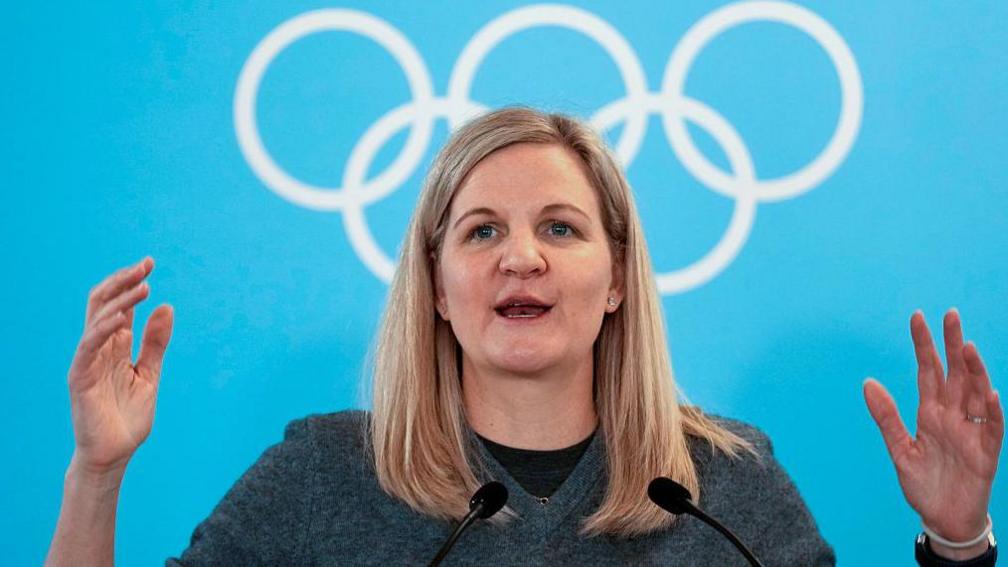
The fallout and key questions from the IOC’s biological female decision
Samael.lol – Five years after former International Olympic Committee (IOC) President Thomas Bach asserted that sex eligibility rules should be decided by individual sports, his successor Kirsty Coventry has unveiled a new policy. This decision, effective from the 2028 Los Angeles Games, restricts women’s competition to those with biological female status, determined by a single SRY gene test identifying a Y chromosome and male sex development. The move aims to “protect fairness, safety, and integrity,” according to the IOC.
From sport-specific to universal criteria
Bach’s 2021 statement emphasized that there’s no one-size-fits-all solution to sex eligibility. “It differs from sport to sport,” he said, advocating for each discipline to set its own rules. However, the IOC later clarified it would not dictate regulations for all sports, leaving athletes with sex variations to compete without disproportionate advantages. This stance was revised in 2024, marking a significant shift in policy.
“There is a 10-12% male performance advantage in most running and swimming events, and that rises to 20% in throwing and jumping disciplines, while reaching 100% in sports like boxing,”
the IOC noted, citing scientific findings that male sex confers competitive benefits in strength-dependent events. This data, however, was not publicly disclosed, sparking debates about its transparency. Critics argue the science has long supported such advantages, yet the IOC’s decision feels abrupt compared to previous flexibility.
Controversies and sporting precedents
The policy change follows years of controversy. In 2021, New Zealand’s Laurel Hubbard became the first openly transgender woman to compete in the Olympics, prompting concerns about fairness in women’s events. Swimming and cycling federations subsequently introduced transgender bans, while World Athletics tightened rules after the 2016 Rio Olympics, where three 800m medalists had differences in sex development (DSD).
World Boxing also adopted stricter criteria following the 2024 Paris Games, where Imane Khelif and Lin Yu-ting won gold despite earlier disqualifications for failing sex tests. Lin was later cleared by the sport’s governing body, highlighting the complexity of the issue. Meanwhile, the UN’s special rapporteur on violence against women urged reinstating sex screening, calling it “overwhelmingly preferable to targeted testing based on allegations, suspicion, and bias.”
Political influences and elite competition
Political factors may have shaped the IOC’s stance. Last year, US President Donald Trump issued an executive order barring transgender women from competing in female sports categories and warned of visa restrictions for transgender athletes. This policy likely pressured the IOC to adopt a more rigid approach. Yet, even without political push, some argue the scientific consensus on performance advantages has been clear for years.
Coventry, who previously supported the inclusion of transgender athletes, now champions the policy as a necessary step to safeguard the female category. The question remains: will this decision resolve debates or deepen divisions among athletes, scientists, and policymakers? BBC Sport explores the implications and lingering uncertainties.